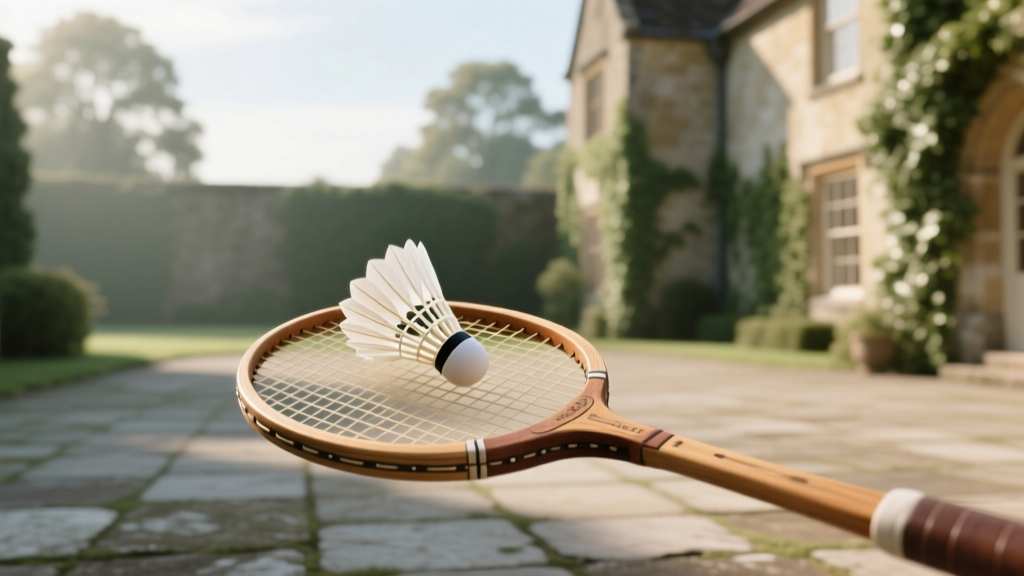
Who Invented Badminton? Origins and History Explained
Badminton was invented by British military officers in Pune, India, in the mid-19th century, evolving from the older game battledore and shuttlecock, and was later formalized at Badminton House in Gloucestershire, England, giving the sport its official name.
The Origins of Badminton: A Historical Overview
While the roots of hitting a shuttlecock with a racket-like instrument trace back over two thousand years to ancient civilizations such as China and Greece, the modern sport of badminton as we know it began in 1873. British army officers stationed in Pune, India, adapted a local game called "Poona" into a structured indoor pastime. When they returned to England, they introduced it at a party held at Badminton House, the country estate of the Duke of Beaufort. The game became so popular that it adopted the name of the estate—"badminton"—and spread rapidly across Britain and beyond.
Key Milestones in Badminton's Development
- Pre-1873: The game "Poona" was played in India using rackets and shuttlecocks.
- 1873: Badminton is first played at Badminton House in Gloucestershire, England.
- 1887: The Bath Badminton Club establishes the first set of rules.
- 1893: The Badminton Association of England (BAE) is formed.
- 1899: First All England Championships are held.
- 1934: International Badminton Federation (now BWF) is founded.
- 1992: Badminton becomes an official Olympic sport at the Barcelona Games.
How Badminton Evolved From Poona to a Global Sport
The transformation from Poona to organized badminton involved standardizing court dimensions, scoring systems, and equipment. Early versions lacked consistent rules, but the establishment of the Badminton Association of England in 1893 led to the codification of gameplay. The sport quickly gained popularity in Commonwealth nations and later in Asia, where countries like Indonesia, China, and Denmark emerged as powerhouses.
Core Elements That Define Modern Badminton
- Court Size: 13.4m x 6.1m for doubles, slightly narrower for singles.
- Net Height: 1.524 meters at the center.
- Scoring System: Best of three games to 21 points, rally scoring.
- Shuttlecock Speed: Ranges from 74 to 78 depending on altitude and temperature.
- Racket Weight: Typically between 80–100 grams.
| Year | Event | Location | Significance |
|---|---|---|---|
| 1873 | First recorded game of badminton | Badminton House, England | Named the sport; foundational moment |
| 1893 | Formation of Badminton Association of England | Bath, England | First governing body; standardized rules |
| 1899 | First All England Open Championships | London, England | Oldest major tournament in badminton |
| 1934 | Founding of International Badminton Federation | Devon, England | Global governance established |
| 1992 | Badminton at Summer Olympics | Barcelona, Spain | Olympic recognition achieved |
| 2024 | BWF World Championships Prize Pool | Copenhagen, Denmark | $2 million USD total prize money |
The data highlights key institutional milestones that transformed badminton from a colonial pastime into a professional global sport. The establishment of national and international bodies provided structure, while Olympic inclusion in 1992 significantly increased funding and visibility. Today, events like the BWF World Championships offer substantial prize money, reflecting the sport’s commercial growth and competitive depth.
Who Were the Key Figures in Badminton's Invention?
No single individual is credited with inventing badminton. Instead, it was a collective effort by British expatriates and military personnel in India who refined Poona into a formal game. The Duke of Beaufort, though not a player himself, lent his estate’s name to the sport, inadvertently branding it forever. Later, members of the Bath Badminton Club and officials from the Badminton Association of England were instrumental in rule development and promotion.
Frequently Asked Questions About Who Invented Badminton
Who actually invented badminton?
Badminton was not invented by a single person but developed by British military officers in Pune, India, in the 1860s–70s. They adapted the local game "Poona" and introduced it to England, where it was formalized and named after Badminton House in 1873.
Why is badminton called badminton?
The sport is named after Badminton House, the estate of the Duke of Beaufort in Gloucestershire, England. The game was first played there publicly in 1873, and the name stuck as it gained popularity across the UK and internationally.
Was badminton originally played in India?
Yes, the precursor to modern badminton, known as "Poona," was widely played by British Army officers in Pune, India, during the 1860s. They brought the game back to England, where it evolved into the standardized sport recognized today.
When did badminton become an Olympic sport?
Badminton became an official Olympic sport at the 1992 Summer Olympics in Barcelona, Spain. It included men's and women's singles and doubles events. Mixed doubles was added in 1996 at the Atlanta Games.
What role did the Badminton Association of England play?
Formed in 1893, the Badminton Association of England (BAE) was the first national governing body for the sport. It standardized rules, organized tournaments like the All England Open, and laid the foundation for international competition and the eventual creation of the BWF.
More Articles
 How Many Viewers Does the Super Bowl Get? (2024 Data)
 How Much Are Table Tennis Tables?
 Who Won Pro Bowl 2025? NFC Claims Victory
 How Much Are Wimbledon Tennis Tickets?
 Teams That Have Never Been to the Super Bowl
 Rey Mysterio Wrestling Career Length (2026)
 When Did Table Tennis Become an Olympic Sport?
 Tennis Players Blow on Hands: Grip & Heat Explained
 What Do Minor League Baseball Players Earn in 2025?
 Who Makes the Best Golf Irons in 2025?