Who Founded Cricket? Origins and Historical Development
Cricket was not founded by a single individual but evolved over centuries, with its earliest known origins in 16th-century England, particularly in the counties of Kent and Sussex.
The Historical Origins of Cricket
Cricket's roots trace back to rural England during the 1500s. Initially a children's game, it gradually transformed into an organized sport by the 17th century. The first recorded match took place in 1646, and by the 18th century, cricket had gained popularity among adults and began spreading across England.
Key Early Developments
- The earliest definitive mention of cricket dates to 1598, referencing a game played by boys in Guildford, Surrey.
- By the late 1600s, adult participation became common, leading to informal village matches.
- The formation of the Marylebone Cricket Club (MCC) in 1787 marked a pivotal moment in standardizing rules.
- The first international match occurred in 1844 between Canada and the United States, though England remained central to the sport’s governance.
Evolution of Cricket Rules and Governance
The codification of cricket laws began in the 18th century. The MCC, based at Lord’s Cricket Ground, became the custodian of the Laws of Cricket, which are still used globally today.
Milestones in Rule Development
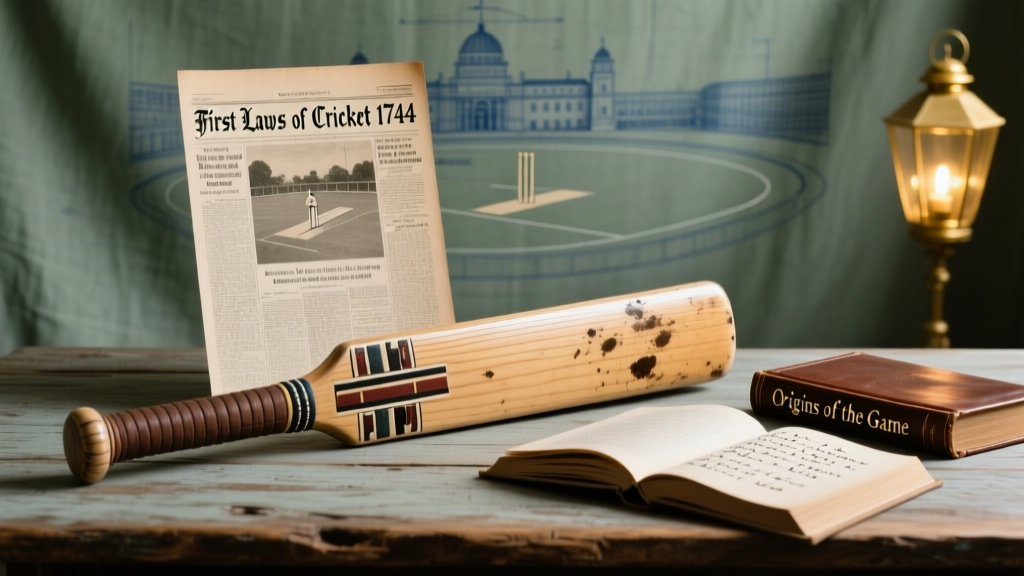
- 1744: First known written laws of cricket established.
- 1774: Introduction of leg before wicket (LBW), wider stumps, and the straight bat.
- 1811: First use of numbered scoresheets.
- 1889: Official establishment of county championships in England.
| Year | Event | Location | Significance |
|---|---|---|---|
| 1598 | Earliest legal record of cricket | Guildford, England | Court testimony mentions boys playing cricket. |
| 1646 | First recorded adult match | Sussex, England | Match halted due to gambling disputes. |
| 1744 | First codified Laws of Cricket | London, England | Formalized pitch length, ball size, and umpire roles. |
| 1787 | Founding of Marylebone Cricket Club (MCC) | London, England | Became guardian of cricket laws and traditions. |
| 1844 | First international cricket match | Staten Island, USA | Canada vs. United States—recognized by ICC. |
| 1889 | Start of County Championship | England | Established formal domestic competition structure. |
| 1909 | Formation of Imperial Cricket Conference (ICC) | London, England | Predecessor to modern ICC; governed international play. |
The timeline shows how cricket progressed from informal village games to structured international competition. Key institutions like the MCC and later the ICC institutionalized the sport, ensuring uniformity in rules and global growth. England's role as the birthplace and early regulator is clearly reflected in these milestones.
Global Expansion and Modern Era
British colonial expansion played a major role in spreading cricket to countries such as Australia, India, South Africa, and the West Indies. By the 20th century, Test cricket was firmly established, and new formats like One Day Internationals (ODIs) and Twenty20 (T20) revolutionized the game's accessibility and commercial appeal.
- The first official Test match was played in 1877 between Australia and England.
- The International Cricket Council (ICC) now includes over 100 member nations.
- T20 leagues like the IPL and Big Bash have redefined player economics and fan engagement.
Frequently Asked Questions About Who Founded Cricket
Who invented cricket?
Cricket was not invented by one person. It developed organically in southern England during the 16th century, evolving from children's games into a formal sport by the 18th century.
Where did cricket originate?
Cricket originated in the counties of Kent and Sussex in southeastern England. The first documented reference dates to 1598 in Guildford, Surrey.
When was cricket first played?
The earliest definite reference to cricket being played is from 1598, describing a game in Guildford. The first recorded adult match occurred in 1646 in Sussex.
Who wrote the first rules of cricket?
The first known code of cricket laws was drawn up in 1744 by the London Cricket Club, with significant revisions later standardized by the Marylebone Cricket Club (MCC) from 1788 onward.
Why is England considered the birthplace of cricket?
England is recognized as the birthplace of cricket because all early records, rule developments, and institutional foundations—such as the MCC and Lord’s Cricket Ground—emerged there, shaping the modern game.
More Articles
 Where Did Lawn Tennis Originate? History & Facts
 The Ultimate Played Guide: Rules, Strategy, and Real-World Performance Data for Competitive Ultimate Frisbee
 How Old Is Ben Shelton? Age, Career & Stats 2025
 Super Bowl Start Time This Sunday: What Time Is It?
 What Size Is a Standard Table Tennis Table?
 How Much Does It Cost to Bowl at Bowlero?
 Terry Bradshaw Super Bowl Wins: 4 Titles Explained
 When Is the Rose Bowl Game Played? 2026 Date & Schedule
 When Did Michael Jordan Play Baseball? Full Story & Stats
 Will MacKenzie Golf: Career, Wins & Legacy