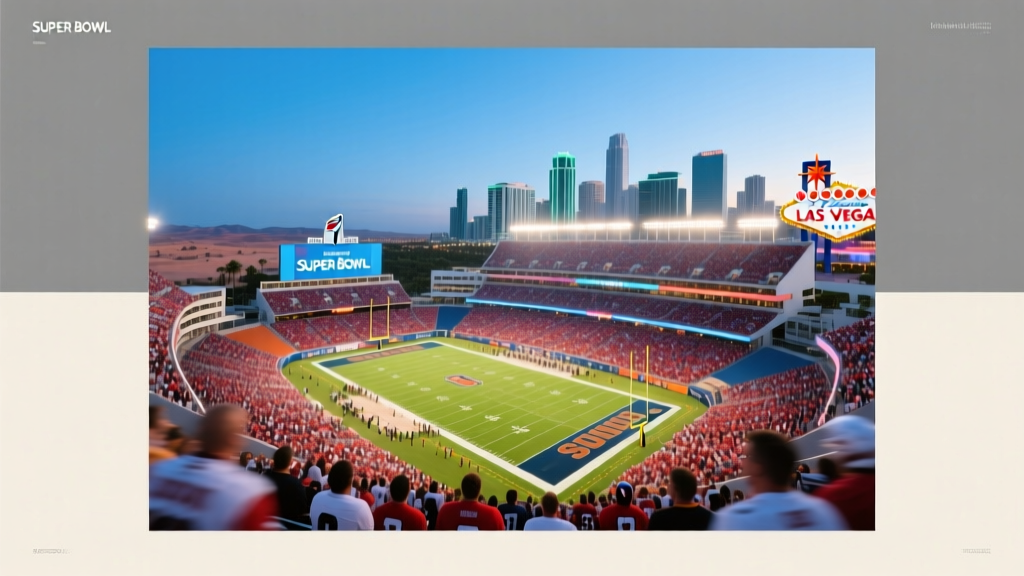
Where Does the Super Bowl Take Place? Host Cities Explained
The Super Bowl takes place in a different host city each year, selected from NFL-approved stadiums across the United States. The game is typically held in February at warm-weather or domed venues to ensure optimal conditions.
How Is the Super Bowl Location Chosen?
The NFL selects the Super Bowl host city several years in advance through a bidding process open to all 32 teams and their stadiums. While any team can submit a proposal, only stadiums meeting strict NFL criteria are considered.
Key Factors in Venue Selection
- Stadium Quality: Must be modern, with premium seating, luxury suites, and advanced technology.
- Climate: Preference for warm-weather cities or indoor domed stadiums to avoid weather disruptions.
- Hotel Capacity: At least 20,000 hotel rooms within an hour of the stadium.
- Transportation Infrastructure: Accessible via major airport and public transit.
- Local Support: Financial incentives and government backing from local authorities.
Past and Upcoming Super Bowl Locations
The Super Bowl rotates among top-tier stadiums, often favoring cities in California, Florida, Texas, Arizona, and Louisiana due to favorable weather and infrastructure.
| Super Bowl | Date | Stadium | City | State |
|---|---|---|---|---|
| LVIII | February 11, 2024 | Allegiant Stadium | Paradise | Nevada |
| LIX | February 9, 2025 | Caesars Superdome | New Orleans | Louisiana |
| LX | February 8, 2026 | SoFi Stadium | Inglewood | California |
| LXI | February 7, 2027 | Lucas Oil Stadium | Indianapolis | Indiana |
| LXII | February 6, 2028 | Mercedes-Benz Stadium | Atlanta | Georgia |
The data shows a clear trend toward metropolitan areas with domed or warm-weather stadiums. Cities like New Orleans, Miami, and Los Angeles are frequent hosts due to their proven ability to manage large-scale events and accommodate tourists. SoFi Stadium and Allegiant Stadium have emerged as new premier venues since opening in the 2020s.
Why Doesn't the Super Bowl Have a Fixed Location?
Unlike regular-season games, the Super Bowl is not hosted by the team with the best record at a fixed site. Instead, it's treated as a neutral-site championship event, similar to other major sports finals.
Benefits of Rotating Host Cities
- Economic Impact: Host cities receive a boost in tourism, hospitality, and local spending—often exceeding $500 million.
- National Exposure: Allows fans across the U.S. to attend without excessive travel costs over time.
- Infrastructure Incentives: Encourages cities to upgrade stadiums and facilities to meet NFL standards.
- Weather Management: Reduces risk of snow, ice, or extreme cold affecting gameplay and fan experience.
Future Trends in Super Bowl Hosting
Recent selections indicate growing preference for state-of-the-art stadiums with integrated entertainment districts. SoFi Stadium (home of the Rams and Chargers) and Allegiant Stadium (Raiders) exemplify this trend, featuring cutting-edge tech and luxury amenities.
Additionally, sustainability and fan experience are becoming key evaluation metrics. The NFL has emphasized eco-friendly operations and digital ticketing integration in recent bids.
Frequently Asked Questions About Super Bowl Locations
Which city has hosted the most Super Bowls?
Miami, including Miami Gardens, has hosted the most Super Bowls, with 11 games as of 2024. New Orleans follows closely with 8, and Los Angeles has hosted 8, including multiple games at SoFi Stadium.
Will the Super Bowl ever be held outside the United States?
No, the Super Bowl will not be held outside the U.S. in the foreseeable future. The NFL has stated that the game’s logistics, security, and cultural significance make domestic hosting essential. International games currently apply only to regular-season matchups.
Can cold-weather cities host the Super Bowl?
Yes, but only if the stadium is domed or has a heated field. For example, Super Bowl XLVIII was held at MetLife Stadium in East Rutherford, New Jersey—the first outdoor, cold-weather venue in modern history. However, it was scheduled in February with contingency plans for extreme weather.
How far in advance is the Super Bowl location decided?
The NFL typically selects the Super Bowl host city 3 to 5 years in advance. For example, New Orleans (Super Bowl LIX) was chosen in 2022, while Atlanta (Super Bowl LXII) was confirmed in 2023 for the 2028 game.
What stadium is hosting the next Super Bowl?
The next Super Bowl, LIX, will be held on February 9, 2025, at Caesars Superdome in New Orleans, Louisiana. This marks the eighth time the city has hosted the event, reinforcing its status as a premier destination for major sporting events.
More Articles
 What Channel Is Showing Super Bowl 2025?
 2025 Pro Bowl Score: AFC 36, NFC 33 Final Results
 Girls Volleyball Net Height: Official 2026 Standards
 How Long Is a Game of Sevens Rugby?
 Where to Play Badminton: Best Venues & Tips
 Who Won Super Bowl 56? Full Recap & Stats
 Coach with Most Super Bowl Wins: Full Breakdown
 How Many Baseballs Are Used in a Game? (MLB Data)
 What Does ATP Stand For in Tennis? Meaning & Role Explained
 Why Is It Called Boxing? Origins and History