
Where Did Rugby Start? Origins and History Explained
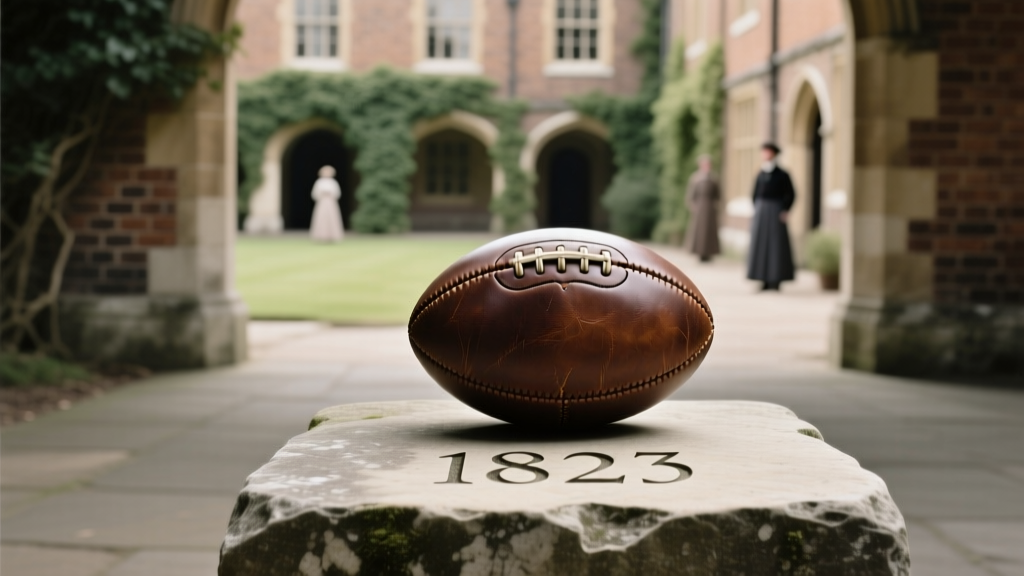
Rugby football originated in Warwickshire, England, during the early 19th century, with the most widely accepted origin being Rugby School in 1823 when William Webb Ellis allegedly picked up the ball and ran with it during a soccer match.
The Historical Origins of Rugby
Rugby's roots trace back to early forms of football played in English public schools, where rules varied significantly between institutions. The game that would become modern rugby began to take shape at Rugby School, one of England’s oldest independent schools founded in 1574.
The Legend of William Webb Ellis
According to tradition, in 1823, a student named William Webb Ellis broke from the customary style of play by picking up the ball and running with it during a football match. Though this story was first recorded decades later and lacks contemporary evidence, it has become central to rugby’s origin myth.
- First documented reference to the Ellis story: 1876, by Rugby School alumnus Matthew Bloxam
- Rugby School officially recognized the event in 1895 with a plaque
- World Rugby (formerly IRB) acknowledges Ellis as a symbolic figure in the sport’s history
Development of Rugby Rules
Prior to standardized rules, football games allowed handling, kicking, and carrying the ball, but lacked consistency. At Rugby School, students began formalizing rules that permitted running with the ball, leading to a distinct code.
Key Milestones in Rule Formation
- 1845: First written rules of Rugby Football established at Rugby School
- 1871: Formation of the Rugby Football Union (RFU) in England
- 1895: Split between northern English clubs led to creation of Rugby League
- 1995: Rugby turns professional following the Rugby World Cup
| Year | Event | Significance |
|---|---|---|
| 1823 | William Webb Ellis incident | Symbolic beginning of rugby as a distinct sport |
| 1845 | Rugby School codifies rules | First standardized rules allowing ball-carrying |
| 1871 | Formation of RFU | National governing body established in England |
| 1895 | Split forming Rugby League | Professionalism debate divides the sport |
| 1995 | Rugby becomes professional | Post-Springbok World Cup victory opens professional era |
The timeline shows how rugby evolved from an informal school game into a globally organized sport. The formalization of rules in 1845 marked a turning point, enabling consistent gameplay and inter-school competition. The 1871 formation of the RFU institutionalized the sport, paving the way for international expansion.
Global Spread and Diversification
From England, rugby spread through the British Empire. It gained popularity in countries such as New Zealand, Australia, South Africa, France, and Wales. Two main codes emerged: Rugby Union and Rugby League, differing in rules, player numbers, and governance.
Rugby Union vs. Rugby League
- Rugby Union: 15 players per side, global popularity, governed by World Rugby
- Rugby League: 13 players, faster pace, strongholds in Australia, Northern England, and Papua New Guinea
Modern Recognition and Legacy
Today, rugby is played in over 120 countries. The Rugby World Cup, first held in 1987, is a major international tournament. The sport emphasizes physicality, teamwork, and sportsmanship, with its origins still celebrated at Rugby School.
Common Questions About Where Rugby Started
Where did rugby originate?
Rugby originated at Rugby School in Warwickshire, England, in the early 19th century, with the legendary event attributed to William Webb Ellis in 1823.
Who invented rugby?
No single person invented rugby, but William Webb Ellis is traditionally credited with inspiring the sport by running with the ball in 1823. The game evolved through rule developments at Rugby School and later standardization by national unions.
When was rugby officially created?
Rugby was first codified in 1845 when Rugby School published its official rules. The sport became formally organized with the creation of the Rugby Football Union in 1871.
Why is it called rugby?
The sport is named after Rugby School, where the distinctive style of play involving carrying the ball developed. The name distinguished it from other forms of football.
Is the William Webb Ellis story true?
There is no definitive proof that William Webb Ellis picked up the ball in 1823. The story was first recorded in 1876. While likely apocryphal, it remains a foundational myth of the sport, honored by World Rugby.
More Articles
 How Many Players on a Baseball Team on the Field?
 Olympic Archery Distance: How Far Is the Target?
 How Much Do Boxing Refs Get Paid in 2025?
 How Much Does It Cost to Open a Bowling Alley?
 Where Was Rugby Made? Origin & History Explained
 How Old Is The Undertaker in Wrestling? (2025 Update)
 Who Won the 1981 Super Bowl? Raiders Beat Eagles 27-10
 Super Bowl Locations: Past, Present & Future Sites
 What Length Golf Clubs Do I Need? Find Your Fit
 Who Won Super Bowl 2013? Ravens Beat 49ers 34-31