When Was the First World Series in Baseball?
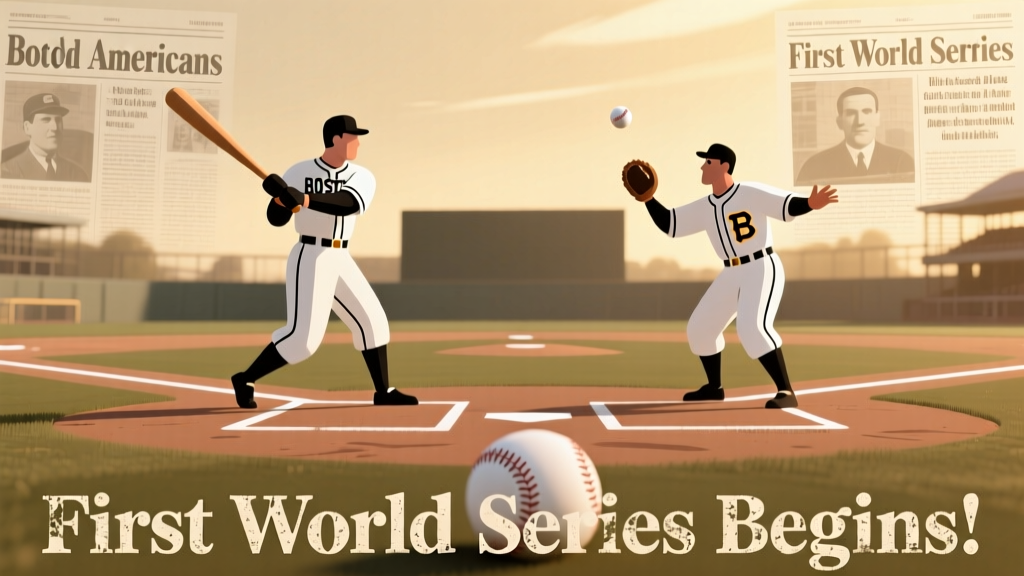
The first World Series in baseball history was played in 1903 between the Pittsburgh Pirates of the National League and the Boston Americans (now the Red Sox) of the American League, with Boston winning the best-of-nine series 5 games to 3.
What Was the First World Series?
The inaugural World Series took place in 1903 and marked the beginning of Major League Baseball's (MLB) annual championship tradition. It was a groundbreaking event that established a formal competition between the champions of the National League (NL) and the American League (AL), two rival professional leagues that had recently reconciled after years of competition.
Background and Context
Prior to 1903, there was no official interleague championship. However, growing tensions and player raids between the NL and AL led to the 1903 National Agreement, which recognized both leagues as equals and created a framework for cooperation. A key component of this agreement was the establishment of a postseason series to determine the true champion of professional baseball.
- The series was structured as a best-of-nine format.
- It featured the Pittsburgh Pirates (NL champions) vs. the Boston Americans (AL champions).
- Games were held in multiple cities, including Boston and Pittsburgh.
- Tickets were sold for up to $3 each, a significant price at the time.
- The Boston Americans won five games to three, capturing the first title.
Key Players and Moments from the 1903 World Series
The 1903 World Series showcased several legendary figures who helped shape early baseball history.
Notable Performances
- Cy Young: The famed pitcher started three games for Boston, winning two and solidifying his legacy.
- Honus Wagner: Pittsburgh’s star shortstop struggled offensively, batting just .222 in the series.
- Bill Dinneen: Won three games for Boston, including the decisive Game 8.
The series also introduced the concept of shared gate receipts, with players receiving bonuses based on ticket sales—a precedent that continues today.
Evolution of the World Series Format
Since its inception, the structure of the World Series has evolved significantly.
| Year Range | Format | Number of Games | Champion Determination |
|---|---|---|---|
| 1903, 1919–1921 | Best-of-nine | Up to 9 | First to win 5 games |
| 1905–Present (except 1919–1921) | Best-of-seven | Up to 7 | First to win 4 games |
| 1904 | No Series | 0 | New York Giants refused to play |
| 1919 | Best-of-nine | 8 | Cincinnati Reds beat Chicago White Sox (Black Sox Scandal) |
| 1994 | No Series | 0 | Cancelled due to players' strike |
The transition from best-of-nine to best-of-seven in 1905 standardized the format and improved scheduling efficiency. The 1904 cancellation prompted MLB to formalize the World Series as a mandatory event starting in 1905, ensuring continuity despite occasional disruptions like the 1994 strike.
Historical Significance and Legacy
The 1903 World Series laid the foundation for what would become one of the most iconic events in American sports. Its success validated the American League as a legitimate major league and helped unify professional baseball under a shared competitive structure.
- Established the modern postseason system.
- Boosted national interest in baseball.
- Set financial precedents through profit-sharing and player bonuses.
- Paved the way for future expansions and playoff formats.
Today, the World Series remains the pinnacle of MLB, watched by millions worldwide and steeped in tradition stemming directly from that first contest in 1903.
Frequently Asked Questions About the First World Series
When was the first World Series played?
The first World Series was played in October 1903 between the Pittsburgh Pirates and the Boston Americans, with Boston winning the series 5 games to 3.
Why was the 1903 World Series significant?
It was the first official championship series between the National and American Leagues, establishing a unified structure for professional baseball and ending interleague rivalry through competition rather than conflict.
Was there a World Series every year since 1903?
No. There was no World Series in 1904 because the New York Giants refused to play, and it was canceled in 1994 due to a players' strike.
What was the format of the first World Series?
The 1903 World Series used a best-of-nine format, where the first team to win five games claimed the title. This format was used again only briefly before switching permanently to best-of-seven in 1905.
Who won the first World Series in baseball history?
The Boston Americans (now known as the Boston Red Sox) won the first World Series in 1903 by defeating the Pittsburgh Pirates 5 games to 3.
More Articles
 What Does DS Mean in Volleyball? Explained
 Super Bowl LVIII Games Until: Full Playoff Breakdown
 How Long Is a Cricket Game? Format-by-Format Breakdown
 How Long Does a Rugby Game Last? Full Timing Explained
 When Is NFL Pro Bowl 2025? Dates, Location & How to Watch
 What Size Baseball Bat Should I Use?
 How Are Football Bowl Games Determined?
 Who Invented Baseball? The True History
 Who Started Tennis? The Inventor of Modern Tennis
 Michael Jordan's Baseball Number Was 45