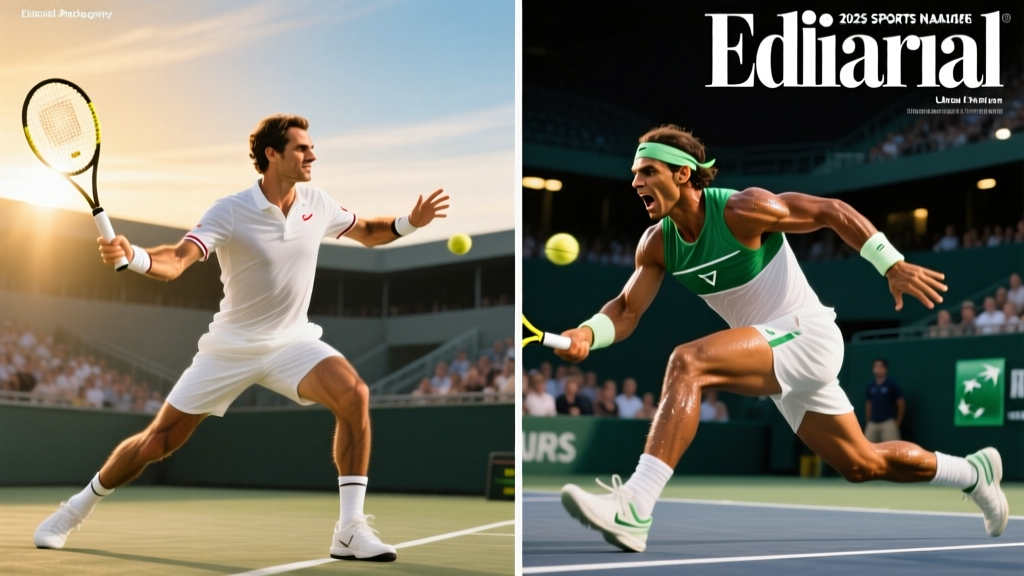
Who Is the Best Tennis Player Ever? GOAT Debate 2025
When discussing who is the best tennis player ever, the most widely accepted answer among experts and fans alike is Roger Federer, Rafael Nadal, and Novak Djokovic—collectively known as the 'Big Three'—with Novak Djokovic currently holding the edge due to his record Grand Slam titles, weeks at World No.1, and superior head-to-head records across all surfaces.
The Case for the Greatest: Defining Tennis Greatness
Determining the greatest tennis player of all time requires evaluating multiple factors beyond just titles. While opinions vary, objective metrics such as Grand Slam victories, weeks ranked World No.1, dominance across surfaces, longevity, and head-to-head performance provide a comprehensive framework.
Key Factors in Evaluating GOAT Status
- Number of Grand Slam singles titles
- Weeks spent as ATP World No.1
- Performance across all surfaces (clay, grass, hard court)
- Head-to-head records against top rivals
- Olympic and team competition success (Davis Cup, etc.)
- Longevity and consistency over multiple decades
Novak Djokovic: The Statistical Leader
As of October 2025, Novak Djokovic holds the most significant milestones in men's tennis history. His unparalleled consistency, mental toughness, and adaptability have allowed him to surpass previous benchmarks set by legends like Pete Sampras and Roger Federer.
Djokovic's Major Achievements
- 24 Grand Slam singles titles (all-time record)
- Over 400 weeks at ATP World No.1 (record)
- Only player to win each Grand Slam tournament at least three times
- Triple Career Grand Slam (won each major three or more times)
- Best hard-court player in history with 10 Australian Open titles
Roger Federer: The Global Icon
Roger Federer revolutionized modern tennis with his elegant style, unmatched sportsmanship, and global appeal. Though retired from professional play, his influence on the sport remains profound.
Federer's Legacy Highlights
- 20 Grand Slam titles
- Wimbledon record of 8 titles (men's singles)
- Held World No.1 ranking for 310 weeks (second all-time)
- Played in 31 Grand Slam finals
- Won ATP Finals six times
- Broad international fanbase and cultural impact
Rafael Nadal: The King of Clay
Rafael Nadal's dominance on clay courts is unmatched in tennis history. His physical intensity, topspin-heavy forehand, and relentless defense redefined what was possible on red dirt.
Nadal's Signature Accomplishments
- 22 Grand Slam titles, including a record 14 French Open victories
- Only man to win 100+ titles at a single Grand Slam (Roland Garros)
- Won Olympic gold in singles (2008) and doubles (2016)
- Completed Career Golden Slam (all four majors + Olympic gold)
- Known for resilience and injury-defying performances
Historical Context: Other Contenders
Before the Big Three era, several players were considered the greatest of their time. Their achievements laid the foundation for today’s standards.
Past Legends Who Shaped the Game
- Pete Sampras: 14 Grand Slams, dominated Wimbledon (7 titles), held No.1 spot for 286 weeks.
- Rod Laver: Only player to win two calendar-year Grand Slams (1962, 1969).
- Björn Borg: 11 Grand Slams, won 6 French Open and 5 Wimbledon titles before retiring at 26.
- Ivan Lendl: 8 Grand Slams, first true baseline power player, spent 270 weeks at No.1.
| Player | Grand Slam Titles | Weeks at No.1 | Year-End No.1 Finishes | Australian Open | French Open | Wimbledon | US Open |
|---|---|---|---|---|---|---|---|
| Novak Djokovic | 24 | 428+ | 8 | 10 | 3 | 7 | 4 |
| Rafael Nadal | 22 | 209 | 5 | 2 | 14 | 2 | 4 |
| Roger Federer | 20 | 310 | 5 | 6 | 1 | 8 | 5 |
| Pete Sampras | 14 | 286 | 6 | 2 | 0 | 7 | 5 |
| Rod Laver | 11* | N/A | 5 | 2 | 2 | 4 | 3 |
The data clearly shows Djokovic leading in total Grand Slam titles and weeks at World No.1, while Nadal dominates on clay with an unprecedented 14 French Open titles. Federer excels at Wimbledon with 8 titles, second only to his own legacy. These statistics underscore how the Big Three have raised the bar beyond previous generations.
Comparative Analysis: Strengths Across Eras
Each member of the Big Three has unique strengths that contribute to their claim:
- Djokovic: Best returner in history, unmatched versatility, peak longevity.
- Nadal: Unrivaled clay mastery, physical endurance, mental fortitude.
- Federer: Pioneered aggressive baseline play, exceptional net skills, broad surface success.
Their sustained rivalry—over 50 meetings, including numerous Grand Slam finals—has elevated the competitive standard of men’s tennis.
Frequently Asked Questions About the Best Tennis Player Ever
Who has the most Grand Slam titles in tennis history?
As of October 2025, Novak Djokovic holds the record with 24 Grand Slam singles titles, surpassing Rafael Nadal (22) and Roger Federer (20). In women’s tennis, Margaret Court leads with 24 titles, closely followed by Serena Williams with 23.
Why is Novak Djokovic considered the greatest?
Djokovic is often seen as the greatest due to his record 24 Grand Slam titles, over 400 weeks ranked World No.1, and being the only player to win each major at least three times. He also leads the head-to-head records against both Federer and Nadal.
Has any tennis player won all four Grand Slams in one year?
Yes, but it is extremely rare. Rod Laver achieved this twice (1962, 1969), making him the only player to complete the calendar-year Grand Slam in the Open Era. Steffi Graf did it in 1988, combining all four majors with Olympic gold—the Golden Slam.
How does Roger Federer compare to Djokovic and Nadal?
Federer has fewer Grand Slam titles (20) than Djokovic and Nadal but is praised for his artistry, influence, and consistency. He held the No.1 ranking for 310 weeks and reached 31 major finals. However, Djokovic leads their head-to-head 27–23, and Nadal leads 24–16, especially on clay.
Is the debate over the GOAT settled?
While statistics favor Djokovic, the debate remains subjective. Fans often prioritize different values—elegance (Federer), passion (Nadal), or dominance (Djokovic). With evolving careers and new players emerging, the conversation continues, though Djokovic currently holds the strongest statistical case.
More Articles
 What Does 643 Mean in Baseball? Explained
 Who Won the 2015 Super Bowl? Patriots vs Seahawks
 Super Bowl LVIII Final Score: Chiefs 25-22 49ers
 How Many Super Bowls Has Aaron Rodgers Won?
 Who Played in Super Bowl 2022? Teams, Score & Highlights
 Where Is Tennis Player Nadal From? | Origin & Career Facts
 Who Is Boxing Tonight? Inoue vs. Goodman Fight Details
 What Year Did Michael Jordan Play Baseball? | 1994 Facts
 How Many Super Bowls Did Brady Lose? 3 Defeats Explained
 What Time Is the Super Bowl on TV in 2025?