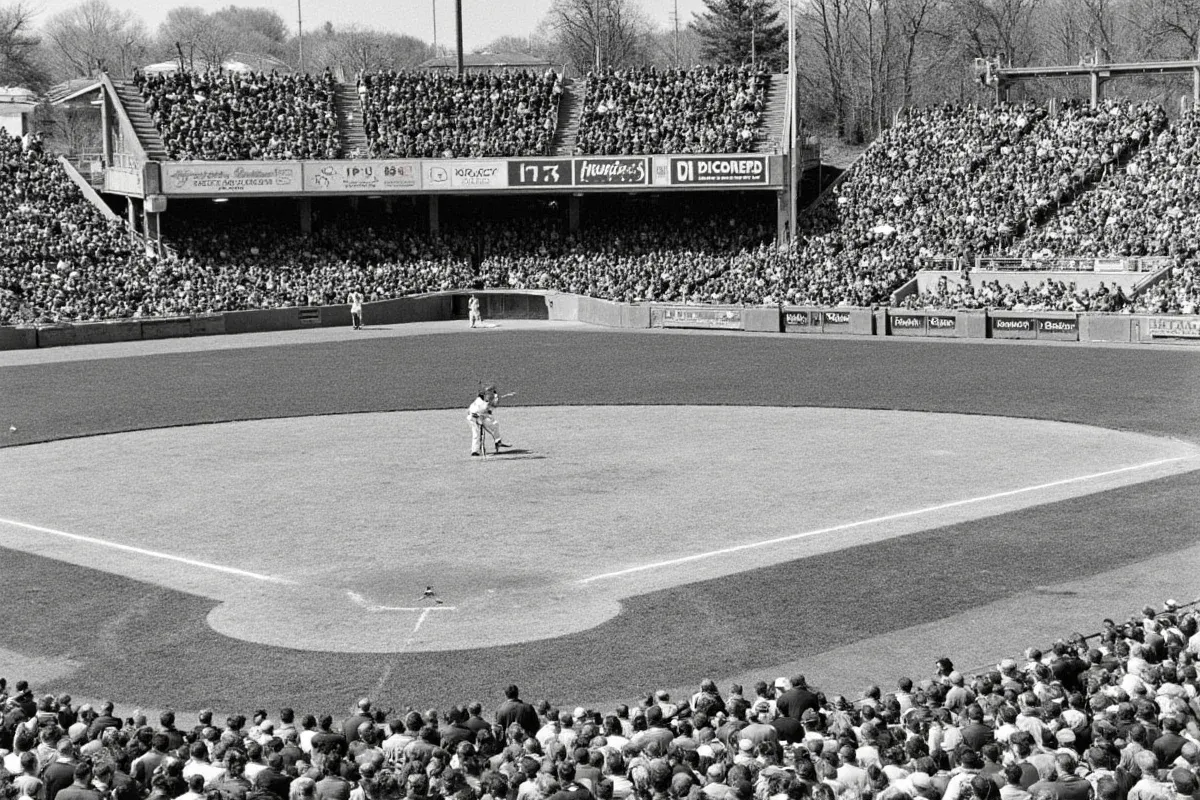
When Did Baseball Start? Origins and Key Milestones
Baseball began in the mid-19th century, with the first recorded game played in 1846 in Hoboken, New Jersey, based on rules formalized by Alexander Cartwright in 1845.
The Origins of Baseball: How and When Did It Start?
Baseball as we know it today originated in the United States in the 1840s. While bat-and-ball games date back centuries in England—such as rounders—the modern codified version of baseball emerged in New York City. The pivotal moment came in 1845 when Alexander Cartwright, a member of the New York Knickerbockers Base Ball Club, established a set of 20 rules that distinguished baseball from earlier games.
Key Developments Leading to Modern Baseball
- The first official game under Cartwright’s rules was played on June 19, 1846, between the Knickerbockers and the New York Nine at Elysian Fields in Hoboken, NJ.
- The New York Nine won the game 23–1 in four innings.
- Cartwright’s rules introduced the diamond-shaped infield, foul lines, and three-strike rule—foundations still used today.
- The National Association of Base Ball Players (NABBP) formed in 1857, standardizing rules and organizing competition.
- The first professional team, the Cincinnati Red Stockings, was established in 1869.
Evolution of Professional Leagues
From amateur clubs, baseball rapidly evolved into a professional sport. The establishment of organized leagues helped solidify its place in American culture.
Milestones in League Development
- 1871: Formation of the National Association of Professional Base Ball Players—the first professional league.
- 1876: Founding of the National League (NL), which brought stability and credibility.
- 1901: Creation of the American League (AL), leading to the first World Series in 1903.
- 1920: End of the "Dead Ball Era" and rise of power hitters like Babe Ruth.
| Year | Event | Significance |
|---|---|---|
| 1845 | Alexander Cartwright codifies rules | Foundation of modern baseball structure |
| 1846 | First recorded game (Knickerbockers vs. New York Nine) | Official start of organized play |
| 1857 | National Association of Base Ball Players forms | Standardization among clubs |
| 1869 | Cincinnati Red Stockings become first pro team | Birth of professional baseball |
| 1876 | National League founded | Establishment of major league structure |
| 1903 | First World Series (Boston Americans vs. Pittsburgh Pirates) | Unification of AL and NL |
The timeline shows how baseball transitioned from informal recreation to a structured professional sport within 60 years. Key institutional developments—especially the codification of rules and formation of leagues—were critical to its growth and longevity.
Frequently Asked Questions About When Baseball Started
When was the first official baseball game played?
The first official baseball game was played on June 19, 1846, in Hoboken, New Jersey, between the New York Nine and the Knickerbocker Base Ball Club. The New York Nine won 23–1.
Who invented baseball?
While Abner Doubleday was once credited, modern historians recognize Alexander Cartwright as the key figure in formalizing the rules of baseball in 1845. His contributions laid the foundation for the modern game.
Was baseball always a professional sport?
No, baseball began as an amateur pastime. The first fully professional team, the Cincinnati Red Stockings, was formed in 1869. The National League, established in 1876, marked the beginning of stable professional baseball.
How did baseball spread across the United States?
Baseball spread through Civil War soldiers who played the game in camps, newspapers reporting on matches, and the formation of regional clubs. By the 1870s, teams existed in major cities nationwide, accelerating its popularity.
What is the significance of the year 1845 in baseball history?
1845 is pivotal because Alexander Cartwright and the Knickerbockers established 20 rules that defined the game—creating the diamond field layout, setting nine-inning games, and eliminating soft-toss pitching. These rules became the blueprint for modern baseball.
More Articles
 How Much Do AAA Baseball Players Make in 2025?
 Where and When Was Baseball Invented? Origins Explained
 2025 Cotton Bowl Start Time, Teams, and How to Watch
 Who Owns PING Golf? Company Ownership Explained
 What Does Suspended Mean in Tennis? Explained
 Where Is the Super Bowl 2025? Location Revealed
 Twins Play Today at 6:40 PM CT - Full Game Details
 How Much Does Club Fitting Cost at Golf Galaxy?
 Who Won Super Bowl 41? Colts Beat Bears 29-17
 Where to Get Bowling Ball Drilled: Best Options & Costs