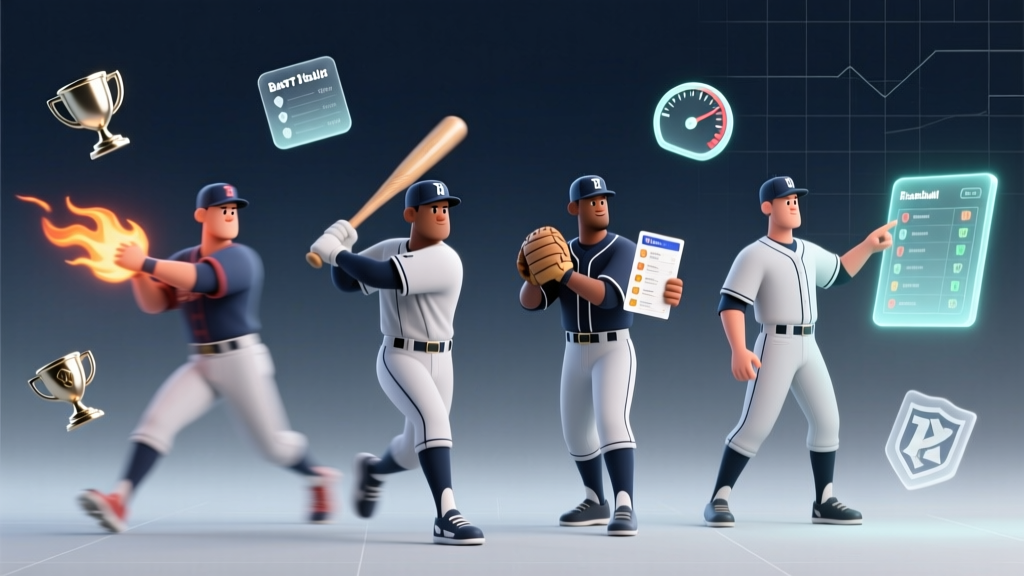
Who Should I Draft in Fantasy Baseball? Top Picks & Strategy
If you're wondering who should I draft fantasy baseball, prioritize starting pitchers with high strikeout rates and reliable starters, stack middle-of-the-order hitters from top offenses, and target breakout candidates with rising skills metrics. Avoid injury-prone players early and balance risk across your roster.
Understanding Fantasy Baseball Draft Strategy
Drafting a winning fantasy baseball team requires more than just picking star players. Success hinges on understanding player roles, positional scarcity, injury history, and statistical trends. The best fantasy managers combine data-driven analysis with strategic planning to build balanced, high-upside rosters.
Key Factors in Player Selection
- Positional Scarcity: Shortstop and catcher often lack elite offensive producers, making top-tier options at these positions highly valuable.
- Injury History: Players with recurring injuries may offer high ceilings but carry significant risk, especially in shallow leagues.
- Home Park Impact: Ballpark factors (e.g., Coors Field boosting offense) can significantly influence hitter performance.
- Skill Development Trends: Rising exit velocity, hard-hit rate, or swinging-strike rate improvements signal breakout potential.
- Role Stability: Closer saves and leadoff batters provide consistent category contributions.
Top Player Types to Target in Your Draft
Focusing on specific player archetypes increases your chances of building a competitive lineup throughout the season.
Elite Starting Pitchers
Starting pitchers who consistently rack up strikeouts and limit walks are cornerstone assets. Look for SPs with sub-3.50 ERA, above-average K/9, and strong FIP (Fielding Independent Pitching).
Middle-of-the-Order Hitters
Batters in the 3rd–5th spots in strong lineups get more RBI opportunities and runs scored. Prioritize those with high on-base percentages and power potential.
Breakout Candidates
Players showing improved Statcast metrics (e.g., barrel rate, expected slugging) without yet receiving full mainstream attention offer great value in later rounds.
Everyday Position Players
Consistent playing time is crucial. Favor players projected for 140+ games at premium positions like SS, 2B, or CF.
Pitcher vs. Hitter Balance
Many managers over-draft hitters early. While offense is flashy, elite pitching wins championships. A common optimal strategy is a 6:4 or 7:5 ratio of hitters to pitchers in 12-team mixed leagues.
| Player | Position | 2024 AVG | 2024 HR | 2024 K/9 | Team | Fantasy Points (per game) |
|---|---|---|---|---|---|---|
| Shohei Ohtani | OF/DH | .282 | 30 | N/A | LA Dodgers | 9.8 |
| Mookie Betts | OF/2B | .290 | 23 | N/A | LA Dodgers | 8.7 |
| Aaron Judge | RF | .276 | 37 | N/A | NY Yankees | 9.1 |
| Gerrit Cole | SP | N/A | N/A | 9.8 | NY Yankees | 8.9 |
| Zack Wheeler | SP | N/A | N/A | 9.5 | Philadelphia Phillies | 8.4 |
| Ronald Acuña Jr. | OF | .289 | 41 | N/A | Atlanta Braves | 10.3 |
The data shows that top-tier two-way players like Shohei Ohtani and Ronald Acuña Jr. deliver elite per-game fantasy production. Meanwhile, high-strikeout starting pitchers like Gerrit Cole remain essential, offering near-hitter-level output despite being pitchers. This reinforces the importance of drafting impact players regardless of position.
Late-Round Sleepers and Value Picks
Smart late-round selections can make or break your season. Target players with favorable platoon splits, upcoming schedule advantages, or recent position changes that increase at-bats.
Examples of High-Upset Potential
- James Wood (OF, WSH): Elite prospect with power-speed upside, likely to see increased ABs mid-season.
- Dominic Smith (1B/OF, NYM): After resurgence in limited role, could earn starting spot if underperformers falter.
- Grayson Rodriguez (SP, BAL): When healthy, posts ace-level stuff—ideal for stash-and-stream strategies.
Common Draft Mistakes to Avoid
Even experienced managers fall into traps. Recognizing these pitfalls improves draft efficiency.
- Drafting based on last year’s stats alone: Aging curves, park changes, and lineup shifts matter.
- Ignoring spring training performance: Strong showings can confirm mechanical improvements.
- Overvaluing closers too early: Save totals are volatile; wait until middle rounds unless it's an elite lock.
- Reaching for favorite team players: Bias clouds judgment—stick to objective rankings.
Frequently Asked Questions About Who Should I Draft in Fantasy Baseball
Who should I draft first in fantasy baseball?
The top picks should be players with proven consistency, high ceiling, and low injury risk—typically elite hitters like Ronald Acuña Jr., Shohei Ohtani, or Mookie Betts. These players provide across-the-board category dominance and stable production.
Should I draft a pitcher in the first round?
Yes, if it's a true ace like Gerrit Cole or Spencer Strider. Pitching is scarcer than hitting, so taking a top-tier starter early can give you a significant edge, especially in points or head-to-head formats.
Who are the best late-round draft targets in 2025?
Look for players like James Wood, Chase DeLauter, and Grayson Rodriguez. They offer high upside with moderate risk, ideal for rounds 15–20. Also consider bounce-back candidates like Cody Bellinger or Anthony Rendon if health improves.
Is it better to draft hitters or pitchers early?
Balance is key. Most experts recommend taking 2–3 elite hitters early, then securing a top pitcher by Round 4–5. However, in points leagues, top pitchers may warrant earlier selection due to their scoring consistency.
How do I decide between two similar players?
Compare their home ballpark, projected lineup protection, health history, and strength of schedule. Use advanced metrics like xwOBA, barrel rate, and K-BB% to differentiate based on underlying skills rather than surface stats.
More Articles
 Taekwondo Belt Order: Full Ranking System Explained
 How Many Games in Baseball? MLB Season Breakdown
 Where to Watch Major League Baseball in 2025
 Where Was Rugby Invented? The True Origin Story
 When Did Baseball Start? Origins and Key Milestones
 Who Plays in the Rose Bowl Stadium? Teams & Events
 Why Baseball & Golf Players Tuck In Shirts
 How Many Super Bowl MVPs Does Tom Brady Have?
 Who Won Super Bowl 2013? Ravens Beat 49ers 34-31
 Who Plays at the Cotton Bowl? Teams and Events Explained