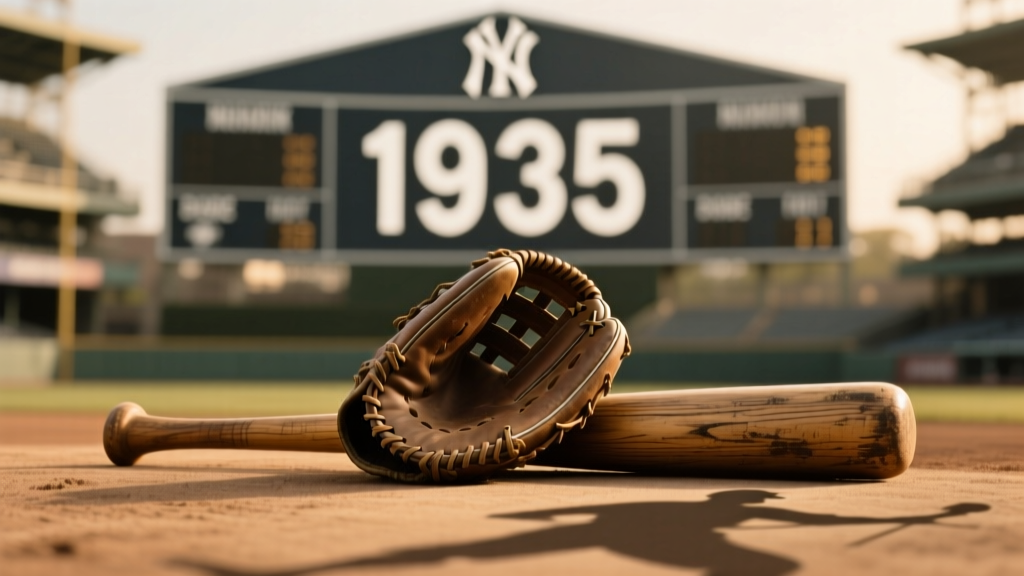
When Did Babe Ruth Retire From Baseball? Final Year Revealed
Babe Ruth retired from Major League Baseball in 1935 after playing his final game on May 30 with the Boston Braves. Widely regarded as one of the greatest baseball players in history, Ruth's retirement marked the end of a legendary 22-year career that transformed the sport.
Who Was Babe Ruth?
Born George Herman Ruth Jr. on February 6, 1895, Babe Ruth began his professional baseball career in 1914 with the Boston Red Sox as a pitcher before emerging as a power-hitting outfielder. His larger-than-life personality and unprecedented home run prowess earned him the nickname "The Bambino" and helped popularize baseball during the Roaring Twenties.
Key Career Highlights
- 7-time All-Star (before the official All-Star Game era)
- 2-time World Series champion with the Boston Red Sox (1915, 1916)
- 4-time World Series champion with the New York Yankees (1923, 1927, 1928, 1932)
- Held the single-season home run record (60 in 1927) for 34 years
- First player to hit 30, 40, 50, and 60 home runs in a season
When Did Babe Ruth Retire and Why?
Babe Ruth officially retired from Major League Baseball on June 2, 1935, shortly after his final appearance with the Boston Braves. By this time, Ruth was 40 years old and his physical condition had significantly declined.
Factors Leading to Retirement
- Declining performance: In his final season, Ruth played only 28 games and batted .181 with six home runs.
- Health issues: He suffered from various ailments, including what would later be diagnosed as throat cancer.
- Team dynamics: Tensions arose with Braves management over his role and public appearances.
- Desire for legacy preservation: Ruth chose to retire rather than continue in diminished capacity.
Babe Ruth's Final Season: 1935 with the Boston Braves
In a symbolic move to revitalize his career, Ruth signed with the Boston Braves in 1935, hoping to contribute as a player and assistant manager. However, his time with the team lasted just two months.
| Statistic | 1935 (Boston Braves) |
|---|---|
| Games Played | 28 |
| At-Bats | 77 |
| Runs | 12 |
| Hits | 14 |
| Home Runs | 6 |
| RBI | 13 |
| Slash Line (BA/OBP/SLG) | .181/.333/.451 |
| Last Home Run Date | May 25, 1935 |
The table shows that while Ruth’s power remained evident with six home runs in just 77 at-bats, his overall batting average (.181) indicated a steep decline in consistency. His ability to stay healthy and play regularly was no longer sustainable at the major league level.
Career Statistics and Legacy
Over 22 MLB seasons, Babe Ruth redefined offensive expectations in baseball. His career totals remain iconic:
- 714 home runs – second all-time at retirement, now fourth
- .342 lifetime batting average
- 2,873 hits and 2,214 runs scored
- OPS+ of 206 – the highest in MLB history
Ruth was among the first five players inducted into the National Baseball Hall of Fame in 1936, underscoring his monumental impact on the game.
Frequently Asked Questions About Babe Ruth's Retirement
When did Babe Ruth play his last Major League game?
Babe Ruth played his final Major League game on May 30, 1935, at Forbes Field in Pittsburgh, Pennsylvania, as a member of the Boston Braves.
Why did Babe Ruth retire in 1935?
Ruth retired due to declining performance, health problems, and limited playing time with the Boston Braves. At age 40, he could no longer perform consistently at the MLB level.
Did Babe Ruth retire as a Yankee?
No, Babe Ruth did not retire as a New York Yankee. He left the Yankees after the 1934 season and played his final year with the Boston Braves before retiring in 1935.
What did Babe Ruth do after retiring from baseball?
After retiring, Ruth made public appearances, participated in charity events, and expressed interest in managing a Major League team—though he was never hired. He passed away in 1948 from complications related to cancer.
Is Babe Ruth's retirement year part of his Hall of Fame recognition?
Yes, Babe Ruth was elected to the Baseball Hall of Fame in 1936, just one year after retiring. His 1935 retirement marked the conclusion of a career so influential that it warranted immediate enshrinement.
More Articles
 What Time Is the Super Bowl 2025? Full Schedule & Details
 What Number Was Michael Jordan in Baseball? Answer: 45
 What Baseball Cards Are Worth Money? Top Valuable Picks
 When Does PA Archery Season End? 2025 Dates
 Super Bowl LVIII MVP 2025: Patrick Mahomes Wins Third Award
 When Does Volleyball Season Start? By Level & Region
 What Day Is the 2025 Super Bowl? Key Dates & Info
 Why Beach Volleyball Players Wear Bikinis
 How Many Super Bowl Championships? Top Teams & Winners List
 How Long Are Professional Baseball Games? (2025 Data)