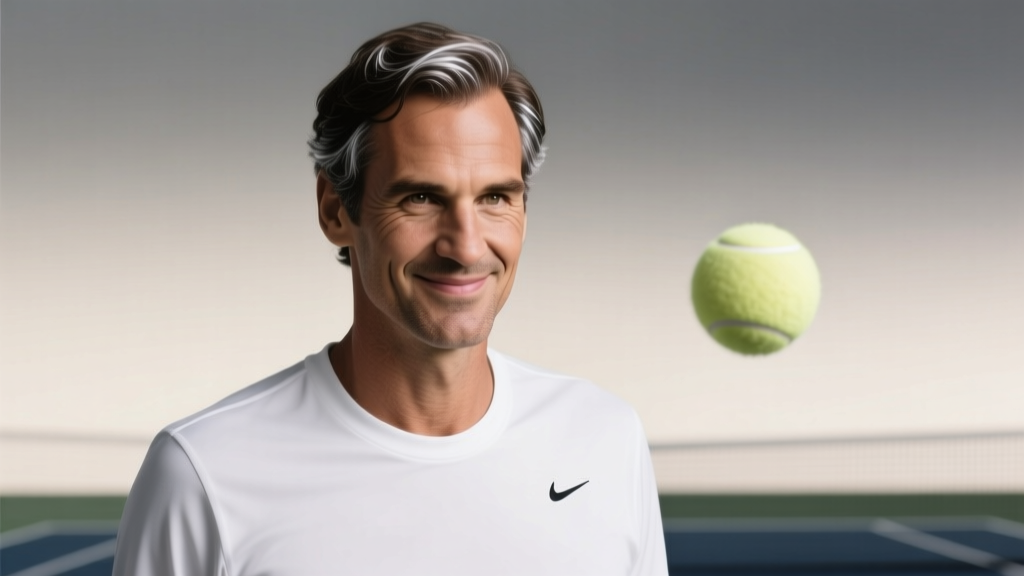
How Old Is Roger Federer? Age, Career & Legacy in 2025
Roger Federer, one of the greatest tennis players in history, was born on August 8, 1981. As of 2025, he is 44 years old. Though retired from professional tennis since 2022, his legacy continues to influence the sport globally.
Who Is Roger Federer?
Roger Federer is a Swiss former professional tennis player widely regarded as one of the most successful and elegant athletes in tennis history. Known for his fluid movement, powerful serve, and one-handed backhand, Federer dominated men's tennis during the 2000s and early 2010s.
Key Career Highlights
- Won 20 Grand Slam singles titles
- Held the World No. 1 ranking for 310 weeks, including 237 consecutive weeks
- Olympic medalist: Silver in singles (2012), Gold in doubles (2008 with Stan Wawrinka)
- Only male player to reach at least five finals in each of the four Grand Slams
- Won six ATP Finals titles
Federer’s Age Timeline in Tennis
Federer turned professional in 1998 and played his last match at the Laver Cup in September 2022. His age throughout key career milestones reflects longevity and sustained excellence.
| Milestone | Year | Age | Event |
|---|---|---|---|
| Turned Professional | 1998 | 17 | ATP Tour debut |
| First Grand Slam Title | 2003 | 21 | Wimbledon Championships |
| First Year-End No. 1 | 2004 | 23 | ATP Rankings |
| Peak Consecutive Weeks at No. 1 | 2004–2008 | 23–27 | 237 weeks |
| 20th Grand Slam Title | 2018 | 36 | Australian Open |
| Last Grand Slam Final | 2019 | 37 | Wimbledon Championships |
| Final Match | 2022 | 41 | Laver Cup (retirement match) |
The table illustrates Federer's exceptional career span, maintaining elite performance into his late 30s. His final Grand Slam final at age 37 and retirement at 41 highlight remarkable physical conditioning and strategic adaptation over time.
Why Federer’s Age Matters in Tennis History
Age plays a critical role in athletic performance, especially in a physically demanding sport like tennis. Federer’s ability to compete at the highest level past the age of 35 redefined expectations for player longevity.
Factors Behind His Longevity
- Injury Prevention: Minimal major injuries due to efficient movement and fitness regimen
- Playing Style: Offensive baseline game reduced time spent in extended rallies
- Smart Scheduling: Selective tournament participation in later years to preserve energy
- Medical Support: Advanced recovery techniques and sports science utilization
How Old Is Federer Compared to Other Tennis Legends?
Federer’s retirement at 41 places him among the oldest to exit the sport at the top level. Comparing his age trajectory with contemporaries reveals insights into modern tennis evolution.
- Rafael Nadal: Born 1986, still active in limited events as of 2025 (age 39)
- Novak Djokovic: Born 1987, competing at Grand Slams in 2025 (age 38)
- Pete Sampras: Retired at 31 after winning 14 Grand Slams
- Rod Laver: Peak in 1960s; retired from amateur era before Open Era began
Federer’s extended peak—winning majors between ages 21 and 36—sets a benchmark for sustained dominance across eras.
Frequently Asked Questions About Roger Federer’s Age and Career
How old is Roger Federer as of 2025?
Roger Federer was born on August 8, 1981. As of 2025, he is 44 years old.
When did Roger Federer retire from tennis?
Roger Federer retired from professional tennis on September 15, 2022, after playing his final match at the Laver Cup in London at the age of 41.
How old was Federer when he won his last Grand Slam?
Federer was 36 years old when he won his 20th Grand Slam title at the 2018 Australian Open, defeating Marin Čilić in the final.
Is Roger Federer older than Novak Djokovic?
Yes, Roger Federer is older than Novak Djokovic. Federer was born in 1981, while Djokovic was born in 1987, making Federer six years older.
Could Federer have played longer if not for injury?
While injuries, particularly knee issues requiring multiple surgeries, contributed to his retirement, Federer stated that declining competitive form and inability to train consistently were decisive factors. Even without injuries, sustaining elite play beyond 40 remains extremely challenging.
More Articles
 Who Won Super Bowl 2000? Rams vs Titans Full Recap
 Football Offside Rule: Complete Guide
 Highest Scoring MLB Game: 49 Runs in 1922
 How Many Super Bowl Wins Do the Chiefs Have? (2025)
 How Much Do Boxing Referees Make Per Fight?
 How Old Was Mike Tyson When He Started Boxing?
 What to Wear to a Super Bowl Party in 2025
 How Wide Is a Bowling Lane? Exact Measurements
 How Long Does the Super Bowl Last? Full Breakdown
 What Does E Mean in Baseball? Explained