
What Was Volleyball Originally Called? The True Origin
Volleyball was originally called Mintonette when it was invented in 1895 by William G. Morgan, a YMCA physical education director in Holyoke, Massachusetts. The game was designed as a less strenuous alternative to basketball for older members of the YMCA. Just one year later, in 1896, the name was changed to “volleyball” after Professor Alfred T. Halsted observed the volleying nature of the game and suggested the new name, which quickly gained popularity and stuck.
The Origins of Volleyball: From Mintonette to Global Sport
Understanding what volleyball was originally called opens a window into the sport's rich history and evolution. Invented at the turn of the 20th century, volleyball began as a quiet indoor activity but rapidly transformed into an international phenomenon.
Why Was It Initially Called Mintonette?
The name “Mintonette” was inspired by badminton, reflecting the net-based gameplay that Morgan adapted. However, unlike badminton, the new game involved hitting a ball back and forth over a raised net using hands.
- William G. Morgan sought to create a recreational activity suitable for businessmen over 40.
- The rules borrowed elements from tennis, handball, and basketball.
- The net height was set at 6 feet 6 inches (1.98 m), higher than a tennis net.
- The first match used a basketball bladder as the ball.
How Did Mintonette Become Volleyball?
During a demonstration game held at Springfield College in 1896, spectators noticed how players “volleyed” the ball back and forth across the net. This observation led Professor Alfred T. Halsted to propose the name “volleyball,” which better captured the essence of play.
The new name was officially adopted shortly after, marking the beginning of modern volleyball.
Key Milestones in Volleyball History
The transformation from Mintonette to organized competitive sport happened rapidly. Below are pivotal moments in early volleyball development:
- 1895: William G. Morgan invents Mintonette.
- 1896: First exhibition held; name changed to volleyball. \li>1916: The term “set” and “spike” were coined in the Philippines.
- 1922: Official rules established by the YMCA.
- 1947: Fédération Internationale de Volleyball (FIVB) founded.
- 1964: Volleyball debuts as an Olympic sport in Tokyo.
Evolution of Rules and Gameplay
Early versions of Mintonette had fewer standardized rules. Over time, key changes shaped the modern game:
| Feature | Mintonette (1895) | Modern Volleyball (2025) |
|---|---|---|
| Number of Players | No fixed limit | 6 per side |
| Scoring System | Side-out scoring, up to 21 | Rally scoring, up to 25 (best of 5 sets) |
| Ball Used | Inflated basketball bladder | Synthetic leather, regulation size #5 |
| Net Height | 6’6” (1.98 m) | Men: 2.43 m | Women: 2.24 m |
| Rotations | Not required | Mandatory clockwise rotation |
The data shows a clear progression from informal recreation to highly structured competition. Standardization of player count, scoring, and equipment reflects volleyball's maturation into a global sport governed by strict regulations. The shift from side-out to rally scoring in the late 1990s significantly increased game pace and spectator appeal.
Global Spread and Variants
From its American roots, volleyball quickly spread internationally through YMCA networks and military exchanges. By the 1920s, it was played in over 20 countries.
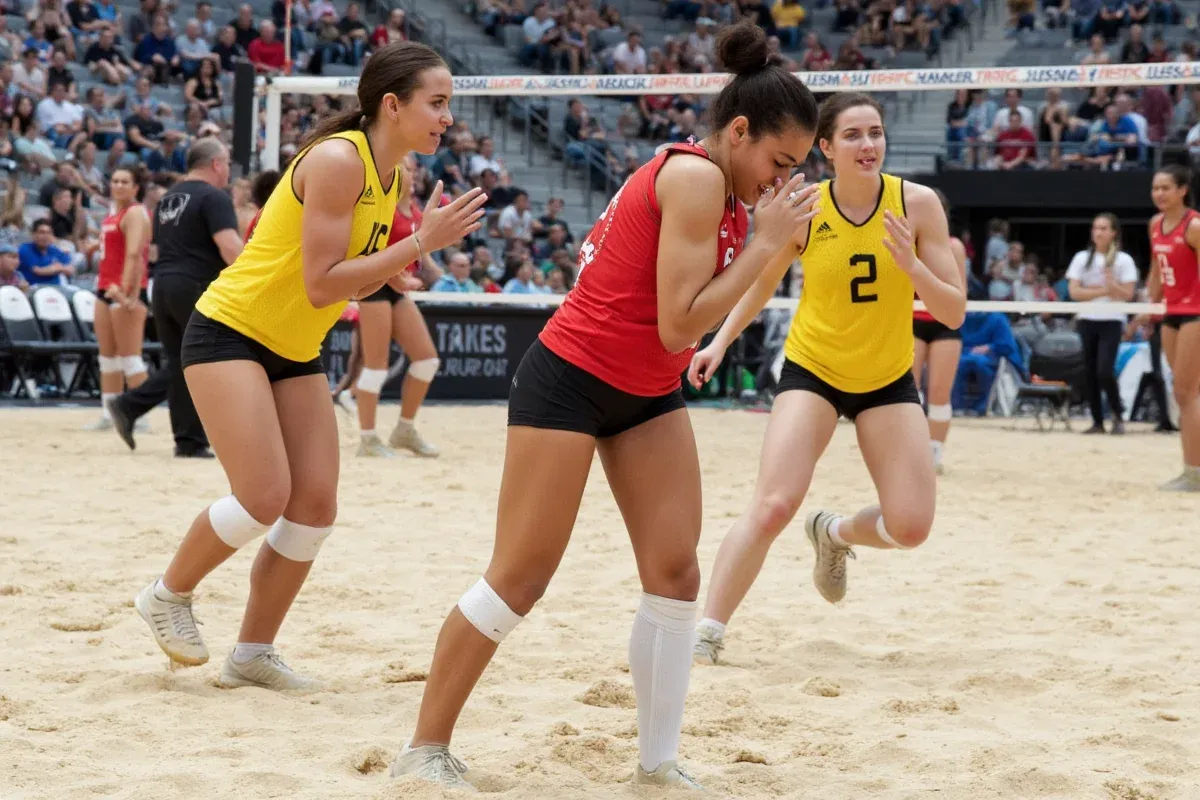
- Beach Volleyball: Emerged in Santa Monica, California in the 1930s; became an Olympic event in 1996.
- Sitting Volleyball: Adapted for athletes with disabilities; introduced at the Paralympics in 1980.
- Soft Volleyball: Popular in Japan; uses a softer ball to reduce injury risk.
Frequently Asked Questions About What Volleyball Was Originally Called
What was volleyball first called before it got its current name?
Volleyball was first called Mintonette when it was created in 1895 by William G. Morgan. The name was changed to “volleyball” in 1896 due to the volleying style of play.
Who invented volleyball and why did they create it?
William G. Morgan invented volleyball (originally Mintonette) to provide a less physically demanding alternative to basketball for older YMCA members. He wanted a game that combined elements of tennis and handball but could be played indoors without running.
When did Mintonette officially become known as volleyball?
Mintonette was renamed “volleyball” in 1896 during a demonstration at Springfield College. Professor Alfred T. Halsted suggested the new name based on the way players hit the ball back and forth in mid-air.
Is Mintonette still played today under its original name?
No, Mintonette is no longer played under that name. All forms of the sport today fall under the umbrella of “volleyball,” including indoor, beach, and sitting variations. The original version has evolved significantly.
Why is knowing the original name of volleyball important?
Knowing that volleyball was once called Mintonette helps us appreciate its historical context and design purpose—as a low-impact, accessible sport. It also highlights how innovation and terminology evolve alongside athletic culture and global adoption.
More Articles
 Who Won Super Bowl 1992? Full Recap & Stats
 How Many Baseball Games in a Regular Season? 162 Explained
 Rose Bowl Start Time Today: What Time Is It?
 How Big Is a Table Tennis Ball? Official Size & Specs
 What Causes Tennis Elbow? Key Factors Explained
 Who Did Deion Sanders Play Baseball For?
 Where Did Squash Originate? History & Facts
 How Old Is Golfer Ernie Els in 2025? Age, Career & Facts
 Rose Bowl Game Today: Start Time, Teams, How to Watch
 What Does a Libero Do in Volleyball? Key Role Explained