
How Long Are Tennis Matches? Duration by Format & Event
Tennis matches vary in length depending on format, gender, and competition rules. Grand Slam men's matches can last up to 5 hours or more, while women's and ATP/WTA tour matches typically range from 1.5 to 3 hours. Best-of-five sets extend match duration significantly compared to best-of-three.
Understanding Tennis Match Duration
The length of a tennis match depends on several factors including the tournament type, gender of players, set format, and whether a final set tiebreak is used. Unlike timed sports, tennis relies on scoring systems that make durations highly variable.
Key Factors Influencing Match Length
- Match Format: Best-of-three sets (common in women’s and most men’s events) vs. best-of-five (men’s Grand Slams).
- Tournament Rules: Use of final-set tiebreaks (e.g., US Open, Wimbledon) affects total playing time.
- Player Style: Baseline rallies extend play; aggressive net players may shorten points.
- Court Surface: Clay slows gameplay; grass speeds it up.
- Player Fitness & Stamina: Longer rallies increase fatigue, potentially prolonging matches.
Match Duration by Tournament Type
Different tournaments enforce distinct formats that directly impact average match times. Grand Slams have longer potential durations due to best-of-five sets for men.
| Tournament | Gender | Sets Format | Avg. Duration (min) | Longest Recorded Match |
|---|---|---|---|---|
| Australian Open | Men | Best of 5 | 150–180 | 5h 56m (Isner–Mahut 2010) |
| French Open | Men | Best of 5 | 160–200 | 4h 39m (Nadal–Federer 2008 Final) |
| Wimbledon | Men | Best of 5 | 140–170 | 11h 5m over 3 days (Isner–Mahut 2010) |
| US Open | Women | Best of 3 | 90–120 | 3h 23m (Williams–Robinson 2019) |
| ATP Tour Event | Men | Best of 3 | 90–130 | 4h 12m (del Potro–Federer 2011) |
| WTA Tour Event | Women | Best of 3 | 85–115 | 4h 44m (Schiavone–Kuznetsova 2011) |
The data shows men’s Grand Slam matches average over two hours, with clay and grass courts influencing pace. The Isner-Mahut 2010 Wimbledon match remains the longest in history at nearly 12 hours across three days. Women’s matches, limited to best-of-three sets, generally finish under two hours but can exceed four in extreme cases.
How Scoring Affects Time
Tennis uses a unique point system—15, 30, 40, game—that can lead to extended games if deuces repeat. Tiebreaks at 6–6 in sets help control duration, though some tournaments only apply them in final sets.
Scoring Elements That Extend Play
- Deuce and advantage scoring prolong individual games.
- No shot clock in most events allows longer breaks between points.
- Medical timeouts and challenges add minutes.
- Final set without tiebreak (pre-2019 rule changes) could result in very long sets (e.g., 70–68).
Recent Rule Changes to Limit Duration
To improve viewer experience and player safety, major tournaments have adopted time controls:
- Shot Clock: 25 seconds between points enforced with penalties.
- Final Set Tiebreaks: Introduced at all Grand Slams post-2018 (e.g., first to 10 points at 6–6).
- Retractable Roofs: Reduce weather delays, maintaining consistent scheduling.
Frequently Asked Questions About Tennis Match Length
How long does an average tennis match last?
Most professional tennis matches last between 1.5 and 3 hours. Best-of-three set matches (women’s and non-Slam men’s) average 90–120 minutes, while best-of-five Grand Slam men’s matches often run 2.5 to 5 hours.
What was the longest tennis match in history?
The longest match was John Isner vs. Nicolas Mahut at Wimbledon 2010, lasting 11 hours and 5 minutes over three days. The final set ended 70–68 in favor of Isner.
Why do men play best of five sets in Grand Slams?
Historically, men’s tennis has used best-of-five sets in majors to test endurance and superiority. This format rewards consistency and physical stamina, distinguishing Grand Slam events from regular tour matches.
Do women ever play best of five sets?
No, WTA rules mandate best-of-three sets for all women’s professional matches, including Grand Slams. There has been debate about equality, but no major change has been implemented as of 2025.
How do court surfaces affect match length?
Clay courts produce longer rallies and slower points, increasing match duration. Grass courts favor faster serves and shorter points, reducing overall time. Hard courts are intermediate, balancing speed and playability.
More Articles
 Where Was Boxing Invented? Origins & Evolution
 Who Is the Best Boxer in the World Right Now? (2025)
 Rose Bowl Capacity: How Many People Can It Hold?
 Has Lamar Jackson Been to a Super Bowl? Answer & Analysis
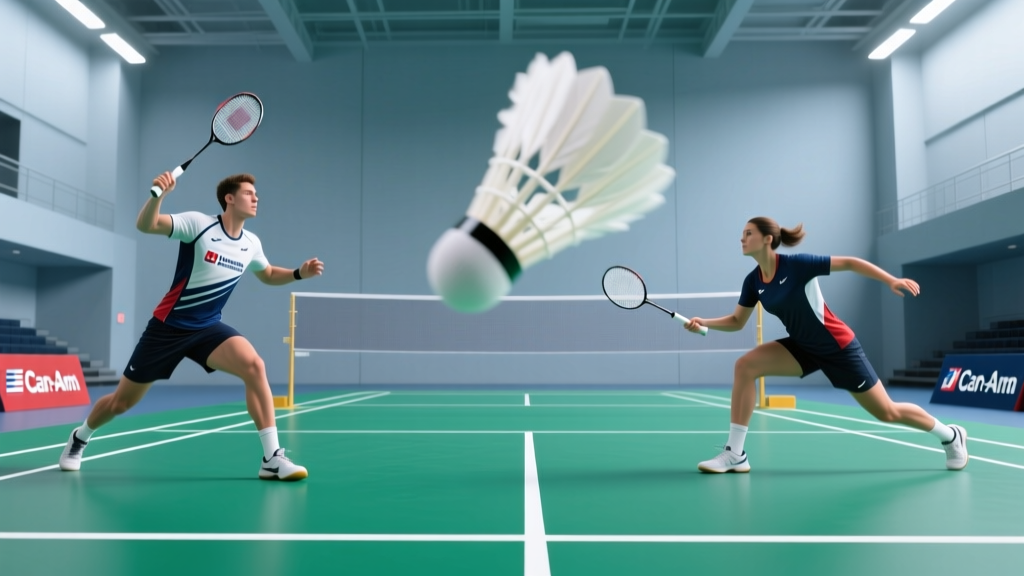 Can Am Badminton: Top North American Tournament Explained
 Where Does the Super Bowl Take Place? Host Cities Explained
 How Many Golf Courses Are in America? (2025 Data)
 When Is the Waste Management Golf Tournament in 2026?
 Who Won Super Bowl 1992? Full Recap & Stats
 How Long Is a Rugby Match in the Olympics?