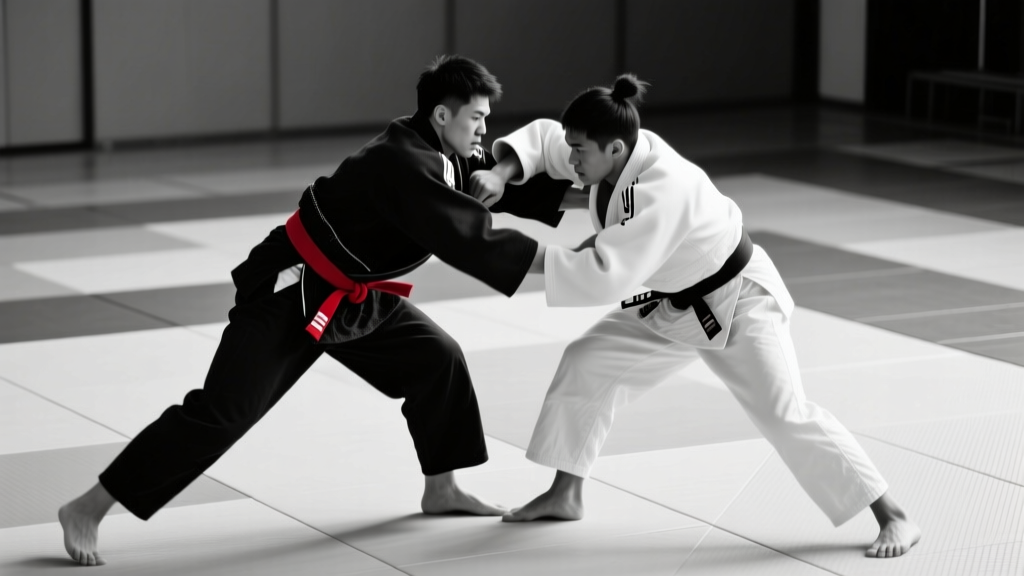
How Is Judo Scored? Ippon, Waza-Ari & Penalties Explained
In judo, points are scored through throws, holds, and penalties. A perfect throw (ippon) ends the match immediately, while lesser throws earn waza-ari or yuko. Control on the ground via osaekomi for 20 seconds scores ippon; penalties (shido) accumulate to deductions or disqualification.
How Judo Scoring Works: The Basics
Judo scoring rewards effective technique, control, and discipline. The International Judo Federation (IJF) governs global competition rules, ensuring consistency across tournaments like the Olympics and World Championships. Understanding how points are awarded helps athletes, coaches, and fans appreciate the sport’s strategic depth.
Key Scoring Actions in Judo
- Ippon: Full point, ends match instantly
- Waza-ari: Half-point; two equal one ippon
- Yuko: Minor point (no longer used in elite senior competitions as of 2017)
- Osaekomi: Hold-down leading to submission or pin duration
- Shido: Penalty for rule violations
Scoring by Technique: Throws and Pins
The primary goal in judo is to score an ippon, which can be achieved in several ways:
When Is an Ippon Awarded?
An ippon is given when a technique demonstrates complete control, power, and precision. It immediately wins the match.
- A throw that lands opponent on their back with force and control
- A hold-down maintained for 20 consecutive seconds
- Submission via arm lock or choke
- Opponent receives three shido penalties
What Counts as Waza-Ari?
Waza-ari is awarded for techniques that are strong but lack full impact or control.
- Throw where opponent lands partially on back
- Hold-down lasting between 15–19 seconds
- Two waza-ari scores combine into one ippon
Penalties and Their Impact on Scoring
Poor sportsmanship, stalling, or illegal moves result in shido penalties. These directly affect outcomes:
- First shido: Warning
- Second shido: Opponent earns yuko (in lower levels), now primarily leads to advantage recognition
- Third shido: Opponent awarded waza-ari
- Fourth shido: Automatic ippon loss (disqualification)
Penalties emphasize fair play and active engagement, discouraging passive strategies.
Detailed Scoring Breakdown: Real Competition Data
To illustrate how scoring unfolds in actual matches, here's data from recent IJF World Judo Tour events (2023–2024 season).
| Event | Total Matches | Ippon Wins (%) | Waza-ari Accumulation Wins | Penalty-Based Wins | Golden Score Decisions |
|---|---|---|---|---|---|
| 2023 World Championships | 486 | 41% | 18% | 9% | 22% |
| 2024 Paris Grand Slam | 320 | 38% | 21% | 7% | 25% |
| 2024 Olympic Qualifier - Abu Dhabi | 275 | 43% | 16% | 11% | 19% |
| Average Across Events | ~360 | 40.7% | 18.3% | 9.0% | 22.0% |
Data shows that over 40% of matches end by ippon, highlighting the effectiveness of high-level throwing techniques. Penalty-based wins account for nearly 1 in 10 victories, underscoring the importance of discipline. Golden score (overtime) decisions remain common, indicating tight competition at elite levels.
Frequently Asked Questions About Judo Scoring
What is the highest score in judo?
The highest score in judo is ippon. It immediately ends the match and declares the scoring athlete the winner. An ippon can be earned through a perfect throw, a 20-second hold-down, or submission via choke or arm lock.
Do two waza-ari equal an ippon?
Yes, two waza-ari scores combine to make one ippon. This rule, known as "waza-ari awasete ippon", has been reinstated by the IJF and is actively used in all major competitions since 2017.
Is yuko still used in judo scoring?
No, yuko is no longer used in senior elite judo competitions as of 2017. The IJF removed it to simplify scoring and encourage more dynamic, high-impact throws. Lower-tier or youth divisions may still use it for developmental purposes.
How long must a pin last to score ippon?
A pin (osaekomi) must be maintained for 20 consecutive seconds to score ippon. The referee counts aloud and stops the clock if control is broken. At 10 seconds, the attacking athlete earns toketa (escape), and at 15 seconds, a waza-ari is awarded.
Can you win judo by points without ippon?
Yes. If no ippon is scored during regulation time, the athlete with the highest cumulative score wins. For example, one waza-ari beats any number of shido penalties against the opponent. If tied, the match proceeds to golden score overtime.
More Articles
 How Much Do Rugby Players Make? 2025 Salaries Explained
 What Bowl Game Is On Tonight? Schedule & TV Info
 Has Dan Marino Won a Super Bowl? Career Facts
 Who Is the Richest Wrestler in 2025?
 Where Is the Orange Bowl Played? Venue Details
 How Many Super Bowls Has Each Team Won? (2025)
 Who Won the 2015 Super Bowl? Patriots vs Seahawks
 Who Won the Super Bowl in 2022? Full Recap & Stats
 How Many People Attended Super Bowl 2025?
 How Many People Does the Rose Bowl Hold? (2025)