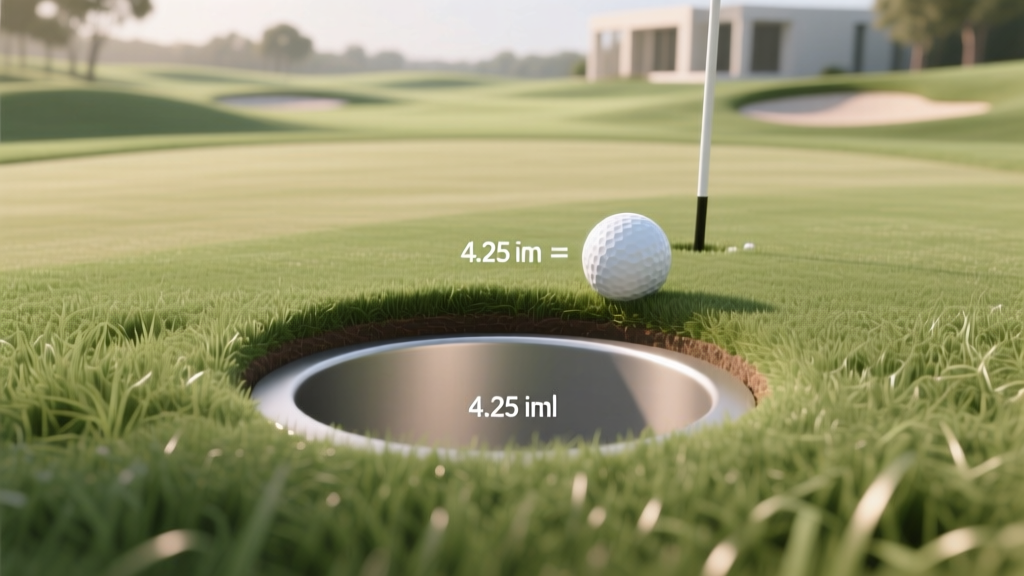
How Big Is a Golf Hole? Official Size Explained
A standard golf hole is 4.25 inches (108 millimeters) in diameter and must be at least 4 inches (101.6 mm) deep, as regulated by the Rules of Golf jointly established by the USGA and The R&A.
Understanding the Standard Golf Hole Dimensions
The size of a golf hole is strictly defined to ensure consistency across all levels of play, from amateur tournaments to professional tours like the PGA and LPGA. The universally accepted diameter of a golf hole is 4.25 inches (108 mm), with a minimum depth of 4 inches (101.6 mm). This standard was formalized in the early 20th century and has remained unchanged since.
Why Is the Golf Hole This Size?
- The 4.25-inch diameter originated from early golf courses in Scotland, where drainage pipes of that size were used to line holes.
- Standardization by the Royal & Ancient Golf Club of St Andrews and the USGA ensured fair and consistent gameplay worldwide. \li>The size allows enough margin for ball entry while maintaining skill challenge—too large would reduce difficulty; too small would make putting excessively hard.
Golf Hole Specifications Across Different Levels
Whether you're playing on a local municipal course or watching the Masters at Augusta National, the hole size remains the same. However, placement, surrounding terrain, and maintenance vary significantly.
| Parameter | Standard Measurement | Used In | Regulating Body |
|---|---|---|---|
| Diameter | 4.25 inches (108 mm) | All official courses | USGA & The R&A |
| Minimum Depth | 4 inches (101.6 mm) | Tournament & recreational play | USGA & The R&A |
| Cup Material | Steel or plastic ring | Course installation | USGA Specifications |
| Flagstick Diameter | 0.5–1 inch (12.7–25.4 mm) | Marking hole location | Rule 13.2a(2) |
| Tolerance (Diameter) | ±0.01 inches | Professional course setup | USGA Course Rating System |
The data confirms that golf hole dimensions are tightly controlled under international rules. Even minor deviations beyond the 0.01-inch tolerance can affect ball behavior upon impact, especially at high-speed tournament play. Consistent cup materials help maintain predictable roll and reduce wear over time.
How Golf Holes Are Measured and Maintained
Course groundskeepers use specialized tools such as hole liners and gauges to ensure each hole meets regulation size. Liners prevent erosion and keep the circular shape intact despite constant ball impacts and weather exposure.
Maintenance Best Practices
- Inspect holes weekly using a diameter gauge.
- Replace worn or deformed cups every 1–3 years depending on traffic.
- Align flagsticks precisely to avoid misleading players about hole center.
- Use sand or soil packing around the liner to minimize shifting.
Frequently Asked Questions About Golf Hole Size
How big is a regulation golf hole?
A regulation golf hole is exactly 4.25 inches (108 mm) in diameter and must be at least 4 inches deep. This standard is enforced globally by the USGA and The R&A for all sanctioned play.
Who decided the size of a golf hole?
The 4.25-inch standard was adopted by the Royal & Ancient Golf Club of St Andrews in the late 1800s after Scottish courses began using drainage pipes of that width. It was later codified by both the R&A and USGA as official rule.
Does the depth of a golf hole matter?
Yes, a golf hole must be at least 4 inches deep to securely hold the ball and prevent it from bouncing out. Most modern cups are 6–8 inches deep for added durability and easier maintenance.
Can a golf hole be larger than 4.25 inches?
No, according to the Rules of Golf, exceeding 4.25 inches invalidates the course for official scoring. Practice greens may have larger holes for beginners, but competitive play requires strict adherence.
Why do some putts bounce out of the hole?
Balls bounce out due to speed, spin, or off-center impacts—even in a regulation-sized hole. A 4.25-inch opening allows some forgiveness, but high-velocity putts often strike the back rim and rebound, especially if the cup isn't perfectly level.
More Articles
 When Did Hulk Hogan Start Wrestling? Career Begin Date
 Why Two First Bases in College Baseball?
 Who Beat Tom Brady in the Super Bowl? Full Breakdown
 How Long Does a Professional Baseball Game Last?
 When Does the Rose Bowl Start? 2026 Kickoff Time
 What Color Is a Tennis Ball? The Science Behind the Yellow
 Who Is the World Heavyweight Boxing Champion in 2025?
 Most Expensive Super Bowl Ring Ever Sold
 Why Are There 18 Holes in Golf? History & Facts
 All Volleyball Positions Explained