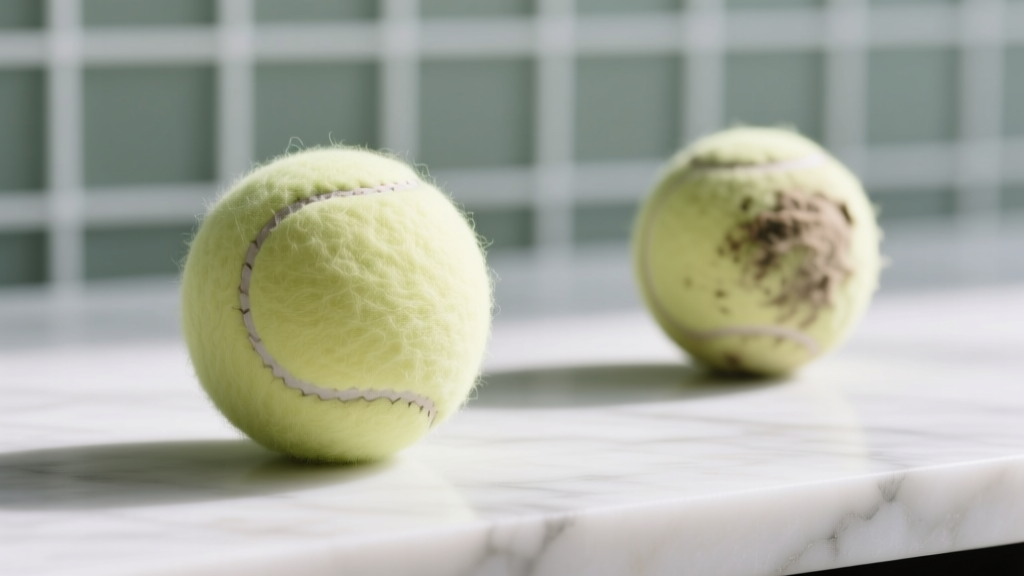
How Long Do Tennis Balls Last? Lifespan Explained
Tennis balls typically last 1–3 weeks for recreational players and 1–3 hours in competitive play, depending on usage, surface type, and ball quality. Pressurized balls lose bounce faster than pressureless variants, which endure longer with consistent performance.
Factors That Affect Tennis Ball Lifespan
The longevity of tennis balls varies significantly based on several key factors. Understanding these helps players maximize value and performance.
Playing Frequency and Intensity
- Recreational players using balls once a week may see 3–4 weeks of usable life.
- Intensive training or match play degrades balls within 1–3 hours.
- Spin-heavy strokes accelerate felt wear, reducing aerodynamic efficiency.
Surface Type
Different court surfaces impact ball wear at varying rates:
- Clay courts: Abrasive surface shreds felt quickly but preserves internal pressure moderately.
- Hard courts: Most damaging to both felt and core due to high friction.
- Grass courts: Gentlest on felt; balls retain shape and bounce longer.
Ball Type: Pressurized vs. Pressureless
Not all tennis balls are created equal. The construction determines durability and performance decay.
- Pressurized balls: Filled with compressed air or nitrogen; provide superior initial feel but lose pressure over time, even unused.
- Pressureless balls: Solid rubber core; no internal gas. They maintain bounce longer and are ideal for ball machines and frequent practice.
| Ball Type | Avg. Bounce Retention (after 10 hours) | Felt Wear Rate (scale 1–10) | Lifespan (match play) | Best For |
|---|---|---|---|---|
| Pressurized (Regular Duty) | 60% | 7 | 1–3 hours | Indoor courts, tournaments |
| Pressurized (Extra Duty) | 55% | 8 | 1–2 hours | Hard courts, heavy topspin |
| Pressureless Training Ball | 95% | 5 | 6+ months (practice) | Lessons, ball machines |
| High-Altitude Ball | 65% | 6 | 2–4 hours | Elevated regions (>4,000 ft) |
The data shows that pressureless balls maintain bounce far longer than pressurized types, making them ideal for extended training. However, pressurized balls offer better responsiveness initially, preferred in professional matches despite shorter lifespan.
Signs Your Tennis Balls Need Replacing
Recognizing when tennis balls are no longer effective ensures consistent play and injury prevention.
- Loss of bounce: If the ball doesn’t rebound to regulation height (53–58 inches when dropped from 100 inches), it’s dead.
- Frayed or bald felt: Worn nap increases air resistance, altering speed and spin response.
- Soft or squishy feel: Indicates lost internal pressure, especially in pressurized models.
- Inconsistent flight path: Damaged balls wobble or deviate unpredictably.
How to Extend Tennis Ball Life
While degradation is inevitable, certain practices can prolong usability.
Proper Storage
- Keep unopened cans sealed until use; balls lose ~2 PSI per month even in sealed containers.
- Store used balls in an airtight container or pressurized ball saver (e.g., Penn Pressure-X).
- Avoid extreme temperatures; heat accelerates pressure loss, cold stiffens rubber.
Rotate Balls During Play
Using multiple balls per session and rotating them evens out wear. Many coaches recommend switching balls every 7–9 games in match conditions to maintain fairness and consistency.
Common Questions About How Long Tennis Balls Last
How long do tennis balls last unopened?
Unopened pressurized tennis balls can last 2–3 years if stored properly. Over time, microscopic leaks cause gradual pressure loss, diminishing bounce even before use. Pressureless balls have nearly indefinite shelf life.
Do tennis balls expire in cans?
Yes, pressurized tennis balls degrade inside cans due to slow gas diffusion through rubber. While not “expired” like food, their performance declines after 18–24 months. Always check manufacture date on the can.
How many sets do tennis balls last?
In recreational play, tennis balls typically last 3–5 sets before noticeable performance drop. In professional matches, new balls are introduced after the first 7 games and then every 9 games thereafter.
Can you reuse old tennis balls?
Yes. Dead tennis balls can be repurposed for dog toys, floor protectors, or massagers. Some facilities collect used balls for donation to animal shelters or community centers.
Why do tennis balls lose bounce over time?
Bounce loss occurs due to internal pressure escape in pressurized balls and structural fatigue in the rubber core. Felt erosion also increases drag, affecting kinetic energy transfer during impact.
More Articles
 Who Is the Oldest Baseball Player Ever?
 What Time Is the Super Bowl 2025? Full Schedule & Details
 How Many Innings Was the Longest Baseball Game?
 How Many Games in Baseball? MLB Season Breakdown
 Who Is Playing in the Celebrity Golf Tournament 2025?
 Has Matthew Stafford Won a Super Bowl? Yes, in 2022
 MLB 2026 Opening Day Schedule & Key Dates
 How Many People Play in the Masters Golf Tournament?
 Who Won the 2006 World Series? Cardinals Beat Tigers
 Who Founded Judo? The Story of Jigoro Kano