How Big Is a Baseball Infield? Full Dimensions Explained
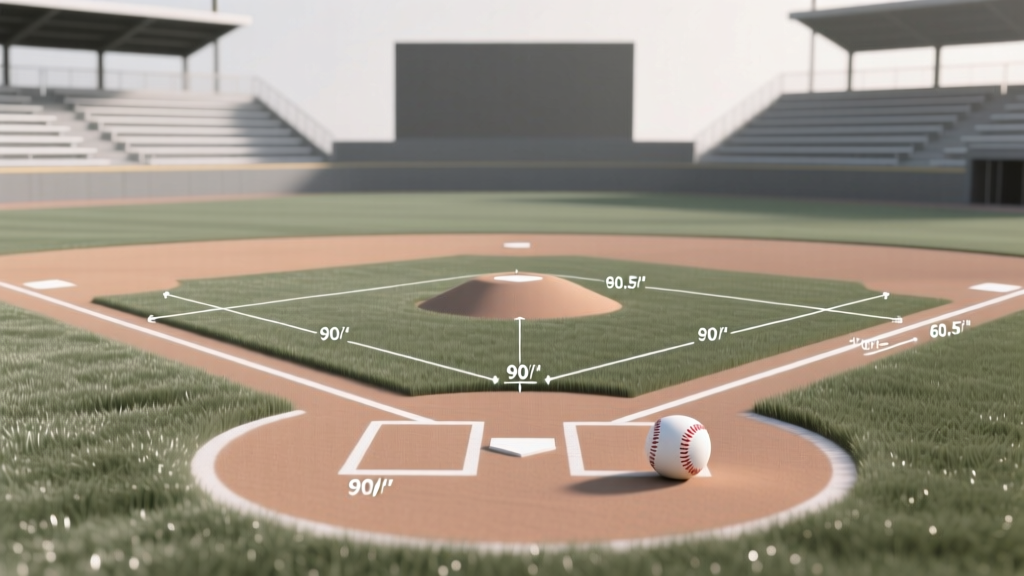
A baseball infield is 90 feet between bases, forming a 90-foot square with the pitcher's mound centered 60 feet 6 inches from home plate. This standardized size applies to most professional and amateur levels, including Major League Baseball (MLB).
Understanding the Dimensions of a Baseball Infield
The infield in baseball refers to the dirt area enclosed by the three bases and home plate, where most defensive action occurs. Its dimensions are strictly regulated to ensure consistency across fields.
Key Measurements of the Infield
- Distance from home plate to first base: 90 feet
- Distance between each consecutive base (first to second, second to third, third to home): 90 feet \li>
- Distance from the front edge of home plate to the front edge of the pitcher’s rubber: 60 feet 6 inches
- Diameter of the pitcher’s mound: 18 feet
- Height of the pitcher’s mound above the home plate level: 10 inches (MLB), 8 inches (high school and below)
Standard Infield Layout and Zones
The infield is divided into several functional zones critical for gameplay:
- Base paths: The 90-foot lines connecting each base form the official base path.
- Pitcher’s mound: Located at the center of the infield diamond, it is where the pitcher delivers the ball.
- Cut-off areas: Secondary positions where fielders back up throws.
- Infield dirt circle: Typically spans about 95 feet in diameter, encompassing the bases and mound.
Regulation Field Sizes Across Leagues
While MLB sets the standard, youth and amateur leagues often modify dimensions to suit player development levels.
| League | Base Path Length | Pitcher-to-Plate Distance | Pitcher Mound Height | Infield Dirt Diameter |
|---|---|---|---|---|
| Major League Baseball (MLB) | 90 feet | 60 feet 6 inches | 10 inches | ~95 feet |
| NCAA (College) | 90 feet | 60 feet 6 inches | 10 inches | ~95 feet |
| High School (NFHS) | 90 feet | 60 feet 6 inches | 8 inches | ~95 feet |
| Little League (Majors Division) | 60 feet | 46 feet | 6 inches | ~60 feet |
| Intermediate (50/70) Baseball | 70 feet | 50 feet | 6 inches | ~70 feet |
The data shows that while MLB, NCAA, and high school maintain identical base distances, youth leagues reduce both base paths and pitching distances to accommodate younger players. These scaled dimensions help develop skills progressively and enhance safety.
Importance of Consistent Infield Measurements
Precise infield dimensions are crucial for fair play, player safety, and strategic execution. Even minor deviations can affect:
- Timing of base steals
- Fielding reaction times
- Throwing accuracy and arm stress
- Baserunner sliding mechanics
Professional groundskeepers use surveying tools to ensure alignment, especially during stadium construction or maintenance.
Frequently Asked Questions About Baseball Infield Size
How big is a baseball infield in feet?
A regulation baseball infield has 90-foot base paths, forming a perfect square. The total distance around the bases is 360 feet, and the infield dirt area typically spans about 95 feet in diameter.
Is every MLB infield the same size?
Yes, all Major League Baseball infields follow identical specifications: 90-foot base paths and a pitcher’s mound 60 feet 6 inches from home plate, ensuring uniformity across stadiums.
Why is the pitcher’s mound 60 feet 6 inches away?
This distance was established in 1893 to balance competition between pitchers and batters. It allows enough time for defensive reactions while giving hitters a fair chance to make contact.
Do youth baseball fields have smaller infields?
Yes, youth leagues like Little League use shorter base paths (60 feet) and reduced pitching distances (46 feet) to match the physical development and skill level of younger players.
What is the diameter of the infield dirt circle?
The infield dirt circle typically measures around 95 feet in diameter in professional and high school fields, encompassing the bases, pitcher’s mound, and common fielding zones.
More Articles
 Don Kessinger Baseball Career and Legacy
 What Position Did Deion Sanders Play in Baseball?
 How Old Is Bernhard Langer? Age & Career Facts 2025
 Where Does Jason Day the Golfer Live? (2025 Update)
 Where to Buy Golf Balls Near Me Today
 Where to Watch Wrestling in 2025 – Full Guide by Promotion
 How Old Is Cricket? Origins & Evolution Explained
 When Does Triple-A Baseball Start in 2025?
 What Golf Ball Should I Use? Find Your Perfect Match
 Where Is Aryna Sabalenka From? Belarus Origin & Career