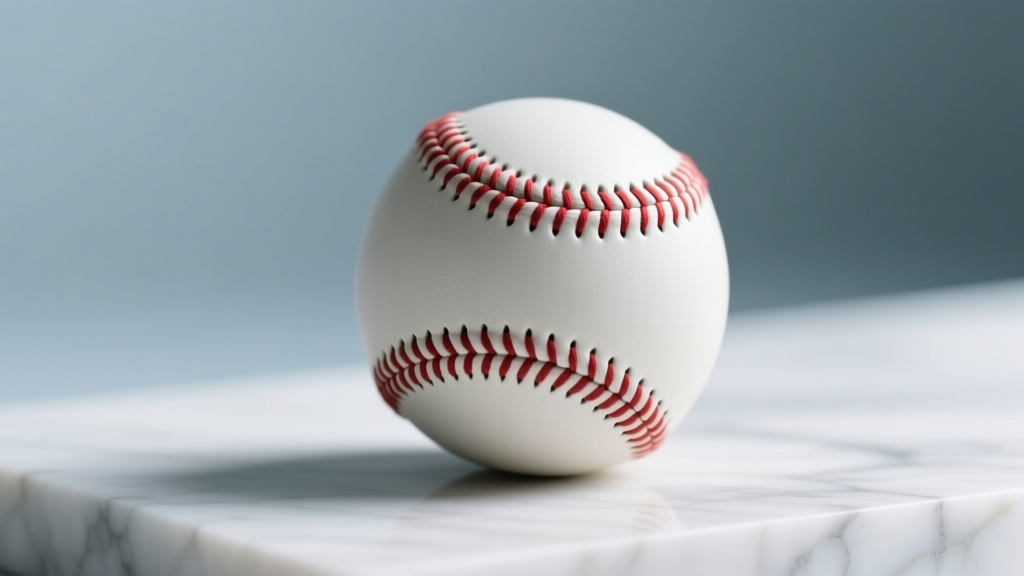
How Big Is a Baseball Ball? Official Size & Weight
A standard baseball has a circumference of 9 to 9.25 inches (22.9 to 23.5 cm) and a diameter of approximately 2.86 to 2.94 inches (7.3 to 7.5 cm), weighing between 5 and 5.25 ounces (142 to 149 grams). These precise dimensions are regulated by Major League Baseball (MLB) to ensure consistency in gameplay, performance, and safety across all levels of professional competition.
Understanding the Size of a Baseball
The size of a baseball is strictly defined to maintain fairness and uniformity in the sport. While it may seem like a small detail, the exact measurements impact pitching speed, hitting dynamics, and fielding control. The ball's dimensions have remained largely unchanged since the early 20th century, reflecting its optimized design for competitive play.
Key Dimensions of a Regulation Baseball
- Circumference: 9 to 9.25 inches (22.9–23.5 cm)
- Diameter: Approximately 2.86 to 2.94 inches (7.3–7.5 cm)
- Weight: 5 to 5.25 ounces (142–149 grams)
- Core Material: Rubber or cork center surrounded by layers of yarn and leather
- Stitch Count: 108 double stitches (216 individual stitches), hand-sewn
Regulations Across Leagues
While Major League Baseball sets the gold standard, other leagues follow similar specifications with minor variations. Youth leagues, collegiate games, and international competitions adhere closely to MLB standards but may use slightly different materials or construction methods for cost or durability reasons.
Comparison of Baseball Sizes by League
| League | Circumference (inches) | Diameter (inches) | Weight (ounces) | Governing Body |
|---|---|---|---|---|
| Major League Baseball (MLB) | 9–9.25 | 2.86–2.94 | 5.00–5.25 | MLB |
| NCAA (College Baseball) | 9–9.25 | 2.86–2.94 | 5.00–5.25 | NCAA |
| NFHS (High School) | 9–9.25 | 2.86–2.94 | 5.00–5.25 | NFHS |
| Little League (Majors Division) | 8.75–9.00 | 2.79–2.86 | 4.75–5.00 | Little League International |
| Soft Core Youth Baseball | 8.5–8.75 | 2.70–2.79 | 4.50–4.75 | Various Manufacturers |
The data shows that professional and collegiate baseballs are nearly identical in size and weight, ensuring a consistent transition for players moving through competitive levels. Youth leagues use slightly smaller and lighter balls to accommodate developing strength and coordination. This scaling supports skill development while reducing injury risk.
Why Baseball Size Matters
The precise dimensions of a baseball influence several critical aspects of the game:
- Pitching Mechanics: A consistent ball size allows pitchers to master grip and release techniques.
- Hitting Performance: Batters rely on predictable ball flight and contact behavior.
- Fielding Safety: Uniform hardness and weight reduce unpredictability during high-speed plays.
- Equipment Design: Gloves, bats, and protective gear are engineered around standard ball dimensions.
Frequently Asked Questions About Baseball Size
How big is a standard baseball in inches?
A regulation baseball has a circumference of 9 to 9.25 inches and a diameter of about 2.86 to 2.94 inches.
What is the weight of a major league baseball?
A Major League Baseball weighs between 5 and 5.25 ounces (142 to 149 grams).
Are all baseballs the same size across leagues?
MLB, NCAA, and high school baseballs are nearly identical in size, but youth leagues like Little League use slightly smaller and lighter balls.
How many stitches are on a baseball?
A standard baseball has 108 double stitches, totaling 216 individual stitches, all done by hand.
Why is the size of a baseball standardized?
Standardization ensures fair play, consistent performance, and player safety. It also allows for reliable equipment design and rule enforcement.
More Articles
 How Tall Is Big Show the Wrestler? Real Height Revealed
 Lab Hygiene Protocol: Evidence-Based Cleaning
 Who Has Won the Most Major Golf Championships?
 How Long Are Cricket Matches? By Format Explained
 What Day Is the Rose Bowl Played?
 Did Reggie Bush Win a Super Bowl? Full Career Breakdown
 Where Is Super Bowl 2030? Location & Date Revealed
 Has Anyone Won All 4 Majors in One Year in Golf?
 Which Boxer Has Been Knocked Out the Most?
 How Old Is Venus Williams? Age & Career Facts in 2025