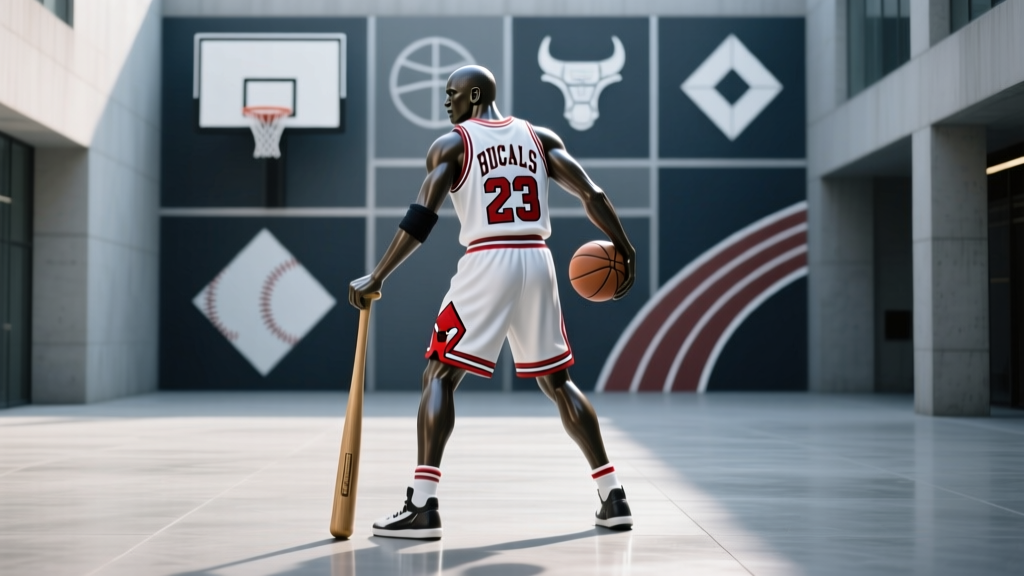
Did Michael Jordan Play Major League Baseball?
Yes, Michael Jordan did play Major League Baseball (MLB) during a brief retirement from basketball. He played for the Chicago White Sox's minor league affiliates in 1994, primarily with the Birmingham Barons, as an outfielder.
Michael Jordan's Transition from Basketball to Baseball
After leading the Chicago Bulls to three consecutive NBA championships and announcing his first retirement in October 1993, Michael Jordan shocked the sports world by pursuing a career in professional baseball. Citing a lifelong dream and the influence of his late father, James Jordan—whose murder earlier that year deeply affected him—Jordan signed a minor league contract with the Chicago White Sox on February 7, 1994.
Motivations Behind the Move
- Desire to honor his father’s memory, who had hoped to see him play baseball
- A break from the intense pressure of NBA stardom
- Genuine passion for baseball dating back to high school
- A need for a new athletic challenge after dominating basketball
Jordan's Minor League Baseball Career
Jordan never played in a Major League Baseball game. Instead, he spent the 1994 season with the Birmingham Barons, a Class AA affiliate of the Chicago White Sox, playing as a center fielder.
Performance and Challenges
While Jordan showcased elite athleticism, hand-eye coordination, and work ethic, he faced significant challenges adapting to professional pitching and the nuances of baseball strategy. His batting average and strikeout rate reflected the difficulty of transitioning between two elite sports.
| Statistic | Value |
|---|---|
| Team | Birmingham Barons (White Sox AA affiliate) |
| Season | 1994 |
| Games Played | 127 |
| At-Bats | 497 |
| Runs | 51 |
| Hits | 150 |
| Home Runs | 3 |
| RBI | 51 |
| Stolen Bases | 30 |
| Batting Average | .202 |
| On-Base Percentage | .289 |
| Slugging Percentage | .307 |
| Strikeouts | 114 |
The data shows that while Jordan demonstrated hustle and speed on the basepaths with 30 stolen bases, his .202 batting average and 114 strikeouts in 497 at-bats indicate the steep learning curve he faced against advanced pitching. His slugging percentage of .307 is below the typical threshold for power production in professional baseball.
Return to the NBA
After one season in the minors, Jordan announced his return to basketball in March 1995 with the famous two-word press release: "I'm back." He rejoined the Chicago Bulls and went on to win three more NBA championships (1996–1998), cementing his legacy as the greatest basketball player of all time.
Legacy of His Baseball Attempt
- Highlighted the difficulty of excelling in multiple professional sports
- Inspired the 1996 film Space Jam, blending his basketball and baseball personas
- Demonstrated his willingness to step outside comfort zones despite public scrutiny
- Boosted attendance and media attention for minor league baseball
Frequently Asked Questions About Michael Jordan and Baseball
Did Michael Jordan ever play in a Major League Baseball game?
No, Michael Jordan never appeared in an MLB regular-season or postseason game. He played only in the minor leagues with the Birmingham Barons, a Double-A affiliate of the Chicago White Sox.
Why did Michael Jordan decide to play baseball?
Jordan pursued baseball to honor his father’s memory, take a break from basketball, and fulfill a childhood dream. His father, James Jordan, was a baseball fan who encouraged Mike to play growing up.
How long did Michael Jordan play professional baseball?
Michael Jordan played one full minor league season in 1994, appearing in 127 games for the Birmingham Barons before returning to the NBA in March 1995.
What were Michael Jordan's baseball stats?
Over 127 games in 1994, Jordan batted .202 with 3 home runs, 51 RBIs, 150 hits, and 30 stolen bases. He struck out 114 times in 497 at-bats, showing both effort and the challenges of high-level competition.
Was Michael Jordan good at baseball?
By professional standards, Jordan was not considered a top-tier prospect. However, given his lack of experience and elite athleticism, many scouts acknowledged his dedication and potential for improvement had he continued.
More Articles
 A.J. Ferrari Wrestling Career and Achievements
 How Much Do Ring Girls Make in Boxing? (2025 Data)
 Why Beach Volleyball Players Wear Bikinis
 How Old Is Golfer Ernie Els in 2025? Age, Career & Facts
 Where Do the Athletics Play Baseball in 2025?
 LSU Baseball Game Today: What Channel Is It On?
 Who Has the Most Super Bowl Appearances?
 Buy Baseball Cards Near Me: Top Local & Online Spots
 Where Was Badminton Invented? The True Origin Revealed
 What Time Is the Boxing Fight Tonight? Schedule & Updates