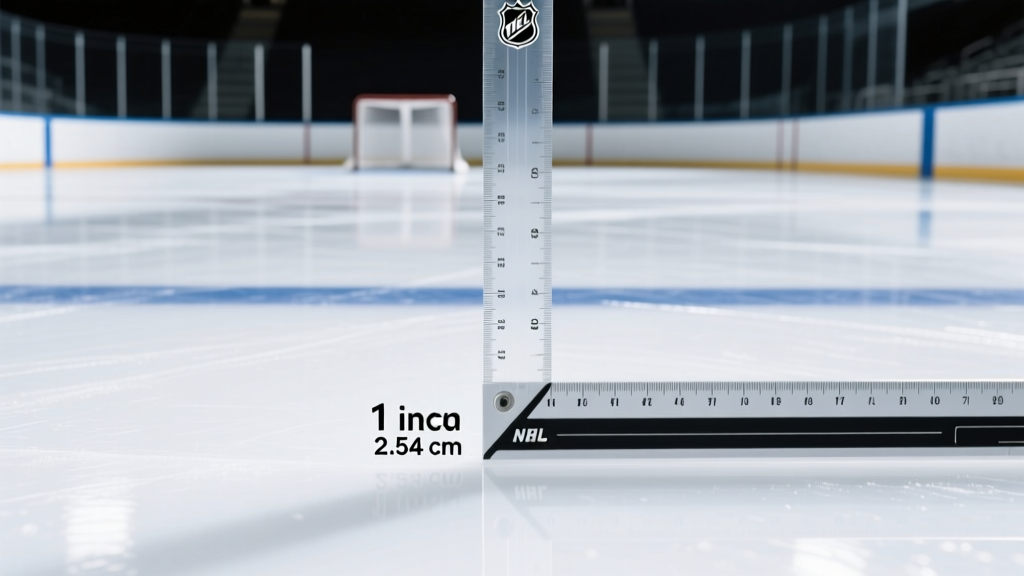
How Thick Is Hockey Ice? NHL Standard Revealed
Professional hockey ice is typically 3/4 inch (1.9 cm) thick, maintained at a temperature of around 24°F (−4.4°C) for optimal hardness and performance.
Understanding Hockey Ice Thickness Standards
The thickness of hockey ice plays a critical role in player safety, puck behavior, and game consistency. In professional leagues like the NHL, ice is carefully engineered to balance durability with performance. While 3/4 inch (1.9 cm) is standard, several factors influence how ice is built and maintained.
Why Ice Thickness Matters
- Puck glide: Thinner ice offers faster puck movement but increases chipping risk.
- Player safety: Proper thickness reduces cracks and uneven surfaces that can cause injuries.
- Energy efficiency: Thicker ice requires more refrigeration and energy to maintain.
- Event adaptability: Ice may be adjusted for concerts or multi-sport events held in arenas.
Factors Affecting Ice Thickness and Quality
Ice isn't just frozen water—it's a precisely controlled surface influenced by multiple variables.
Temperature Control
The ideal ice temperature for hockey ranges from 22°F to 24°F (−5.6°C to −4.4°C). Colder ice is harder and faster but more brittle; warmer ice is softer and slower, increasing skate drag.
Water Purity
Deionized or filtered water is used to reduce minerals and impurities that cloud ice and weaken structural integrity. Pure water freezes clearer and stronger.
Refrigeration System Efficiency
A concrete slab beneath the ice contains embedded brine pipes that circulate coolant. The system must maintain consistent temperatures to prevent warping or melting.
Ice Construction: How Rinks Build the Surface
Hockey rinks use a layered approach to build ice from scratch. This process ensures strong adhesion and clarity.
- Painting the base: Lines and logos are painted directly onto the concrete slab.
- Spraying thin layers: Water is misted in fine sprays to bond with the cold slab without cracking.
- Building up gradually: Multiple layers are added over hours until the desired thickness is reached.
- Final flooding: A smooth top coat is applied for a glass-like finish.
| League/Facility | Avg. Ice Thickness (inches) | Avg. Ice Thickness (cm) | Surface Temp (°F) | Surface Temp (°C) |
|---|---|---|---|---|
| NHL Arenas | 0.75 | 1.9 | 24 | −4.4 |
| IIHF International Rinks | 0.75 | 1.9 | 23 | −5.0 |
| College Rinks (NCAA) | 0.75–0.875 | 1.9–2.2 | 24–25 | −4.4 to −3.9 |
| Recreational Public Rinks | 1.0–1.5 | 2.5–3.8 | 25–28 | −3.9 to −2.2 |
| Olympic Rinks (Winter Games) | 0.75 | 1.9 | 22 | −5.6 |
The data shows that elite competitions maintain thinner, colder ice for peak performance, while recreational rinks often use thicker ice to withstand variable usage and less precise climate control. Consistency across NHL and Olympic standards highlights the importance of optimized playing conditions.
Maintenance Practices in Professional Arenas
Daily upkeep ensures ice remains safe and fast throughout the season.
- Zamboni resurfacing: Machines shave the top layer and lay down hot water (140°F/60°C) that bonds smoothly.
- Monitoring systems: Sensors track slab and air temperatures in real time.
- Humidity control: Indoor rinks maintain 30–50% humidity to prevent fog and excess snow buildup.
Frequently Asked Questions About Hockey Ice Thickness
How thick is NHL ice?
NHL ice is consistently maintained at 3/4 inch (1.9 cm) thick, with precise temperature control to ensure optimal hardness and playability.
Is hockey ice thicker than skating rink ice?
No, hockey ice is typically thinner than recreational skating rink ice. Public rinks often have ice between 1 and 1.5 inches thick to handle heavier wear, while hockey prioritizes speed and puck response with thinner, colder ice.
Can ice be too thick for hockey?
Yes. Excessively thick ice retains more heat, making it softer and slower. It also increases stress on refrigeration systems and raises energy costs unnecessarily.
How long does it take to build hockey ice from scratch?
Constructing a full sheet of hockey ice takes approximately 48 to 72 hours. This includes painting lines, applying thin layers, and gradually building up to the final thickness with proper freezing between each stage.
Why is hockey ice white?
The white color comes from paint applied beneath the top layer of clear ice. This paint enhances visibility of the puck and markings. Some modern rinks use composite panels with printed graphics instead.
More Articles
 Most Expensive Sports to Play: Equipment Costs Ranked from Budget to Elite
 What Muscles Does a Rower Work? Full-Body Breakdown
 How High Can a Cheetah Jump? Facts & Data
 How Much Does a Canoe Cost? (2025 Prices)
 Did Saquon Barkley Get Fined for Backward Hurdle?
 How Cold Are Ice Skating Rinks? Expert Breakdown
 Can Cows Swim? Yes, Here's How and Why
 How Much Water in an Olympic Swimming Pool?
 How Fast Do K1 Speed Go Karts Go? (Up to 45 MPH)
 Best Running Shoes for Flat Feet (2026)