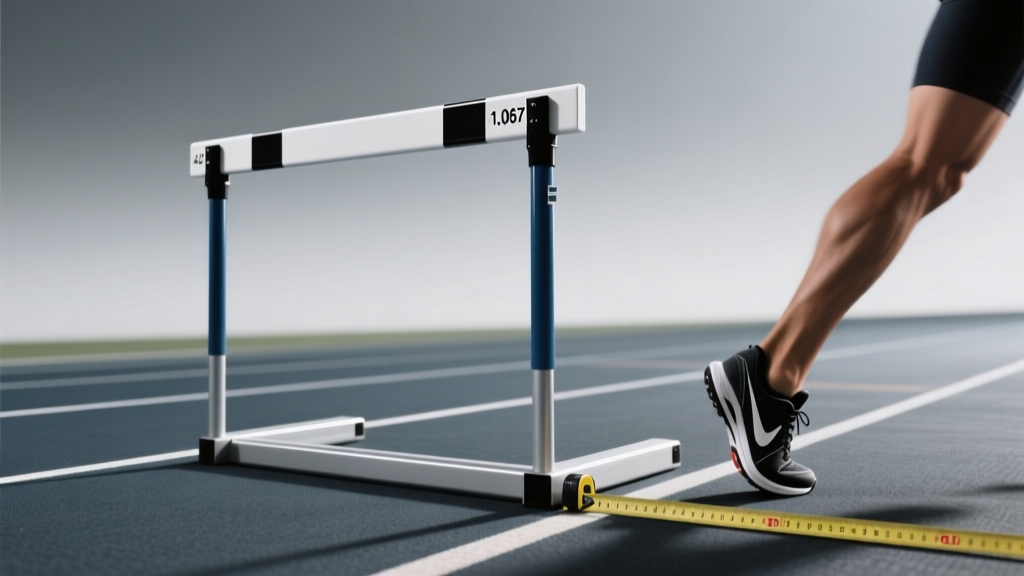
How Tall Are Hurdles in Track Events?
Hurdles vary in height depending on the event, gender, and age group; for example, in elite men's 110m hurdles, the standard height is 42 inches (1.067 meters), while women's 100m hurdles are set at 33 inches (0.838 meters).
Understanding Hurdle Heights Across Track Events
Hurdling is a technical sprint discipline that combines speed, rhythm, and precision. The height of the hurdles is a critical factor that defines each race and ensures fair competition across different categories. Whether you're an athlete, coach, or fan, understanding the standardized hurdle heights helps in training effectively and appreciating the sport’s nuances.
Standard Hurdle Heights by Event and Gender
The International Association of Athletics Federations (World Athletics) sets official regulations for hurdle dimensions. These standards ensure consistency in international and professional competitions. Below are the most common track events involving hurdles:
- Men's 110m Hurdles
- Women's 100m Hurdles
- Men's and Women's 400m Hurdles
- Youth and high school variations
Differences Between Men’s and Women’s Hurdle Events
While both men and women compete in sprint hurdle races, the distances and hurdle heights differ to account for physiological differences and competitive balance:
- Men’s 110m hurdles use taller hurdles (42") compared to women’s 100m hurdles (33").
- Women run a shorter distance in their sprint hurdle event but face similar technical demands.
- In the 400m hurdles, men clear 36" hurdles, while women face 30" barriers.
Detailed Hurdle Height Specifications
The following table outlines official hurdle heights for various competitive levels and events as defined by World Athletics and NFHS (National Federation of State High School Associations).
| Event | Gender | Hurdle Height (inches) | Hurdle Height (meters) | Governing Body |
|---|---|---|---|---|
| 110m Hurdles | Men | 42 | 1.067 | World Athletics |
| 100m Hurdles | Women | 33 | 0.838 | World Athletics |
| 400m Hurdles | Men | 36 | 0.914 | World Athletics |
| 400m Hurdles | Women | 30 | 0.762 | World Athletics |
| 100m Hurdles | High School Girls | 33 | 0.838 | NFHS |
| 300m Hurdles | High School Boys | 36 | 0.914 | NFHS |
| 300m Hurdles | High School Girls | 30 | 0.762 | NFHS |
| Intermediate Hurdles | Juniors (Males) | 39 | 0.991 | World Athletics |
The data shows a consistent pattern: male sprinters generally face higher hurdles than female athletes across equivalent events. Additionally, youth and high school competitions mirror elite standards but may include intermediate categories to support athlete development. The precise measurements ensure safety and fairness in competition.
Why Hurdle Height Matters in Performance
Hurdle height directly affects an athlete’s stride pattern, takeoff distance, and clearance technique. Even small deviations can disrupt rhythm and slow down performance.
- Taller hurdles require more vertical lift, increasing energy cost.
- Lower hurdles allow faster clearance but still demand proper form to avoid knocking them down.
- Coaches use standardized heights to train correct lead-leg drive and trail-leg snap.
Impact on Race Strategy
Athletes must plan their approach to each hurdle based on height and spacing. For instance, elite men's 110m hurdlers typically take three steps between hurdles, adjusting stride length to maintain momentum. Incorrect adaptation to hurdle height can lead to inefficient mechanics or disqualification if too many hurdles are knocked over.
Frequently Asked Questions About Hurdle Heights
How tall are hurdles in the men’s 110m race?
The standard height for men’s 110-meter hurdles is 42 inches (1.067 meters), as regulated by World Athletics for senior elite competitions.
What is the height of women’s 100m hurdles?
Women’s 100-meter hurdles are set at 33 inches (0.838 meters), a height used in Olympic, World Championship, and most high school competitions.
Are 400m hurdles lower than 110m hurdles?
Yes, 400m hurdles are lower. Men’s 400m hurdles are 36 inches (0.914 meters) high, compared to 42 inches for the 110m event. This accounts for fatigue over the longer distance.
Do high school hurdle heights differ from professional ones?
For the most part, high school girls use the same 33-inch height as professionals in the 100m hurdles. High school boys often use 39 inches for 110m in junior divisions, moving to 42 inches at advanced levels.
Why aren’t all hurdles the same height?
Hurdle heights are calibrated to match event demands, athlete physiology, and safety. They balance challenge with technical feasibility, ensuring competitive fairness across genders and age groups.
More Articles
 Where to Buy Go Karts Near Me: Local & Online Options
 Ice Skating Rink Temperature: Ideal Range Explained
 Best Sports for Weight Loss: 10 High-Calorie-Burning Activities Ranked
 Rules vs Reality: Performance Data Check
 Where Can You Ride Go Karts Near Me? Top Locations
 How Much Is Ice Skating at Rockefeller Center?
 How High Does LeBron Jump? Vertical Leap Revealed
 When Was Ice Skating Invented? Origins & Evolution
 Best Premium Sports Gear Guide
 Swimming Strokes Guide: Freestyle, Backstroke, Breaststroke, and Butterfly