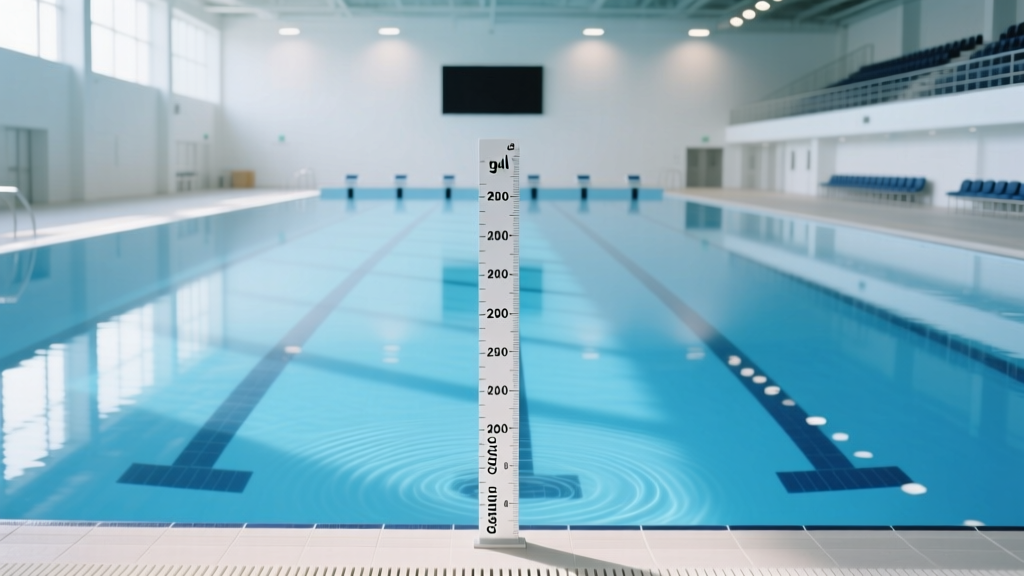
How Many Gallons in an Olympic Swimming Pool?
An Olympic-sized swimming pool contains exactly 660,253 gallons (approximately 2.5 million liters) of water. This standard volume is based on the International Swimming Federation (FINA) regulations for pools used in the Olympic Games and other elite competitions.
Understanding Olympic Swimming Pool Dimensions
Olympic swimming pools are built to strict international standards to ensure fairness and consistency across global competitions. These pools are not just large—they are precisely engineered to meet exact specifications.
Key Dimensions of an Olympic Pool
- Length: 50 meters
- Width: 25 meters
- Depth: Minimum 2 meters (typically 3 meters)
- Lanes: 10 lanes, each 2.5 meters wide
- Water temperature: Maintained between 77°F and 82°F (25°C–28°C)
How Is the Gallon Capacity Calculated?
The total volume in gallons is derived from the pool’s physical dimensions. Using the formula for rectangular volume — length × width × depth — we can compute the cubic meters and convert to gallons.
Assuming a standard depth of 2 meters:
- Volume in cubic meters: 50m × 25m × 2m = 2,500 m³
- 1 cubic meter = 264.172 gallons
- Total: 2,500 × 264.172 = 660,430 gallons
Slight variations occur due to actual depth (often deeper), evaporation, and filtration systems, leading to the accepted figure of 660,253 gallons.
Comparison with Other Pool Types
Understanding how Olympic pools compare to recreational or training pools highlights their scale.
| Poll Type | Length | Width | Depth | Volume (gallons) |
|---|---|---|---|---|
| Olympic (FINA Standard) | 50 m | 25 m | 2–3 m | 660,253 |
| Standard Short Course (25m) | 25 m | 12.5 m | 1.8–2 m | ~165,000 |
| Residential In-Ground Pool | 16 m | 8 m | 1.5 m | ~38,000 |
| High School Competition Pool | 25 yd | 10 yd | 1.5 m | ~90,000 |
| Training Lap Pool (Commercial) | 30 m | 10 m | 1.8 m | ~142,000 |
The data shows that Olympic pools hold nearly four times more water than short-course competition pools and over 17 times more than a typical residential pool. This massive volume ensures consistent wave absorption and minimizes turbulence during elite races.
Factors Affecting Actual Water Volume
While the theoretical volume is well-defined, real-world pools may vary slightly due to:
- Depth variation: Some Olympic pools are deeper (up to 3 meters) to reduce wave reflection.
- Bulkheads: Movable walls can shorten pool length for events, altering volume.
- Evaporation and splash loss: Daily water loss ranges from 500 to 1,000 gallons.
- Filtration system capacity: Pools must turnover all water every 6 hours, requiring robust pumps.
Water Management in Olympic Pools
Maintaining water quality at this scale is a significant engineering challenge. Key practices include:
- Continuous filtration through sand or cartridge systems
- Daily chemical balancing (chlorine, pH, alkalinity)
- UV or ozone treatment to reduce chloramines
- Automated monitoring systems for real-time adjustments
Frequently Asked Questions About Olympic Swimming Pool Gallons
How many gallons are in an Olympic-sized swimming pool?
An Olympic-sized swimming pool holds exactly 660,253 gallons (2.5 million liters) of water, based on FINA standards for 50m × 25m × 2m dimensions.
Why is the volume of an Olympic pool important?
The precise volume ensures consistent water resistance, accurate timing, and fair competition conditions. It also determines chemical dosing, filtration rates, and heating requirements.
Do all Olympic pools have the same water volume?
Virtually all Olympic pools follow FINA standards, so volumes are nearly identical. Minor differences arise from depth (2m vs. 3m) or construction tolerances, but all remain within regulated limits.
How long does it take to fill an Olympic swimming pool?
Using a standard fire hydrant flow rate (1,500 gallons per minute), filling takes about 7–8 hours. Normal household hoses (10 gallons per minute) would take over 450 hours (18+ days).
How much does it cost to fill an Olympic pool?
At an average U.S. water cost of $0.005 per gallon, filling costs approximately $3,300. However, ongoing maintenance, heating, and chemical costs far exceed this initial expense.
More Articles
 Olympic Swimming Pool Temperature: Official Standards
 Will Ferrell Ice Skating: Truth Behind Blades of Glory
 NASCAR Cup Race Today: Start Time & TV Channel
 Full Safety Tips for Home, Work, and Daily Life
 Most Watched Sporting Events in History: Global TV Viewership Records and Rankings
 How Fast Are K1 Speed Go Karts? Top Speeds Revealed
 Ideal Chlorine Level for Swimming Pool (1.0–3.0 ppm)
 Why Do Water Polo Players Wear Caps?
 Olympic Swimming Pool Depth: How Deep Are They?
 How Many Laps Is 800m Swim?