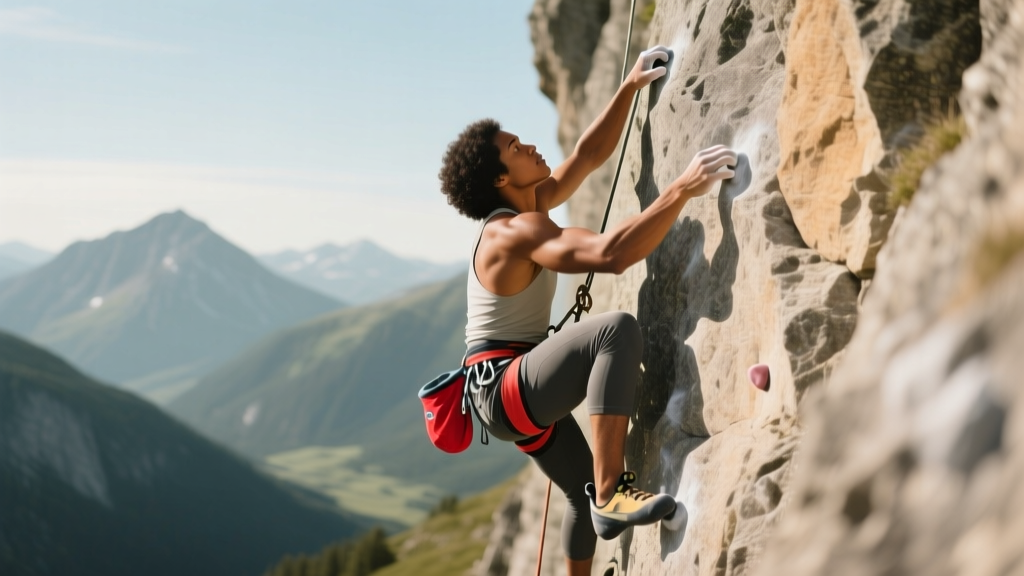
How Many Calories Do I Burn Rock Climbing?
Rock climbing burns between 500 to 900 calories per hour, depending on body weight, intensity, and climbing style. Indoor bouldering and outdoor lead climbing typically burn more calories than top-roping due to increased physical demand.
How Rock Climbing Burns Calories
Rock climbing is a full-body workout that engages multiple muscle groups simultaneously, including the arms, back, core, and legs. The continuous movement, grip strength, balance, and problem-solving required during climbs significantly increase energy expenditure. Unlike steady-state cardio, climbing combines strength, endurance, and mental focus, elevating heart rate and metabolic output.
Key Factors Influencing Calorie Burn
- Body weight: Heavier individuals burn more calories performing the same activity.
- Climbing intensity: Dynamic moves, overhangs, and difficult routes require more effort.
- Type of climbing: Bouldering, sport climbing, and trad climbing vary in duration and exertion.
- Duration and rest periods: Longer sessions with minimal rest increase total calorie expenditure.
- Experience level: Beginners may burn more calories due to inefficiency and increased muscle engagement.
Calories Burned by Climbing Type
Different rock climbing disciplines involve distinct movement patterns and energy systems. Below is a detailed breakdown of average calories burned per hour based on body weight and climbing type.
| Climbing Style | Weight (130 lbs / 59 kg) | Weight (155 lbs / 70 kg) | Weight (180 lbs / 82 kg) | Metabolic Equivalent (MET) |
|---|---|---|---|---|
| Top-Roping (Moderate) | 520 kcal | 620 kcal | 720 kcal | 7.0 |
| Bouldering (Intense) | 640 kcal | 760 kcal | 880 kcal | 8.5 |
| Sport Climbing (Lead) | 580 kcal | 690 kcal | 800 kcal | 7.8 |
| Traditional Climbing | 600 kcal | 710 kcal | 830 kcal | 8.0 |
| Indoor Climbing (General) | 500 kcal | 600 kcal | 700 kcal | 6.8 |
The data shows that bouldering and traditional climbing yield the highest calorie burn due to technical difficulty and sustained muscle engagement. Individuals weighing more than 180 lbs can exceed 900 kcal/hour during intense sessions. MET values above 6.0 classify rock climbing as a vigorous-intensity activity.
Maximizing Calorie Burn While Rock Climbing
To get the most out of your climbing session for fitness and weight management, consider these evidence-based strategies:
Increase Session Duration and Density
Aim for at least 60–90 minutes of continuous climbing. Reduce long rest periods between routes—keeping rest under 3–5 minutes maintains elevated heart rate and metabolic demand.
Climb More Challenging Routes
Routes rated V4 or 5.10 and above require greater coordination, power, and endurance, increasing energy use. Progressively overload your training with harder problems to avoid plateaus.
Incorporate Interval Training
Use a circuit-style approach: climb four boulder problems consecutively with minimal rest. This mimics high-intensity interval training (HIIT), boosting post-exercise oxygen consumption (EPOC) and fat oxidation.
Combine Strength and Cardio Elements
Add campus board drills, dynos, or plyometric moves to boost anaerobic capacity. These explosive actions increase calorie burn both during and after climbing.
Frequently Asked Questions About Rock Climbing and Calorie Burn
Does rock climbing burn more calories than running?
It depends on intensity and body weight. Running at 6 mph burns about 600–800 kcal/hour for a 155-lb person. Intense bouldering can match or exceed this, especially when factoring in post-climb metabolic elevation. However, steady-distance running may result in higher total burn over longer durations.
Is rock climbing good for weight loss?
Yes, rock climbing is highly effective for weight loss because it builds lean muscle, increases metabolism, and burns significant calories. Combined with proper nutrition, regular climbing can lead to sustainable fat loss and improved body composition.
Do beginners burn more calories than experienced climbers?
Potentially yes. Novices often use inefficient movement patterns, engage more muscle fibers, and experience higher heart rates during climbs, leading to greater energy expenditure. Over time, efficiency improves, which may reduce calorie burn unless intensity increases.
How many calories does 30 minutes of rock climbing burn?
On average, 30 minutes of rock climbing burns 250–450 calories depending on weight and intensity. A 155-lb person doing moderate top-roping may burn around 300 kcal, while intense bouldering could reach 400 kcal in the same timeframe.
Does indoor vs outdoor climbing affect calorie burn?
Outdoor climbing often involves steeper terrain, longer routes, and added environmental challenges (e.g., wind, temperature), potentially increasing calorie expenditure. However, indoor bouldering at high intensity can match outdoor burn rates due to concentrated effort and volume.
More Articles
 Where to Buy Swim Goggles: Best Online & In-Store Options
 What Does Row Mean in Sports? Definition & Uses
 Who Invented Field Hockey? Origins & History Explained
 Where to Watch MotoGP Live in 2025 – Global Guide
 Para Swimming Classification Explained
 Tennis String Tension: Power vs Control
 How Much Is a Formula 1 Car? Full Cost Breakdown 2025
 How Many Laps Is 800m Swim?
 Sports Alternatives to Mean: Safer, Evidence-Based Options for Athletic Performance and Recovery
 Olympic Swimming Events 2026: Full List