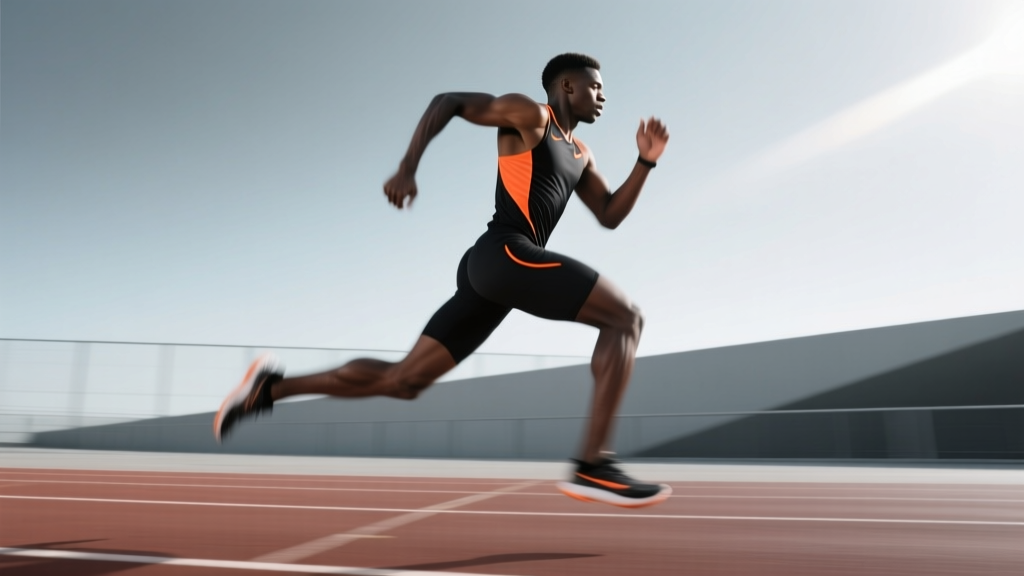
How Fast Can Racewalkers Walk? Elite Speeds Revealed
Race walkers at the elite level can achieve speeds of up to 8.5 to 9.5 miles per hour (13.7 to 15.3 km/h), significantly faster than a regular brisk walk, thanks to their unique technique and strict adherence to racewalking rules.
What Is Racewalking?
Racewalking is a long-distance discipline within athletics where competitors must maintain continuous contact with the ground and keep their advancing leg straightened from the moment of first contact until it passes under the body. Unlike running, no visible loss of contact is allowed, making it both technically demanding and physically intense.
Key Rules of Racewalking
- Continuous Ground Contact: One foot must always be in contact with the ground, as judged by the human eye.
- Straight-Leg Rule: The advancing leg must be straightened when it touches the ground and remain straight until it passes under the body.
- Judging System: Violations result in warnings or disqualification by certified judges along the course.
How Fast Do Elite Racewalkers Walk?
Top racewalkers compete at speeds that rival light jogging. Men's world records reflect average speeds exceeding 9 mph (14.5 km/h) over distances like 20km and 50km (now replaced by 35km).
Factors Influencing Racewalking Speed
- Stride Efficiency: High cadence and optimized stride length without breaking form.
- Technique Mastery: Proper hip rotation and arm drive enhance forward momentum.
- Aerobic Capacity: Elite VO2 max levels support sustained high-speed effort.
- Training Volume: Athletes often log over 100 miles per week with technical drills.
| Event | Athlete | Time | Distance | Average Speed (km/h) | Average Speed (mph) | Year |
|---|---|---|---|---|---|---|
| 20 km | Yusuke Suzuki (JPN) | 1:16:36 | 20 km | 15.6 | 9.7 | 2015 |
| 35 km | Massimo Stano (ITA) | 2:23:14 | 35 km | 15.0 | 9.3 | 2022 |
| 50 km (M) | Jianhua Yang (CHN) | 3:39:20 | 50 km | 13.7 | 8.5 | 2014 |
| 20 km (W) | Liu Hong (CHN) | 1:24:38 | 20 km | 14.2 | 8.8 | 2019 |
| 35 km (W) | Qieyang Shenjie (CHN) | 2:38:41 | 35 km | 13.3 | 8.3 | 2023 |
The data shows that elite male racewalkers sustain average speeds above 15 km/h (9.3+ mph) over 20–35 km, while women average between 13.3 and 14.2 km/h. Speeds decrease slightly over longer distances due to fatigue and pacing strategy, but remain far beyond typical walking pace.
Comparison With Other Forms of Locomotion
Speed Ranges Across Activities
- Regular Walking: 3–4 mph (4.8–6.4 km/h)
- Brisk Walking: 4–5 mph (6.4–8.0 km/h)
- Racewalking (Elite): 8.5–9.7 mph (13.7–15.6 km/h)
- Jogging: 5–7 mph (8–11 km/h)
- Running (Elite Marathoners): ~13 mph (21 km/h)
This comparison highlights how racewalking bridges the gap between fast walking and slow running, achieving speeds typically associated with running—despite never breaking contact with the ground.
Training Secrets Behind High-Speed Racewalking
Elite racewalkers combine endurance training with technical precision. Key components include:
- Daily technique drills to perfect form
- Hundreds of kilometers per month on mixed terrain
- Strength training focusing on glutes, hamstrings, and core stability
- Frequent video analysis to correct minor flaws
- Altitude training to boost aerobic capacity
Coaches emphasize minimizing vertical oscillation and maximizing forward propulsion through coordinated arm swing and pelvic rotation.
Frequently Asked Questions About Racewalking Speed
How fast can the fastest racewalker walk?
The fastest recorded racewalker, Yusuke Suzuki of Japan, averaged 15.6 km/h (9.7 mph) over 20 km in 2015, setting the men’s world record.
Is racewalking faster than running?
No, racewalking is not faster than running. Top runners exceed 20 km/h over long distances, while even elite racewalkers max out around 15.6 km/h due to biomechanical constraints.
Why don’t racewalkers run instead?
Racewalking is a distinct competitive sport governed by specific rules. Athletes train specifically for this discipline, which requires unique technique and offers Olympic and World Championship events separate from running.
Can amateur walkers reach 8 mph?
It is extremely rare. Most fit amateurs walk at 4–5 mph. Achieving 8 mph requires years of dedicated training, optimal biomechanics, and elite-level conditioning.
Does racewalking speed vary by distance?
Yes. Shorter distances like 20 km allow higher average speeds due to less fatigue. Over 35 km, speeds drop slightly as athletes pace themselves to avoid disqualification and manage energy.
More Articles
 Olympic Care and Maintenance: A Technical Field Manual for Pool Operators and Facility Managers
 How High Does Simone Biles Jump? Up to 6 Feet
 How Fast Do K1 Speed Go Karts Go? (Up to 45 MPH)
 How Fast Do Olympic Swimmers Swim? Speeds Revealed
 Where to Buy Swimming Clothes: Best Stores & Brands 2025
 Has Anyone Won 3 Super Bowls in a Row? The Answer
 Best Sports for Weight Loss: 10 High-Calorie-Burning Activities Ranked
 Where to Buy Swim Goggles: Best Online & In-Store Options
 When Is the Equestrian Olympics? Dates & Events
 The Last Common Mistakes: Critical Oversights That Sabotage Projects, Campaigns, and Operations