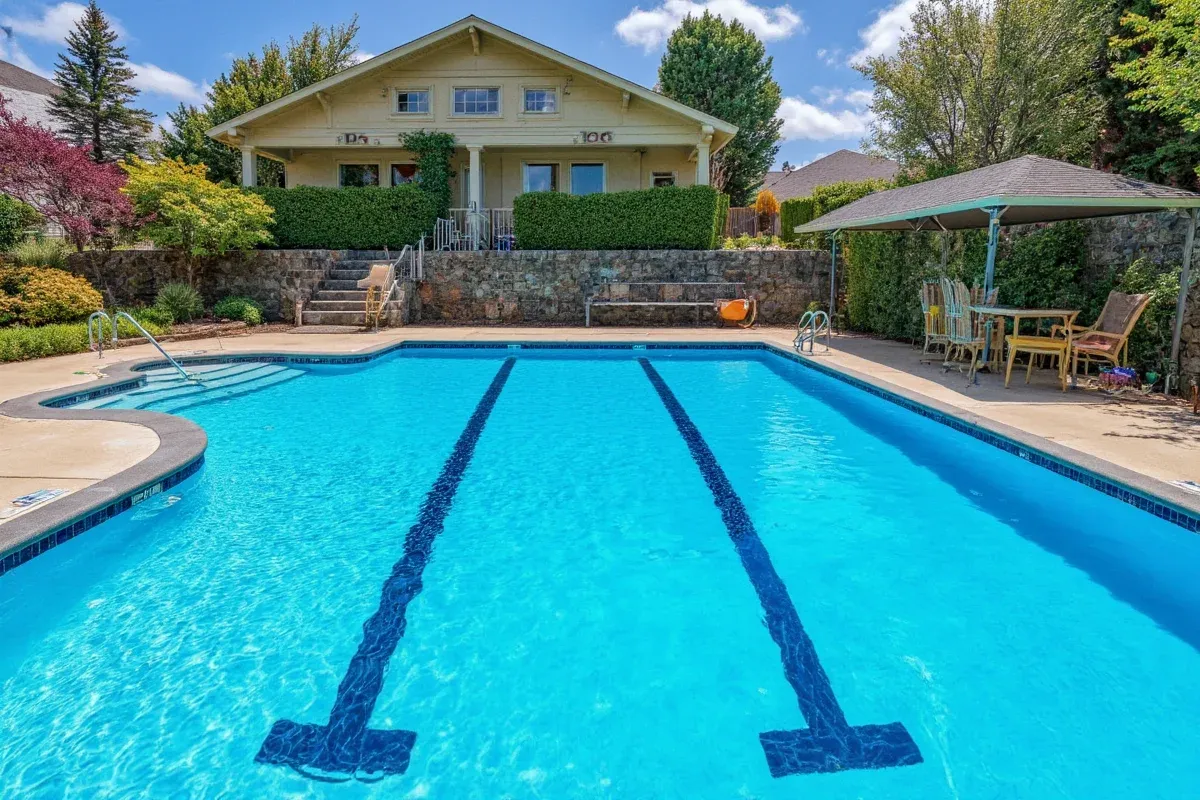
Olympic Pool Depth: Official 2026 Standards
An Olympic-size swimming pool is 2.0 meters (6 feet 7 inches) deep on average, with a minimum depth of 2.0 meters throughout the competition area to meet FINA standards. This depth ensures minimal water turbulence and optimal swimmer performance during elite competitions.
Understanding Olympic Swimming Pool Depth Standards
The depth of an Olympic swimming pool is strictly regulated by the Fédération Internationale de Natation (FINA), the international governing body for aquatic sports. Maintaining a consistent depth is crucial for fairness, safety, and competitive integrity in high-level swimming events.
Why Is Pool Depth Important?
- Reduces wave resistance: Deeper water minimizes surface waves and turbulence, allowing swimmers to maintain speed.
- Improves swimmer safety: Adequate depth prevents injuries during dives and turns.
- Ensures fair competition: Uniform depth across all lanes eliminates any hydrodynamic advantages.
- Enhances timing accuracy: Stable water conditions support precise touchpad responses at the wall.
FINA Regulations for Competition Pools
Fully compliant Olympic pools must adhere to strict dimensional and structural guidelines. While length and width are standardized, depth plays a critical role in certification.
| Feature | Standard Measurement | Regulatory Body |
|---|---|---|
| Length | 50 meters | FINA |
| Width | 25 meters | FINA |
| Number of Lanes | 10 | FINA |
| Lane Width | 2.5 meters | FINA |
| Minimum Depth | 2.0 meters (6'7") | FINA |
| Recommended Depth | 3.0 meters (9'10") | FINA |
| Water Temperature | 25–28°C (77–82°F) | FINA |
| pH Level | 6.5–7.5 | FINA |
The data shows that while the minimum allowable depth is 2.0 meters, FINA recommends up to 3.0 meters for elite competitions to further reduce wave reflection from the bottom. Pools used in Olympic Games typically exceed the minimum standard to optimize performance conditions.
Variations in Olympic Pool Depths
Although the minimum depth is fixed, actual depths can vary based on venue design and technological upgrades. For example, some modern facilities incorporate deeper basins to accommodate underwater camera systems and advanced lane line dampeners.
Examples of Actual Olympic Pool Depths
- London 2012 Aquatics Centre: 3.0 meters deep
- Rio 2016 Olympic Aquatic Stadium: 3.0 meters deep
- Tokyo 2020 Olympic Aquatics Centre: 3.0 meters deep
- Paris 2024 Aquatic Centre (planned): 3.0 meters deep
These examples illustrate that host cities consistently build beyond the minimum requirement to enhance athlete experience and broadcast quality.
Common Questions About Olympic-Size Swimming Pools
How deep is an Olympic-size swimming pool?
An Olympic-size swimming pool must be at least 2.0 meters (6 feet 7 inches) deep according to FINA regulations, though most elite venues are built to 3.0 meters (9 feet 10 inches) for better performance conditions.
Why are Olympic pools so deep?
Olympic pools are deep to minimize wave turbulence and prevent energy reflection from the pool bottom, which can slow swimmers. Greater depth improves water stability and supports faster times.
Are all Olympic pools the same depth?
No, not all Olympic pools are exactly the same depth. While all must meet the minimum 2.0-meter depth standard, many competition pools—especially those used in the Olympics—are constructed at 3.0 meters for superior hydrodynamic performance.
Does pool depth affect swimming speed?
Yes, greater depth reduces wave interference and drag, allowing swimmers to maintain higher speeds. Studies have shown that deeper pools contribute to faster recorded times due to improved water dynamics.
What happens if an Olympic pool is too shallow?
If a pool is shallower than 2.0 meters, it does not meet FINA standards and cannot host official competitions. Shallow pools increase wave resistance and risk injury during starts and turns, compromising both safety and fairness.
More Articles
 Olympic Care and Maintenance: A Technical Field Manual for Pool Operators and Facility Managers
 When Does the Ice Skating Rink Open in 2025?
 How Long to Swim English Channel: Times & Facts
 The Best Safety Story: How a Single Decision Saved 247 Lives at DuPont’s La Porte Facility
 How Many Gallons in an Average Swimming Pool?
 How Many Calories Does Swimming Burn? (By Weight & Stroke)
 Most Dangerous Sports in the World: Death Rates and Injury Statistics
 What Muscles Does a Rowing Machine Work? Full Breakdown
 How Fast Can a Jet Ski Go? Top Speeds Revealed
 Olympic Swimming Pool Dimensions Explained