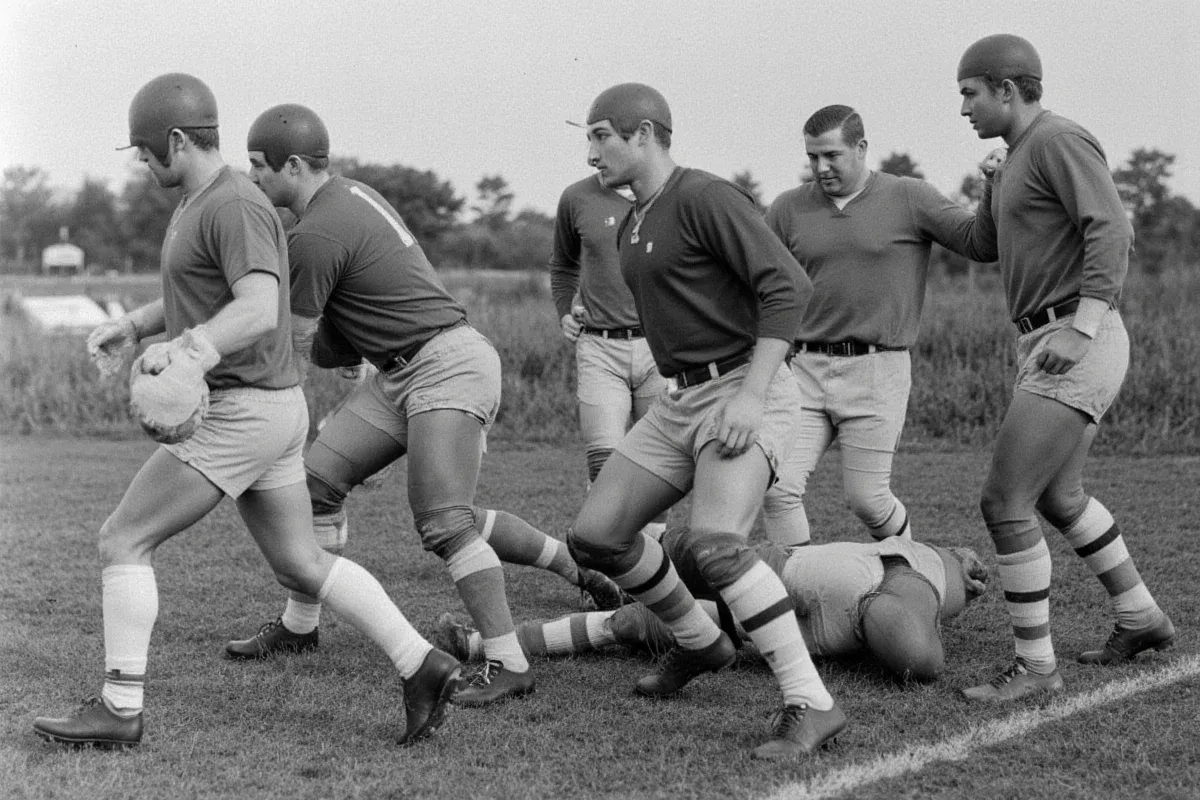
Who Invented American Football? Walter Camp's Role
Who Invented American Football?
The invention of American football cannot be credited to a single individual, but Walter Camp is widely recognized as the “Father of American Football” for his pivotal role in shaping the sport's rules and structure in the late 19th century. While early forms of football were played at colleges like Harvard, Yale, and Princeton, it was Camp who introduced critical innovations such as the line of scrimmage, the system of downs, and the standard 11-player team, transforming rugby-style play into the distinct game we know today.
The Evolution of American Football
American football evolved from a mix of soccer and rugby, with roots tracing back to informal games played in the mid-1800s. Early versions lacked standardized rules, leading to chaotic and often dangerous contests. The need for uniformity prompted influential figures, especially Walter Camp, to formalize the game.
Key Influences on Early Football
- Intercollegiate matches between schools like Harvard, Yale, and Princeton in the 1860s and 1870s
- Adoption of rugby rules by some universities after the 1874 Harvard-McGill game
- Lack of consistent regulations leading to safety concerns and gameplay inconsistencies
- Growing demand for a uniquely American sport distinct from British rugby and soccer
Walter Camp: The Architect of Modern Football
Walter Camp, a former Yale player and coach, served on the Intercollegiate Football Association rules committee from 1876 onward. His contributions laid the foundation for modern American football.
Major Rule Changes Introduced by Walter Camp
- 1880: Introduced the snap from center to quarterback, replacing the rugby scrum
- 1882: Established the system of downs (originally three downs to gain five yards)
- 1883: Standardized the 11-player team
- 1887: Helped define the line of scrimmage and field dimensions
- 1890s: Advocated for legalizing the forward pass (later adopted in 1906)
| Year | Innovation | Impact | Adopted By |
|---|---|---|---|
| 1880 | Introduction of the snap | Replaced chaotic scrums with structured play initiation | Intercollegiate Football Association |
| 1882 | Down-and-distance system | Encouraged strategic play over brute force | Yale, later nationwide adoption |
| 1883 | 11-player teams | Standardized team size, improving balance and fairness | Intercollegiate Football Association |
| 1894 | Legalization of blocking | Increased offensive strategy and physicality | NCAA predecessor rules committees |
| 1906 | Forward pass legalized | Revolutionized offensive tactics and reduced reliance on mass formations | National Collegiate Athletic Association (NCAA) |
The data shows a clear progression of rule changes from 1880 to 1906 that transformed football from a disorganized, rugby-like contest into a structured, strategic sport. Most foundational changes occurred under Walter Camp’s influence before 1900, with the forward pass being a later but equally transformative addition. These innovations collectively defined the essence of American football.
Other Key Figures in Football’s Development
While Walter Camp was central, others also contributed significantly:
- Amos Alonzo Stagg: Pioneer coach who developed early offensive formations and emphasized conditioning.
- John Heisman: Namesake of the Heisman Trophy; advocated for rule changes to improve safety and flow.
- Glenn Scobey Warner (Pop Warner): Innovator of the Carlisle Indian Industrial School team; popularized the forward pass and double wing formation.
From College Game to National Sport
American football grew in popularity through college rivalries and media coverage. The formation of the NFL in 1920 marked its transition to professional status. Over time, television broadcasts and commercialization turned it into America’s most-watched sport.
Frequently Asked Questions About the Invention of American Football
Who is considered the father of American football?
Walter Camp is universally regarded as the “Father of American Football” due to his extensive contributions to the sport’s rules and structure during the 1880s and 1890s.
Was American football invented by one person?
No, American football evolved from rugby and soccer through collective input, but Walter Camp was the most influential figure in standardizing its rules and gameplay.
When was American football invented?
There is no single invention date, but the period between 1876 and 1906 saw the key developments that defined the sport, with Walter Camp leading rule reforms starting in 1876.
What was the first American football game?
The first intercollegiate football game was played between Rutgers and Princeton on November 6, 1869, using rules similar to soccer. The modern version began taking shape after the 1874 Harvard-McGill game introduced rugby elements.
How did American football differ from rugby?
American football diverged from rugby by introducing the line of scrimmage, downs system, forward pass, and specialized positions, making it more strategic and less reliant on continuous play.
More Articles
 What Conference Is Notre Dame In For Football? (2025 Update)
 How Many National Championships Does Ohio State Have?
 How Many Scholarships for D1 Football? Full Breakdown
 What Does a Running Back Do in Football? Key Roles Explained
 When Does Football Season Start? 2025 Dates by Level
 Where Did Cam Little Play College Football?
 What Division Is Harvard Football? FCS Explained
 How Many D3 Football Teams Are There? 2025 Update
 Who Is the Best Football Player of All Time?
 Who Is the Highest-Paid Footballer in 2025?