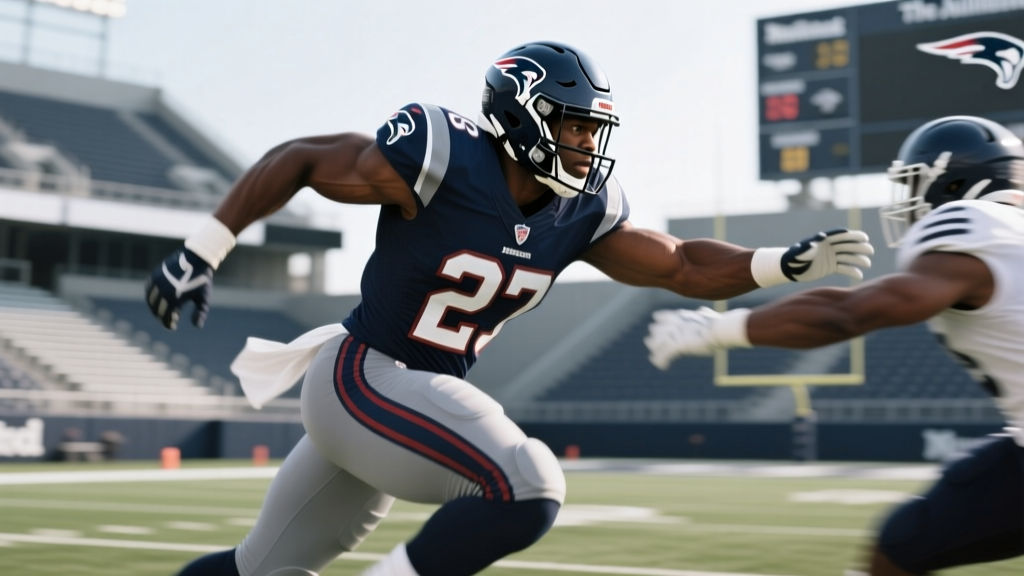
What Does a Strong Safety Do in Football?
In American football, a strong safety is a defensive back who plays closer to the line of scrimmage, primarily responsible for stopping the run, covering tight ends, and providing deep support against the pass. Known for their physicality and versatility, strong safeties often serve as hybrid defenders who blend linebacker-like toughness with cornerback-level coverage skills.
What Is a Strong Safety in Football?
The strong safety (SS) is one of two primary safety positions in a traditional defensive backfield, alongside the free safety. Positioned on the "strong" side of the offense—typically where the tight end lines up—the strong safety plays a critical role in both run defense and pass coverage. Unlike the free safety, who acts as the last line of defense and focuses more on deep zone coverage, the strong safety is more involved in frontline action.
Key Responsibilities of a Strong Safety
- Run Support: The strong safety must be physically tough enough to take on blockers and tackle ball carriers near the line of scrimmage.
- Tight End Coverage: Often tasked with covering athletic tight ends in man or zone schemes.
- Blitzing: Frequently used as a surprise pass rusher due to their positioning and size.
- Zone and Man Coverage: Covers intermediate to deep zones or specific receivers depending on the defensive scheme.
- Field Awareness: Must read offensive formations quickly to adjust alignment and responsibilities.
Strong Safety vs. Free Safety: Key Differences
While both safeties are part of the secondary, their roles differ significantly based on scheme and personnel.
| Attribute | Strong Safety (SS) | Free Safety (FS) |
|---|---|---|
| Primary Role | Run support, physical coverage | Deep coverage, ball hawk |
| Positioning | Near line, strong side | Deep middle, center field |
| Size & Strength | Larger, more physical | Leaner, faster |
| Blitz Frequency | Higher | Rare |
| Coverage Focus | Tight ends, RBs, short zones | Deep zones, double coverage |
Skills and Attributes of an Elite Strong Safety
To excel at the position, a strong safety must possess a rare combination of physical and mental traits.
- Size and Strength: Typically 6'0"–6'3", 210–230 lbs, capable of shedding blocks.
- Speed and Agility: Enough speed to keep up with tight ends and running backs in the open field.
- Football IQ: Must diagnose play-action, screen passes, and run directions instantly.
- Hitting Ability: Delivers big hits to deter runs and break up passes.
- Versatility: Effective in multiple defensive packages (nickel, dime, base).
Notable Strong Safeties in NFL History
Some of the most impactful defenders in NFL history have played strong safety.
| Player | Teams | Career Span | Pro Bowls | All-Pro Selections | Interceptions |
|---|---|---|---|---|---|
| Ronnie Lott | 49ers, Jets, Raiders | 1981–1994 | 10 | 7 | 63 |
| Ed Reed | Ravens, Texans, Jets | 2002–2013 | 9 | 5 | 64 |
| Charles Woodson | Raiders, Packers | 1998–2015 | 8 | 5 | 55 |
| Earl Thomas | Seahawks, Ravens, Ravens | 2010–2019 | 6 | 3 | 39 |
| Troy Polamalu | Steelers | 2003–2014 | 8 | 6 | 32 |
Data shows that elite strong safeties combine high interception totals with consistent Pro Bowl and All-Pro recognition. While some, like Ed Reed, recorded more picks than traditional cornerbacks, others like Ronnie Lott excelled through sheer impact and versatility across decades of dominant play.
How Strong Safeties Fit Into Defensive Schemes
Different defensive systems utilize the strong safety in unique ways:
- 4-3 Defense: SS aligns over the tight end, often single-covered or playing press.
- 3-4 Defense: May act as an extra linebacker, especially in run-heavy situations.
- Nickel Packages: Lines up in the slot or deep third, depending on coverage.
- Blitz Packages: Used as a delayed blitzer from the back end to pressure quarterbacks.
Modern NFL defenses increasingly demand multi-skill defenders, making the strong safety one of the most adaptable pieces on the roster.
Frequently Asked Questions About Strong Safeties in Football
What does a strong safety do in football?
A strong safety defends against both the run and pass, typically lining up on the offense’s strong side. They cover tight ends, support run defense, blitz occasionally, and provide intermediate-to-deep coverage.
Why is it called a strong safety?
The position is named after the "strong" side of the offense, where the tight end is aligned. The strong safety matches up against this side to counter bigger, physical threats.
Is a strong safety bigger than a free safety?
Generally, yes. Strong safeties tend to be larger and stronger (210–230 lbs) to handle run support and physical coverage, while free safeties are often leaner and faster for deep range.
Can a strong safety play free safety?
Yes, many players transition between roles. However, the skill sets differ—strong safeties need more physicality, while free safeties require superior range and ball skills.
Who are the top strong safeties in the NFL today?
As of 2025, standout strong safeties include Justin Simmons of the Atlanta Falcons, Derwin James Jr. of the Los Angeles Chargers, and Jessie Bates III of the Carolina Panthers, all known for their versatility and playmaking ability.
More Articles
 What Position Is LS in Football? Explained
 When Does High School Football Season End?
 How Many Uniforms Does Oregon Football Have?
 What Time Are Football Games On Today? Full Schedule
 How Long Do Football Games Last? Full Breakdown by Level
 When Does Football Start Today? Kickoff Times for Oct 25
 What Channel Is Thursday Night Football On?
 Next Patriots Game: Date, Time, TV & Tickets
 Who Owns PSG Football Club? QSI Ownership Explained
 When Does NCAA Football Begin in 2025? Full Schedule Dates