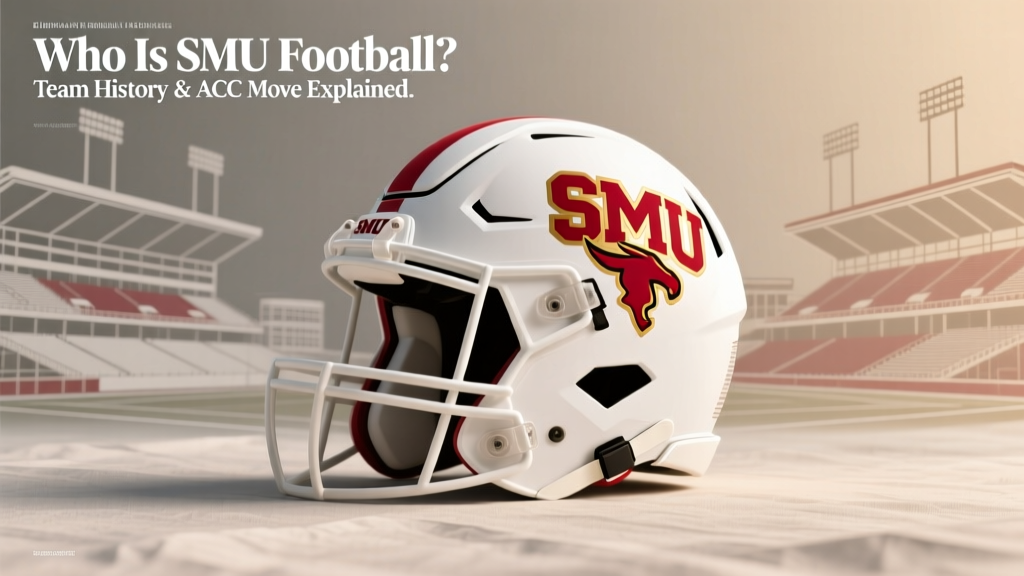
Who Is SMU Football? Team History & ACC Move Explained
SMU football refers to the Southern Methodist University Mustangs football team, a NCAA Division I FBS program competing in the Atlantic Coast Conference (ACC) as of 2024. With a storied history including a national championship claim in 1935 and a notorious NCAA 'death penalty' in 1987, SMU has reemerged as a competitive force under head coach Rhett Lashlee, highlighted by a 2023 conference title and consistent bowl appearances.
Overview of SMU Football
The SMU Mustangs represent Southern Methodist University in American football. Based in Dallas, Texas, the program has evolved from historical prominence to modern resurgence, now playing at the highest level of college football after joining the Atlantic Coast Conference (ACC) in July 2024. This move marks a pivotal moment in the program’s trajectory, aligning it with elite academic and athletic institutions.
Key Facts About SMU Football
- Team Name: SMU Mustangs
- University: Southern Methodist University
- Location: Dallas, Texas
- Conference: Atlantic Coast Conference (ACC), starting 2024
- Division: NCAA Division I Football Bowl Subdivision (FBS)
- Home Stadium: Gerald J. Ford Stadium (capacity: ~32,000)
- Head Coach: Rhett Lashlee (as of 2025)
- First Season: 1915
Historical Significance and Legacy
SMU football boasts a legacy defined by both triumph and turmoil. The program gained national attention in the early 20th century, claiming a national championship in 1935 under coach Matty Bell. That season, SMU finished 12–1 and defeated nationally ranked teams, earning recognition from select polls.
The Death Penalty Era
One of the darkest chapters in college football history unfolded at SMU in 1987 when the NCAA imposed the so-called "death penalty" due to rampant violations involving illicit payments to players. The sanctions canceled the 1987 season and severely restricted the 1988 season, effectively dismantling the program for years. The long-term impact included lost recruiting momentum, diminished fan support, and financial strain.
Resurgence and Modern Success
After decades of rebuilding, SMU began a notable revival in the 2000s. Under coaches like June Jones and Sonny Dykes, the team adopted innovative offensive systems—particularly the run-and-shoot and later high-tempo spread offenses—that revitalized performance. The 2023 season was historic: SMU won the American Athletic Conference (AAC) Championship with a 26–14 victory over Tulane, finishing the regular season 10–2 and earning a berth in the College Football Playoff Access Bowl (Fenway Bowl).
SMU's Move to the ACC
In 2023, SMU accepted an invitation to join the Atlantic Coast Conference, effective July 1, 2024. This transition bypassed the traditional waiting period thanks to special provisions related to conference realignment. Joining powerhouses like Clemson, Florida State, and Miami, SMU gains greater national exposure, enhanced recruiting opportunities, and increased revenue through media rights.
Impact of ACC Membership
- National Exposure: Games televised on ESPN networks multiple times per season.
- Recruiting Boost: Proximity to talent-rich Texas combined with ACC branding strengthens recruiting pipelines.
- Academic Alignment: SMU’s strong academic profile complements ACC’s emphasis on institutional excellence.
- Revenue Growth: Projected annual media payouts expected to exceed $40 million per school by 2025.
| Season | Record (Overall) | Conference Record | Bowl Game | Final AP Rank |
|---|---|---|---|---|
| 2023 | 11–3 | 7–1 (AAC) | Fenway Bowl (vs. Boston College) | NR |
| 2022 | 8–5 | 5–3 (AAC) | Frisco Bowl (Win vs. UTSA) | NR |
| 2021 | 8–4 | 5–3 (AAC) | New Mexico Bowl (Loss vs. BYU) | NR |
| 2019 | 10–3 | 6–2 (AAC) | Arizona Bowl (Win vs. Arizona) | NR |
| 1982 | 11–0–1 | 7–0–1 (SWC) | Orange Bowl (Loss vs. Penn State) | #2 |
The table highlights key seasons in SMU football history, showing both historical dominance (1982) and recent resurgence (2019–2023). The 1982 team’s undefeated regular season and #2 final ranking remain program benchmarks. Since 2019, SMU has recorded four consecutive winning seasons, reflecting sustained improvement under modern coaching leadership. Despite strong records, national ranking penetration remains limited, suggesting room for growth in the ACC era.
Notable Players and Coaches
SMU has produced several NFL-caliber athletes and influential coaches. Among the most notable alumni is Eric Dickerson, the legendary running back who set the NFL rookie rushing record in 1983 and was inducted into the Pro Football Hall of Fame in 1999. More recently, wide receiver Rashee Rice emerged as a star before being drafted by the Kansas City Chiefs in 2023.
Recent Coaching Leadership
- Rhett Lashlee (2022–present): Led SMU to the 2023 AAC Championship; known for elite offensive design.
- Sonny Dykes (2018–2021): Transformed program culture; achieved 10 wins in 2019.
- June Jones (2008–2017): Revived program with run-and-shoot offense; won three bowl games.
Frequently Asked Questions About SMU Football
What conference is SMU football in for 2025?
As of July 1, 2024, SMU football competes in the Atlantic Coast Conference (ACC), marking its first season among ACC rivals in 2024 and continuing into 2025.
Has SMU ever won a national championship in football?
SMU claims a national championship for the 1935 season based on the Dickinson System rankings. While not universally recognized like modern titles, this claim is officially acknowledged by the university.
Who is the current head coach of SMU football?
Rhett Lashlee is the current head coach of SMU football, entering his fourth season in 2025. He previously served as offensive coordinator at Auburn and Arkansas.
Where does SMU play its home football games?
SMU plays home games at Gerald J. Ford Stadium, located on the university’s campus in Dallas, Texas. The stadium opened in 1932 and has a current capacity of approximately 32,000.
Why was SMU football banned in 1987?
SMU received the NCAA “death penalty” in 1987 due to repeated violations involving slush funds and illegal player payments. The entire 1987 season was canceled, and the team played only five road games in 1988 with no home games or TV appearances.
More Articles
 How Much Do Football Referees Make? (2025 Data)
 Who Has the Most Trophies in Football History?
 Oregon Ducks Game Time Today: Start Time & TV Info
 How Often Is the Football World Cup Held?
 Where Does Notre Dame Play Football? Stadium Info & Facts
 What Does Edge Mean in Football? Explained
 Who Plays NFL Football on Sunday? Full Guide & Schedule
 Where Was Football Founded? The True Origin Explained
 When Was American Football Started? History & Origins
 Why Is a Football Called a Football?