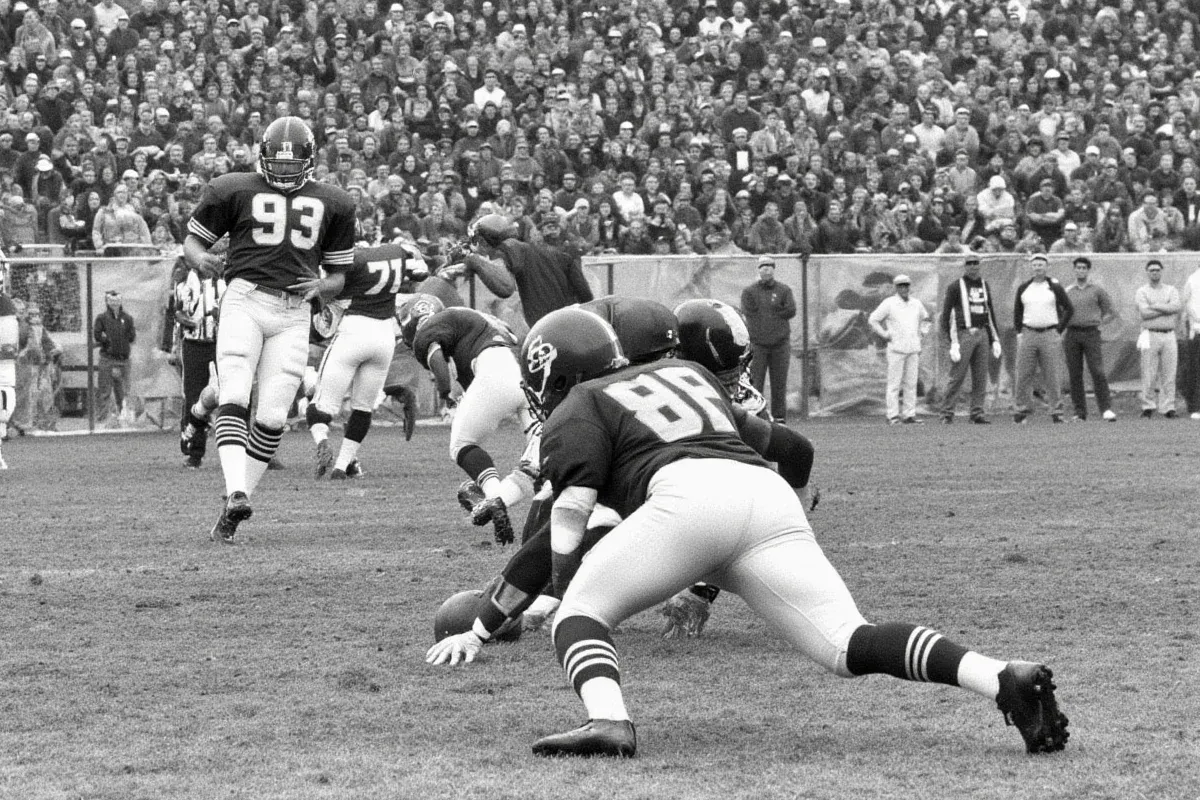
Who Invented American Football? The True Origins
American football was not invented by a single person, but it evolved from rugby and soccer in the late 19th century. Walter Camp, known as the \"Father of American Football,\" played the most pivotal role in shaping the modern game through rule changes like the line of scrimmage and the down system.
The Origins of American Football
American football emerged in the United States during the 1860s and 1870s as a blend of English rugby and association football (soccer). Early versions of the game were played on college campuses, particularly between institutions like Harvard, Yale, Princeton, and Rutgers. These games lacked standardized rules and varied significantly from one match to another.
Key Influences on Early Development
- Rugby football: Provided the foundation for carrying the ball and tackling.
- Soccer: Influenced early kicking-based gameplay before hand use became dominant.
- Intercollegiate competition: Drove demand for standardized rules.
Walter Camp: The Architect of Modern Football
While no one individual can be credited with inventing American football outright, Walter Camp—a former Yale player and coach—was instrumental in transforming the sport into its modern form. From the 1880s through the early 1900s, he introduced key innovations that differentiated American football from rugby.
Camp's Major Rule Contributions
- Line of Scrimmage (1880): Replaced the rugby scrum with a defined starting point for each play.
- Down-and-Distance System (1882): Introduced the concept of gaining 5 yards in 3 downs (later adjusted to 10 yards in 4 downs).
- Standardized Team Size: Reduced teams from 15 to 11 players.
- Scoring System: Helped formalize point values for touchdowns, field goals, and safeties.
Evolution Through Collegiate Rules Committees
The Intercollegiate Football Association (IFA), formed in 1876, began standardizing rules across schools. However, it wasn’t until the formation of the Intercollegiate Rules Committee in the 1880s—with Camp as a leading member—that consistent rulemaking took hold. This committee laid the groundwork for what would eventually become the NCAA’s rulebook.
Milestones in Rule Standardization
| Year | Rule Change | Impact |
|---|---|---|
| 1876 | Harvard adopts rugby rules | Shift away from soccer-style play |
| 1880 | Camp introduces line of scrimmage | Differentiated game from rugby |
| 1882 | Down-and-distance system established | Encouraged strategic play |
| 1888 | Forward pass legalized (but rarely used) | Laid foundation for future innovation |
| 1906 | NCAA legalizes forward pass | Reduced reliance on brute force, improved safety |
Key Innovations That Shaped the Game
Beyond Camp’s contributions, several other developments helped define American football:
- The Forward Pass (1906): Legalized by the NCAA to reduce injuries and open up gameplay.
- Helmet Introduction (1890s–1940s): Leather helmets appeared in the 1890s; mandatory plastic helmets came later.
- Professional Leagues: The American Professional Football Association (founded 1920, later NFL) institutionalized the sport.
| Year | Event | Participating Teams | Significance |
|---|---|---|---|
| 1869 | Rutgers vs. Princeton | Rutgers, Princeton | First intercollegiate football game (resembled soccer) |
| 1874 | Harvard vs. McGill | Harvard, McGill University | Introduced rugby-style rules to U.S. |
| 1880 | Camp proposes line of scrimmage | N/A | Defined structure for each play |
| 1906 | Forward pass legalized | NCAA adoption | Revolutionized offensive strategy |
| 1920 | APFA (NFL) founded | 10 original teams | Birth of professional league |
The data illustrates how American football evolved incrementally through key events rather than a single invention. The shift from soccer-like contests in 1869 to the structured, rule-bound game by 1920 highlights the importance of experimentation and leadership—particularly by Walter Camp and collegiate committees—in shaping the sport. The legalization of the forward pass in 1906 marked a turning point toward modern offensive strategies.
Frequently Asked Questions About Who Invented American Football
Who is considered the father of American football?
Walter Camp is widely regarded as the \"Father of American Football\" due to his foundational rule changes, including the line of scrimmage and the down system, which transformed the sport from its rugby roots into a distinct game.
Was American football invented by one person?
No, American football was not invented by a single individual. It evolved over decades through contributions from multiple individuals, colleges, and rule-making bodies, with Walter Camp being the most influential figure.
When was the first American football game played?
The first intercollegiate football game resembling modern football was played on November 6, 1869, between Rutgers and Princeton. However, this game was more similar to soccer than today’s American football.
How did American football differ from rugby?
American football diverged from rugby primarily through the introduction of the line of scrimmage, the down-and-distance system, and later the legalization of the forward pass—elements that added structure and strategy absent in traditional rugby play.
What role did Walter Camp play in football history?
Walter Camp served on the Intercollegiate Rules Committee for nearly 50 years and introduced critical innovations such as the snap from center, the quarterback position, and standardized scoring. His influence earned him recognition as the central architect of modern American football.
More Articles
 Has Oregon Won a National Championship in Football?
 Soccer Cleats for Wide Feet: 2026 Buyer Guide
 Who Is the Best Football Player of All Time?
 Who Invented Football? Walter Camp's Role Explained
 When Does Football Season Start? 2025 Dates by Level
 When Do the Badgers Football Play in 2025? Schedule & Times
 Who Won Olympic Football 2024? France & Spain Claim Gold
 Which Team Has Most Super Bowl Wins? (Updated 2025)
 How Many National Championships Has Alabama Football Won?
 What Time Are the NFL Football Games Today?