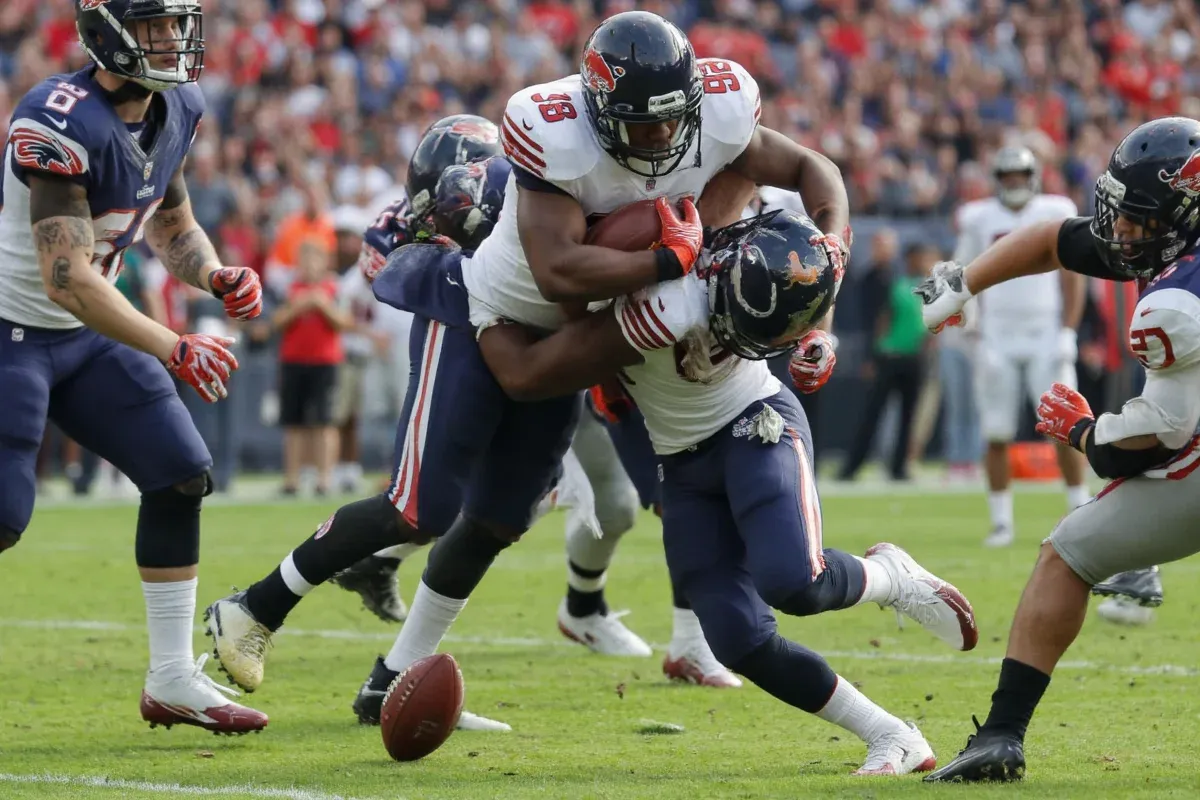
What Do Linebackers Do in Football? Key Roles Explained
Linebackers in football are defensive players who line up behind the defensive linemen and are responsible for stopping the run, covering receivers, and pressuring the quarterback. They serve as the backbone of the defense, combining speed, strength, and football intelligence to read offenses and make plays.
What Is a Linebacker?
A linebacker (LB) is a key position in American football's defensive unit. Positioned between the defensive line and the defensive backfield, linebackers must be versatile athletes capable of tackling, covering pass routes, and rushing the passer.
Primary Responsibilities of a Linebacker
- Stop running plays by filling gaps and tackling ball carriers
- Cover tight ends, running backs, or slot receivers in passing situations
- Blitz the quarterback on designed pressure plays
- Read offensive formations and signal defensive adjustments
- Serve as the defensive leader on the field
Types of Linebackers
There are three main types of linebackers, each with distinct roles based on alignment and responsibilities:
Inside Linebacker (ILB)
Also known as middle linebackers (MLB), ILBs typically line up in the center of the defense. They are often the primary tacklers and defensive play-callers.
Outside Linebacker (OLB)
OLBs align on the edges of the defensive line. In a 3-4 defense, they may specialize as pass rushers (edge rushers) or coverage players depending on the scheme.
Edge Rusher
A hybrid role often filled by an OLB, especially in 3-4 defenses. This player focuses on pressuring the quarterback from the outside, blending linebacker and defensive end skills.
Linebacker Roles by Defensive Scheme
The exact duties of a linebacker vary significantly based on the defensive formation used.
| Defense Type | Linebacker Count | Primary Role | Example Teams (2024) |
|---|---|---|---|
| 4-3 Defense | 3 (1 MLB, 2 OLB) | Run support, zone coverage | Kansas City Chiefs, Dallas Cowboys |
| 3-4 Defense | 4 (2 ILB, 2 OLB) | Pass rush, flexible coverage | Tampa Bay Buccaneers, Pittsburgh Steelers |
| Nickel Package | 2–3 | Match speed vs. multiple WRs | L.A. Rams, Buffalo Bills |
| Dime Package | 1–2 | Deep coverage support | Baltimore Ravens, San Francisco 49ers |
The table shows how defensive schemes influence linebacker deployment. The 3-4 defense relies more heavily on linebackers for both pass rush and coverage, while the 4-3 uses them primarily for run defense and short-zone drops. Nickel and dime packages reduce linebacker presence to counter pass-heavy offenses.
Skills and Attributes of Elite Linebackers
Successful linebackers combine physical and mental traits to excel in dynamic game situations.
Physical Requirements
- Strength: To shed blockers and tackle runners
- Speed: For chasing down plays and covering receivers
- Agility: To change direction quickly in pursuit
- Endurance: To perform at a high level across all downs
Mental & Tactical Skills
- Football IQ: Ability to read offensive formations and anticipate plays
- Communication: Often responsible for calling audibles and adjustments
- Leadership: Frequently serve as defensive captains
- Discipline: Staying in assigned zones or gaps without over-pursuing
Evolution of the Linebacker Position
Historically, linebackers were primarily run-stoppers. However, modern NFL offenses have transformed the role into a more agile, coverage-focused position. With the rise of spread offenses and three-plus wide receiver sets, linebackers now face more passing situations than ever before.
Players like Patrick Mahomes and Lamar Jackson have forced defenses to adapt, increasing the demand for athletic, multi-skilled linebackers who can cover ground in space. As a result, traditional "big" middle linebackers are being replaced by faster, lighter hybrids better suited for today’s pace-and-space game.
Frequently Asked Questions About Linebackers in Football
What do linebackers do on every play?
On each play, linebackers read the offense, fill assigned gaps against the run, drop into coverage zones, or execute blitzes based on the defensive call. Their actions depend on the formation, down, and game situation.
Who are the best linebackers in NFL history?
Legends include Lawrence Taylor, Ray Lewis, Jack Lambert, Derrick Brooks, and Junior Seau. These players combined dominance against the run, pass coverage, and leadership to define their eras.
How fast should a linebacker run the 40-yard dash?
Top NFL linebackers typically run the 40-yard dash in 4.6 to 4.8 seconds. Edge rushers may be faster (sub-4.6), while inside backers prioritize power over pure speed.
Do linebackers cover tight ends in man-to-man defense?
Yes, especially outside linebackers. In man coverage, OLBs often match up with tight ends or running backs coming out of the backfield, requiring strong tackling and fluid hips to stay with agile targets.
Can a linebacker win Defensive Player of the Year?
Absolutely. Recent winners like T.J. Watt and Bobby Wagner show that elite sack totals, tackles, and impact plays make linebackers strong candidates for the award, especially if they lead their team in defensive performance.
More Articles
 College Football Tonight: Schedule & How to Watch
 What Does a Cornerback in Football Do?
 What Football Games Are on TV Tomorrow? Full Schedule
 How Many Overtime Periods in College Football?
 Football Gear Care: Boots and Equipment
 What Does 4th and 10 Mean in Football? Explained
 When Was American Football Invented? History & Origins
 Football Teams Playing Now: Live Matches Today
 How Many D3 Football Teams Are There? 2025 Update
 What Does TBD Mean in Football? Explained