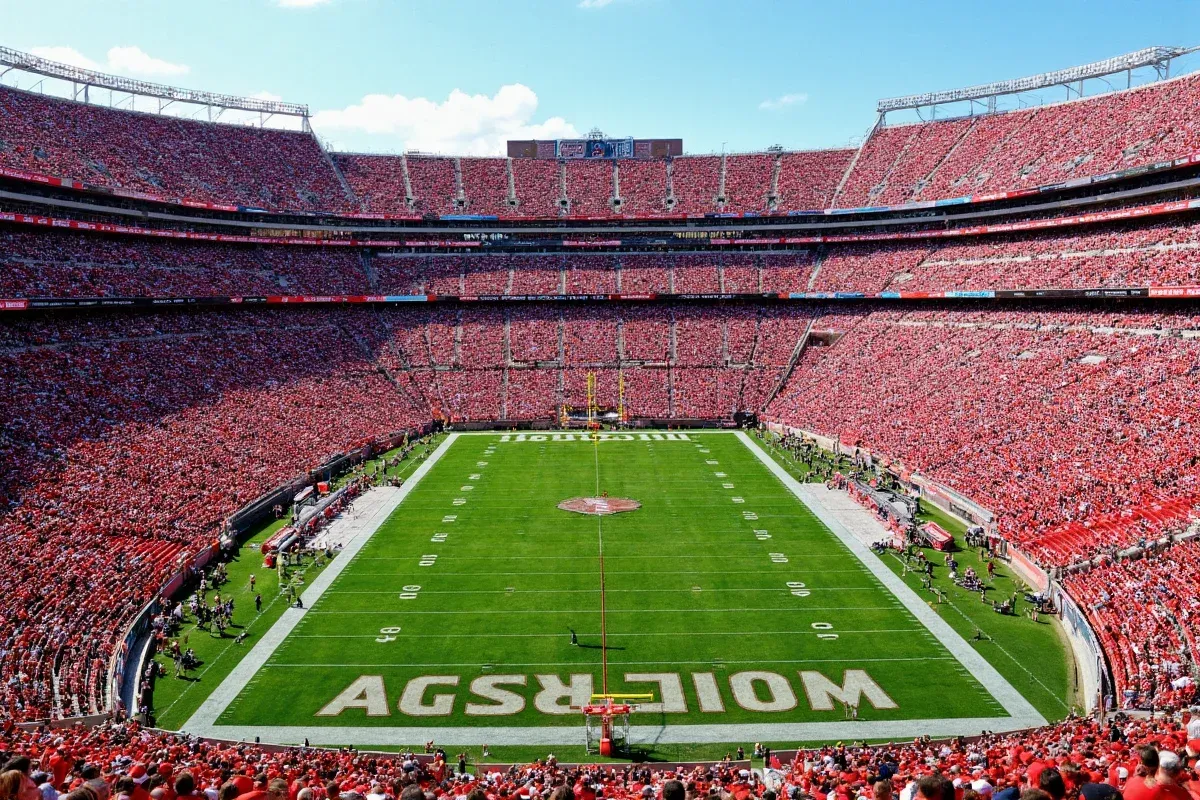
Who Has the Biggest College Football Stadium? (2025)
Michigan Stadium at the University of Michigan holds the title of the largest college football stadium in the United States, with an official seating capacity of 107,601. Commonly known as "The Big House," it has consistently ranked as the nation's largest stadium since expansions in the early 2000s and hosts massive crowds for Wolverines home games, regularly exceeding 110,000 attendees when standing room is included.
Overview of the Largest College Football Stadiums
College football stadiums in the U.S. are renowned for their immense size and passionate fanbases. The competition for the top spot centers on a few powerhouse programs with facilities that rival professional venues. Michigan Stadium leads this category, but several other stadiums come close in capacity and atmosphere.
Why Stadium Size Matters in College Football
- Larger stadiums enhance team revenue through ticket sales and concessions.
- They contribute to home-field advantage due to crowd noise and energy.
- Stadium size often reflects institutional pride and athletic department investment.
- Media coverage and recruiting efforts benefit from iconic, high-capacity venues.
Top 10 Largest College Football Stadiums in the U.S.
| Rank | University | Stadium Name | Capacity | Conference | Location |
|---|---|---|---|---|---|
| 1 | University of Michigan | Michigan Stadium | 107,601 | Big Ten | Ann Arbor, MI |
| 2 | Beaver Stadium - Penn State | Beaver Stadium | 106,572 | Big Ten | University Park, PA |
| 3 | Ohio Stadium - Ohio State | Ohio Stadium | 102,780 | Big Ten | Columbus, OH |
| 4 | Tiger Stadium - LSU | Tiger Stadium | 102,321 | SEC | Baton Rouge, LA |
| 5 | Sanford Stadium - Georgia | Sanford Stadium | 92,746 | SEC | Athens, GA |
| 6 | Rose Bowl - UCLA | Rose Bowl | 91,136 | Big Ten | Pasadena, CA |
| 7 | Neyland Stadium - Tennessee | Neyland Stadium | 101,915 | SEC | Knoxville, TN |
| 8 | Ben Hill Griffin Stadium - Florida | Ben Hill Griffin Stadium | 88,548 | SEC | Gainesville, FL |
| 9 | Kyle Field - Texas A&M | Kyle Field | 102,733 | SEC | College Station, TX |
| 10 | Los Angeles Memorial Coliseum - USC | Los Angeles Memorial Coliseum | 77,500 | Big Ten | Los Angeles, CA |
The data shows that Michigan Stadium maintains a narrow lead over Beaver Stadium and Kyle Field, with all three exceeding 100,000 seats. SEC and Big Ten schools dominate the top 10, reflecting strong regional support and financial backing. Notably, Kyle Field saw major renovations in 2015, increasing its capacity significantly, while Michigan’s record attendance exceeds 115,000 during marquee matchups.
Historical Growth of Michigan Stadium
Originally opened in 1927 with a capacity of 72,000, Michigan Stadium has undergone multiple expansions. Key upgrades occurred in 1956, 1992, and most notably between 2008 and 2010, when luxury boxes and additional seating brought total capacity above 107,000. These expansions were driven by sustained fan demand and the program’s national prominence.
Notable Records at The Big House
- Holds the record for highest attendance in NCAA football history: 115,109 (vs. Notre Dame, 2013).
- Hosted a regular-season NHL game in 2014 (Winter Classic), setting an outdoor attendance record.
- Consistently ranks among the loudest stadiums in college football.
Comparison: SEC vs. Big Ten Stadium Sizes
The Southeastern Conference (SEC) and Big Ten Conference lead in stadium infrastructure. While the Big Ten claims the top two spots (Michigan and Penn State), the SEC features more entries overall in the top 10, including LSU, Tennessee, Georgia, and Texas A&M. This highlights the deep-rooted football culture across both regions.
Factors Influencing Stadium Capacity
- University Size: Larger student bodies often correlate with bigger stadiums.
- Alumni Base: Extensive alumni networks support higher attendance and donations.
- Conference Revenue: Power conferences generate funds enabling facility upgrades.
- Urban vs. Rural Location: Campuses in rural areas may build larger stadiums to accommodate visiting fans.
Frequently Asked Questions About College Football Stadiums
What is the largest college football stadium in the United States?
Michigan Stadium, home of the University of Michigan Wolverines, is the largest college football stadium in the U.S., with a seating capacity of 107,601.
Has any college stadium ever hosted over 110,000 fans?
Yes, Michigan Stadium has recorded attendances over 115,000, including standing-room-only crowds, such as the 2013 game against Notre Dame.
Which conference has the largest average stadium capacity?
As of 2025, the Big Ten Conference has the highest average stadium capacity among FBS conferences, closely followed by the SEC.
Is Penn State's Beaver Stadium bigger than Michigan's?
No, Beaver Stadium has a capacity of 106,572, making it slightly smaller than Michigan Stadium’s 107,601 seats.
Are stadium capacities fixed or do they change over time?
Capacities can change due to renovations, safety regulations, or added seating. For example, Kyle Field was expanded to over 102,000 in 2015, and Michigan made adjustments in 2010 to maximize capacity.
More Articles
 Buccaneers Game Today: Start Time & How to Watch
 What Time Is Football On Today? Live Game Schedules 2025
 Clemson Football Ranking 2025: Current AP & Coaches Poll
 What Does DT Mean in Football? Defensive Tackle Explained
 What Does IR Mean in Fantasy Football? Explained
 When Do the Denver Broncos Play Football in 2025?
 How Long Are Football Fields? Full Dimensions Explained
 Why Two Monday Night Football Games in 2025?
 Why Was American Football Invented? Origins Explained
 How Many Laces Are in a Football? (Answer & Facts)