Where Was American Football Invented? Origins & History
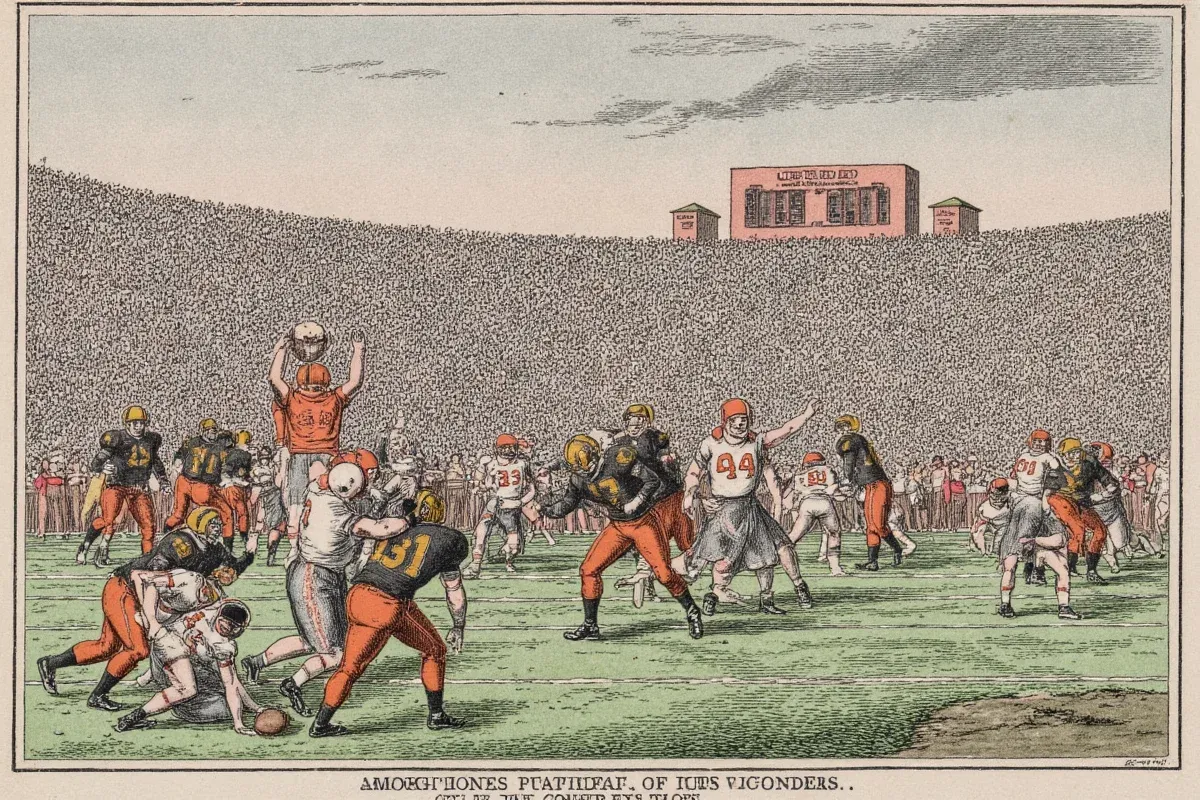
American football was invented in the United States, with its origins tracing back to a game played between Rutgers and Princeton in 1869. This match, though resembling soccer more than modern football, marked the first intercollegiate football contest and laid the foundation for the sport's evolution. Over the following decades, rules were refined by figures like Walter Camp, who is often called the “Father of American Football,” helping shape the distinct game we recognize today.
Origins of American Football
The roots of American football can be traced to early forms of rugby and soccer played in England. However, the sport as we know it began to take shape in the U.S. during the late 19th century. The first recognized intercollegiate football game was held on November 6, 1869, between Rutgers and Princeton Universities.
Key Early Developments
- Rutgers vs. Princeton (1869): Played under modified soccer rules with 25 players per side.
- Introduction of the scrimmage and line of scrimmage by Walter Camp in the 1880s.
- Legalization of the forward pass in 1906 to increase safety and open up gameplay.
- Formation of the Intercollegiate Football Association in 1876.
Evolution from Rugby and Soccer
While British rugby and association football influenced early American games, U.S. colleges adapted the rules independently. Harvard and McGill University played a hybrid game in 1874 using both rugby and soccer rules, which significantly impacted the direction of American football.
This hybrid model encouraged the adoption of rugby-style carrying and tackling, distinguishing it from soccer-based play. By 1876, representatives from several universities met to standardize rules, leading to the formation of the Intercollegiate Football Association, modeled after England’s Football Association but tailored for American preferences.
Walter Camp and the Birth of Modern Football
Walter Camp, a former Yale player and coach, is widely credited with transforming the sport into its modern form. His contributions include:
- Establishing the system of downs (initially three downs to gain five yards).
- Introducing the line of scrimmage and the snap from center.
- Reducing team size from 15 to 11 players.
- Developing the scoring system still used today (touchdowns, field goals, safeties).
Camp served on the Rules Committee for nearly two decades, ensuring consistent rule application across college teams and promoting player safety amid growing concerns over injuries.
College Football Expansion and Professionalization
By the early 20th century, college football had gained widespread popularity across the United States. Schools such as Notre Dame, Michigan, and Alabama built strong programs that drew large crowds and national attention.
The transition to professional leagues began in the 1890s, with players being paid to compete. The American Professional Football Association, founded in 1920, later became the National Football League (NFL), solidifying the sport’s professional structure.
| Year | Event | Significance |
|---|---|---|
| 1869 | Rutgers vs. Princeton | First intercollegiate football game in the U.S. |
| 1874 | Harvard vs. McGill | Introduced rugby elements to American football. |
| 1876 | Intercollegiate Football Association formed | Standardized early rules based on rugby. |
| 1880 | Walter Camp introduces scrimmage line | Created structured offensive plays. |
| 1906 | Forward pass legalized | Increased safety and strategic complexity. |
| 1920 | NFL (originally APFA) founded | Established professional league structure. |
| 1967 | First Super Bowl | Unified NFL and AFL under major championship. |
The timeline shows how American football evolved from informal matches into a codified, professional sport. Key innovations like the forward pass and down system transformed gameplay, while institutional support from colleges and later the NFL ensured long-term growth.
Data reflects pivotal moments where rule changes or organizational milestones directly influenced the sport’s development trajectory, highlighting the shift from amateur competition to a major American cultural institution.
Frequently Asked Questions About Where American Football Was Invented
Where was American football invented?
American football was invented in the United States, originating from a game played between Rutgers and Princeton in 1869. Though initially similar to soccer, it evolved uniquely through rule changes led by figures like Walter Camp.
Was American football invented by one person?
No single individual invented American football, but Walter Camp is considered the “Father of American Football” due to his extensive influence on the rules and structure of the game during the 1880s and 1890s.
Did Canada or England invent American football?
No, although English rugby and soccer influenced the game, and a key hybrid match occurred between Harvard and McGill (a Canadian university), American football was developed and formalized in the United States.
How is American football different from rugby?
American football features downs, line of scrimmage, forward passes, and heavy protective gear, whereas rugby emphasizes continuous play, lateral or backward passing, and minimal padding. These distinctions emerged through rule changes in the U.S. during the late 19th century.
When did the NFL start?
The NFL was founded in 1920 as the American Professional Football Association (APFA) and renamed the National Football League in 1922. It became the premier professional football league in the U.S., overseeing the sport’s commercial and competitive growth.
More Articles
 How Long Is a Football Game? Full Breakdown
 49ers Game Today: Kickoff Time, TV Channel, Live Stream
 Which Country Invented Football (Soccer)?
 FIFA World Cup Winners: Brazil's Record (2026)
 Where Does Pitt Play Football? Home Stadium Info
 Where Can I Buy Football Cards? Top Sources 2025
 Who Is the Tallest Football Player Ever?
 What Do Football Players Wear? Full Kit Breakdown
 Is Football in the Olympics? Yes, Here's How It Works
 How Many Players on a Football Team? Full Breakdown