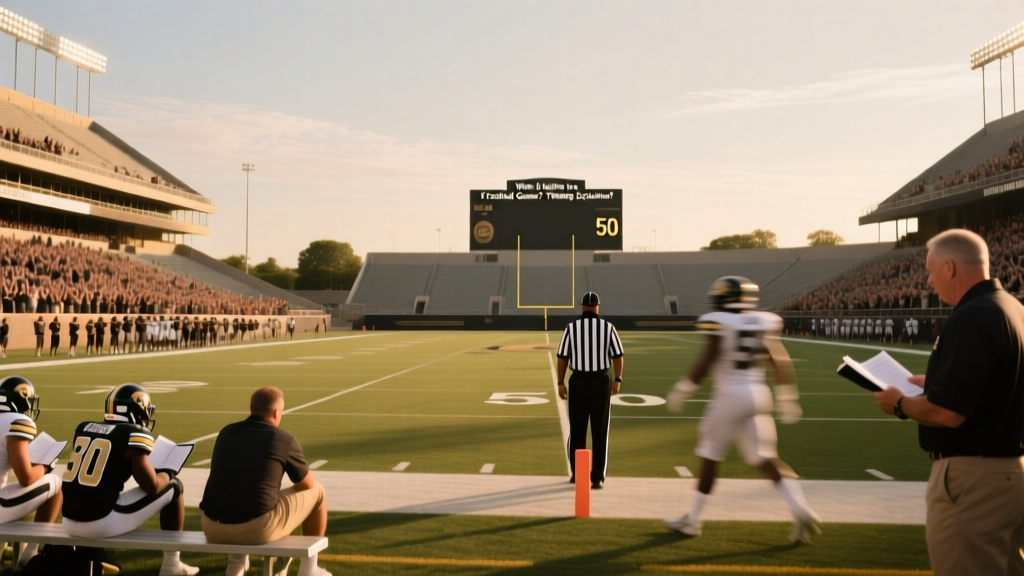
When Is Halftime in a Football Game? Timing Explained
In a standard football game, halftime occurs at the end of the second quarter, marking the midpoint of the match. For professional and college games, this break lasts 12 minutes in the NFL and 20 minutes in NCAA football, providing teams time to regroup and adjust strategies before the second half.
Understanding Halftime in Football
Halftime is a scheduled break that separates the first and second halves of a football game. It occurs after the second quarter concludes and before the third quarter begins. This pause allows players to rest, coaches to review performance, and teams to refine their game plans.
When Exactly Does Halftime Start?
- In both the NFL and NCAA, halftime begins immediately after the second quarter ends.
- The clock stops once the second quarter expires, triggering the halftime break.
- Teams leave the field and return to locker rooms for evaluation and discussion.
Duration of Halftime by League
The length of halftime varies depending on the level of play. While most regular-season games follow standard timing rules, special events like the Super Bowl extend the break for entertainment purposes.
| League/Event | Regular Halftime Duration | Special Event Duration | Game Type |
|---|---|---|---|
| NFL | 12 minutes | 30 minutes (Super Bowl) | Professional |
| NCAA College Football | 20 minutes | 20 minutes | College |
| High School Football | 10–15 minutes | N/A | Youth/Scholastic |
| International American Football (IFAF) | 15 minutes | 15 minutes | Global Competitions |
The data shows that while the NFL keeps halftime shorter during regular games for pacing, it extends significantly during the Super Bowl for the halftime show. In contrast, NCAA maintains a consistent 20-minute break across all games, prioritizing team strategy and player recovery.
Functions and Activities During Halftime
Halftime serves multiple critical roles beyond just a rest period. It impacts gameplay, entertainment, and operational logistics.
Team Strategy and Adjustments
- Coaches analyze first-half performances using real-time stats and video feeds.
- Players receive feedback on positioning, execution errors, and opponent tendencies.
- Game plans are adjusted based on score, momentum, and injury status.
Player Rest and Medical Evaluation
Athletes use the break to rehydrate, cool down (in hot climates), and undergo quick medical checks. Training staff assess injuries and apply preventive treatments before returning to play.
Entertainment and Broadcast Elements
In major events like the Super Bowl, halftime features high-profile musical performances watched by millions. These shows are choreographed months in advance and contribute significantly to viewer engagement and advertising revenue.
Impact of Halftime on Game Outcome
Studies indicate that adjustments made during halftime can influence the final result. Teams trailing at halftime often make tactical changes that lead to comebacks.
- According to NFL statistics, approximately 34% of teams behind at halftime win the game in regulation or overtime.
- Coaching decisions such as offensive scheme shifts or defensive alignment changes peak during this interval.
- Possession and field position after halftime kickoff are strategically managed to regain momentum.
Frequently Asked Questions About Halftime in Football
How long is halftime in an NFL game?
Halftime in a regular NFL game lasts 12 minutes. However, during the Super Bowl, it extends to 30 minutes to accommodate the elaborate halftime show.
Why is NFL halftime only 12 minutes?
The 12-minute duration balances player recovery with broadcast pacing. Shorter breaks maintain viewer engagement and keep the overall game runtime manageable for television schedules.
What happens during college football halftime?
College teams use the 20-minute halftime for extended strategic reviews, player rest, and band performances. The longer break allows more comprehensive coaching input compared to professional games.
Do high school football games have halftime?
Yes, high school football games include a halftime break, typically lasting between 10 and 15 minutes, depending on state regulations and game length.
Can teams change strategies during halftime?
Absolutely. Halftime is a crucial window for coaches to modify game plans, correct mistakes, and adapt to opponents’ tactics. Most strategic pivots occur during this period.
More Articles
 How Many Football Clubs Are in London? Full List 2025
 Where Do the Patriots Play Football? Gillette Stadium Guide
 Which Football Teams Are Playing Today? Match Schedule 2025
 Football Cleat Fit Guide 2026: Avoid Blisters
 New York Giants Stadium: Home Field Info (2026)
 What Does PCT Mean in Football? Explained
 Did Cowboys Win Today? Final Score & Game Recap
 What Football Conference Is Florida State In? (2025)
 What Does Redshirt Mean in College Football? Explained
 How Many Football Games Are in a Season? NFL, College, HS