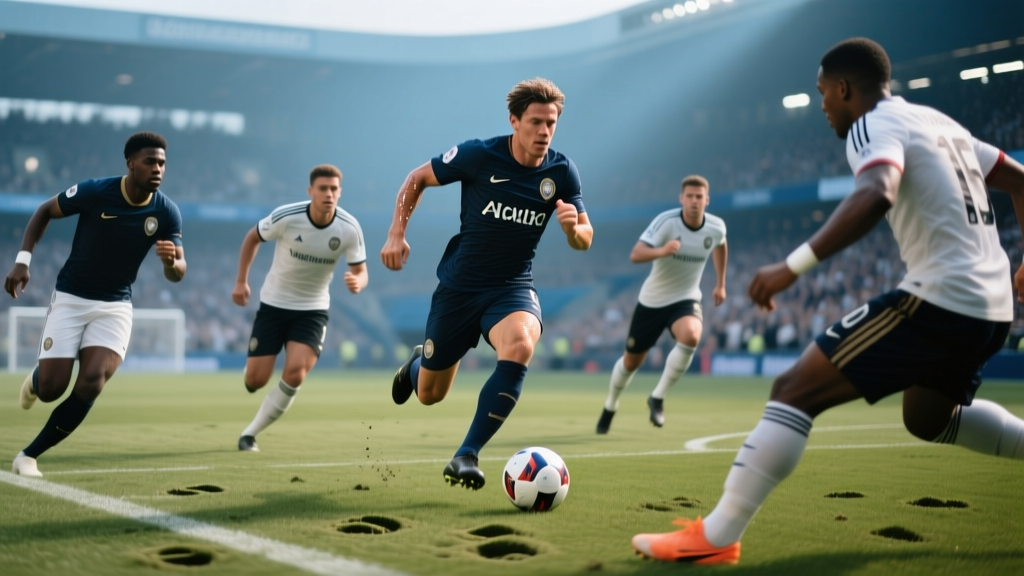
When Do Footballers Retire? Average Age by Position
Professional footballers typically retire between the ages of 34 and 38, depending on position, physical demands, injury history, and league standards. Goalkeepers often play longer, into their late 30s or early 40s, due to less physical strain compared to outfield players.
Factors Influencing Footballer Retirement Age
The age at which professional footballers retire is not fixed and varies significantly based on multiple factors. Understanding these helps explain why some athletes exit earlier while others extend their careers well into their late 30s.
Key Determinants of Retirement Timing
- Position played: Outfield players like wingers and defenders face higher physical demands, leading to earlier retirement. Midfielders and goalkeepers often last longer.
- Injury history: Recurring injuries can force early retirement regardless of skill level.
- League intensity: Players in physically demanding leagues (e.g., Premier League) may retire earlier than those in technically focused leagues (e.g., MLS or J-League).
- Lifestyle and recovery: Access to advanced sports science, nutrition, and training regimens extends playing life.
- Financial security: Players with strong savings or off-field ventures may choose early retirement for health preservation.
Average Retirement Age by Position
Different positions impose unique physical and tactical demands, directly influencing career longevity. Below is a breakdown of average retirement ages across key roles in professional football.
| Position | Average Retirement Age | Notable Examples | Common Reasons for Retirement |
|---|---|---|---|
| Goalkeeper | 38.5 | Gianluigi Buffon (45), Manuel Neuer (active at 38) | Loss of reflexes, fewer starting opportunities |
| Center-Back | 35.2 | Virgil van Dijk, Sergio Ramos | Physical decline, injury accumulation |
| Full-Back | 34.0 | Ashley Cole, Philipp Lahm | Pace reduction, defensive vulnerability |
| Midfielder (Defensive) | 35.8 | Luka Modrić (active at 39), Claude Makélélé | Tactical adaptation limits |
| Midfielder (Attacking) | 34.7 | Andrés Iniesta (retired at 40), Mesut Özil | Diminished creativity, pressing intensity |
| Winger | 33.5 | Cristiano Ronaldo (active at 40), Arjen Robben | Speed loss, high injury risk |
| Striker | 35.0 | Zlatan Ibrahimović (retired at 41), Robert Lewandowski | Finishing consistency, mobility issues |
The data shows that goalkeepers and defensive midfielders have the longest careers, averaging over 35 years. This is due to reduced reliance on explosive speed and greater emphasis on positioning and experience. In contrast, wingers retire earliest, as their game depends heavily on pace and agility—attributes that diminish rapidly with age.
Impact of Modern Sports Science on Career Longevity
Advancements in sports medicine, recovery protocols, and personalized training programs have significantly extended professional football careers. Players now maintain peak physical condition longer through:
- GPS tracking and load monitoring to prevent overtraining
- Cryotherapy, hyperbaric oxygen therapy, and IV nutrient treatments
- Specialized nutrition plans tailored to metabolic profiles
- Year-round strength and conditioning coaching
Cristiano Ronaldo, for example, reportedly spends over $1 million annually on fitness and recovery, allowing him to compete at elite levels past age 39. Similarly, Luka Modrić remains a key player for Real Madrid at nearly 40 due to meticulous lifestyle management.
League-Specific Retirement Trends
Retirement patterns also vary by league due to differences in physicality, climate, and scheduling:
- Premier League (England): High-intensity play leads to earlier retirement, especially for full-backs and wingers.
- Serie A (Italy): Tactical focus allows experienced players to adapt, extending careers—common among central defenders and midfielders.
- MLS (USA): Many European stars transition here post-35, using lower physical demands to prolong careers.
- J-League (Japan): Similar to MLS, attracts aging international talent seeking less taxing competition.
Frequently Asked Questions About Footballer Retirement
What is the average retirement age for professional footballers?
The average retirement age for professional footballers is approximately 35 years. However, this varies by position, with goalkeepers retiring later (around 38–40) and wingers exiting earlier (around 33–34).
Why do footballers retire so early compared to other professions?
Footballers retire early due to the extreme physical demands of the sport, cumulative injury toll, and declining performance metrics after the mid-30s. Unlike office-based jobs, football relies heavily on speed, endurance, and explosive power, which deteriorate with age.
Who holds the record for the oldest professional footballer?
Ezzeldin Bahader from Egypt holds the record as the oldest registered professional footballer, playing at age 74 in 2020. Among elite-level players, Gianluigi Buffon retired professionally at 45 after a career spanning over two decades with Parma and Juventus.
Can footballers return after retirement?
Yes, some footballers unretire if they remain physically fit and receive offers. Examples include Zlatan Ibrahimović, who returned after brief retirements, and Diego Maradona, who played informally post-retirement. However, official comebacks in top leagues are rare and usually occur in lower divisions or exhibition matches.
Do retired footballers receive pensions?
Yes, many retired footballers receive pensions through national players' unions or league agreements. In England, the Professional Footballers' Association (PFA) provides pension schemes based on years of service. However, not all players qualify, especially those with short careers or from countries without structured retirement plans.
More Articles
 What Does Play Action Mean in Football?
 Who Has Scored the Most Goals in Football History?
 Where Did Jesse Palmer Play Football? College & Pro Career
 Dallas Cowboys Game Time Tomorrow: 3:25 PM CT
 Who Was the Best Football Player in History? Messi
 Where to Watch High School Football Live Online & on TV
 Who Is the Best Football Player in the World in 2025?
 How Many Meters in a Football Field? Exact Length Explained
 Where Does Temple Play Football? Home Stadium Info
 Georgia Football National Championships: How Many?