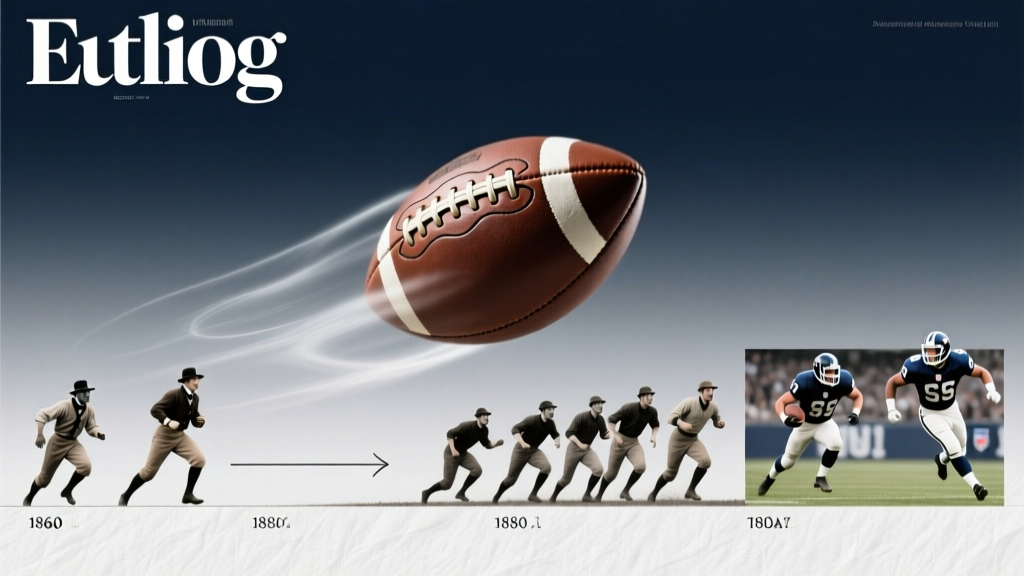
When Did American Football Begin? Origins & Evolution
American football began in 1869 when the first intercollegiate game was played between Rutgers and Princeton, marking the sport's origin as a blend of soccer and rugby that evolved into the modern game.
The Birth of American Football
The origins of American football trace back to a pivotal moment on November 6, 1869, when Rutgers and Princeton Universities faced off in New Brunswick, New Jersey. This match, widely recognized as the first intercollegiate football game in the United States, laid the foundation for what would become one of America’s most popular sports. The game resembled soccer more than modern football, with 25 players per side and goals scored by kicking the ball into the opponent’s net.
Early Influences and Development
- The game was initially based on the rules of the Football Association (soccer) and Rugby Football Union.
- Walter Camp, known as the "Father of American Football," introduced key innovations in the 1880s, including the line of scrimmage, the snap from center, and the system of downs.
- Harvard University adopted a rugby-style game in the early 1870s, influencing other schools to move away from soccer-style rules.
- The Intercollegiate Football Association was formed in 1876 by Yale, Harvard, and Princeton to standardize rules.
Evolution of Rules and Structure
Throughout the late 19th century, American football underwent significant rule changes that differentiated it from its British predecessors. These changes were crucial in shaping the physical, strategic nature of the modern game.
Key Rule Changes in Early Football
| Year | Milestone | Impact |
|---|---|---|
| 1869 | First intercollegiate game (Rutgers vs. Princeton) | Established organized college football in the U.S. |
| 1876 | Harvard adopts rugby rules; formation of Intercollegiate Football Association | Shifted gameplay toward carrying and passing the ball |
| 1880 | Walter Camp introduces the snap and down system | Laid foundation for structured offensive plays |
| 1882 | Introduction of the four-down system to gain 25 yards | Increased strategic complexity and reduced stalling |
| 1888 | Camp forms the first rules committee | Centralized control over game evolution |
| 1906 | Legalization of the forward pass | Revolutionized offensive strategy and improved player safety |
The data shows a steady progression of innovation from 1869 to 1906, with Walter Camp playing a central role in formalizing the structure of the game. The legalization of the forward pass in 1906 was a turning point, reducing reliance on dangerous mass formations and opening up the field strategically.
Formation of Professional Leagues
While college football dominated the sport’s early years, professional teams began emerging in the early 20th century. The first professional league, the American Professional Football Association (APFA), was founded in 1920 and later renamed the National Football League (NFL) in 1922.
- The NFL started with 14 teams, mostly from small towns like Canton, Ohio, and Decatur, Illinois.
- Jim Thorpe, a renowned athlete, served as the league’s first president.
- The Green Bay Packers joined in 1921 and remain the oldest continuously operating team in the league.
Modern Impact and Global Reach
Today, American football is deeply embedded in U.S. culture, highlighted by events like the Super Bowl, which draws over 100 million viewers annually. While the sport remains primarily popular in the United States, efforts to expand internationally through NFL Europe and regular-season games in London and Mexico City continue.
Frequently Asked Questions About the Origins of American Football
When was the first American football game played?
The first intercollegiate American football game was played on November 6, 1869, between Rutgers and Princeton Universities in New Jersey.
Who invented American football?
While no single person invented the sport, Walter Camp is widely regarded as the "Father of American Football" for his pivotal role in developing its rules and structure in the 1880s.
How did American football evolve from rugby?
American football evolved from rugby through rule changes introduced by Walter Camp, including the line of scrimmage, the snap, and the down system, making it distinct by the early 20th century.
When did the forward pass become legal in football?
The forward pass was legalized in 1906 by the NCAA to improve player safety and open up gameplay, fundamentally changing offensive strategies.
When was the NFL founded?
The NFL was founded as the American Professional Football Association (APFA) on August 20, 1920, and was renamed the National Football League in 1922.
More Articles
 When Did Football First Start? The 1863 Origin Explained
 How Many Teams in College Football 2025? Full FBS Breakdown
 When Did Tom Brady Start Playing Football? Full Timeline
 What Time Is the Auburn Football Game Today?
 Clemson Football Ranking 2025: Current AP & Coaches Poll
 Who Plays Thanksgiving Football? NFL Teams & Schedule
 Who Is the Fastest NFL Player in 2025? (Updated Data)
 When Did the Pro Bowl Become Flag Football?
 When Was the Last Football World Cup? Key Details
 Who Did Michael Strahan Play Football For? | Full NFL Career