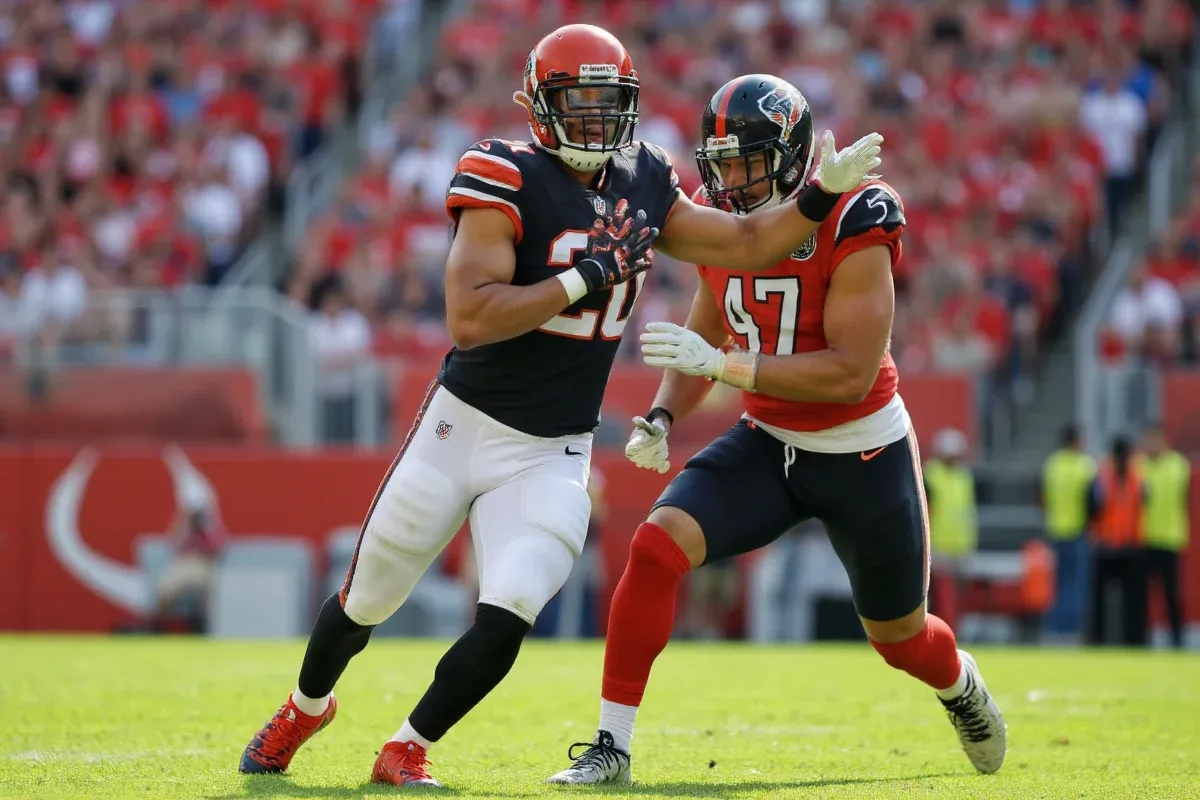
What Position Is ATH in Football? Explained
In football, ATH stands for 'Athlete' and refers to a player who is highly versatile and capable of playing multiple positions due to exceptional physical skills, often listed on rosters when the player doesn't fit a single traditional role.
Understanding the ATH Position in Football
The term ATH, short for Athlete, is commonly used in American football—especially at the high school and college levels—to describe a player with outstanding physical abilities who can perform effectively in various roles across the field. Unlike traditional position labels like QB (Quarterback) or WR (Wide Receiver), ATH highlights versatility rather than specialization.
Why Is a Player Labeled as an ATH?
- Multiskilled talent: The player excels in speed, strength, agility, and game sense, making them suitable for multiple roles.
- Positional flexibility: Coaches may not want to limit the player to one specific role during recruitment or roster listing. \li>Development stage: Younger players (e.g., in high school) are still refining their skills and physique, so labeling them as ATH keeps options open.
- Recruiting strategy: College scouts use ATH to identify players they can mold into positions based on team needs.
Common Positions ATH Players Transition Into
While ATH denotes a generalist, most athletes eventually specialize as they progress to higher levels of competition. Their final position often depends on body type, skill set, and coaching decisions.
Potential Position Paths for ATH Players
| Player Type | Height Range | Weight Range | Primary Attributes | Typical Position Conversion |
|---|---|---|---|---|
| Tall & Lean ATH | 6'0" – 6'4" | 180–210 lbs | Speed, hands, route running | Wide Receiver (WR) |
| Compact & Fast ATH | 5'9" – 6'1" | 170–190 lbs | Agility, acceleration, elusiveness | Running Back (RB) or Slot Receiver |
| Strong & Athletic ATH | 6'0" – 6'3" | 200–230 lbs | Physicality, tackling, coverage ability | Safety (S) or Linebacker (LB) |
| Very Tall & Explosive ATH | 6'3" – 6'6" | 220–250 lbs | Length, leaping, blocking | Tight End (TE) or Defensive End (DE) |
The data shows that ATH players are typically categorized based on physical metrics and dominant traits. Most transition into positions that maximize their natural strengths—whether it's speed for offensive skill roles or physicality for defensive impact. Coaches use combine results, game film, and training performance to guide these transitions.
ATH in Different Football Levels
High School Football
In high school, many standout players are labeled ATH because they play both offense and defense. A single player might be the team’s leading rusher, top receiver, and best cover defender. The ATH tag reflects this dual-role reality.
College Football
Recruiting services like 247Sports and Rivals frequently list elite prospects as ATH. These players are often priority recruits because coaches see long-term potential to develop them into specialized roles based on team needs.
NFL Draft
While the NFL rarely uses “ATH” officially, some players are described similarly during draft analysis. For example, players like Taysom Hill (New Orleans Saints) or Cordarrelle Patterson (Atlanta Falcons) are modern examples of “utility athletes” who fulfill multiple roles—special teams, rushing, receiving, and even passing.
Frequently Asked Questions About ATH in Football
What does ATH mean on a football roster?
ATH stands for 'Athlete' and is used to classify a player who demonstrates the physical tools to play multiple positions but hasn’t been assigned a specific one yet, especially common in college recruiting.
Is ATH a real position in football?
Not in the traditional sense. ATH is more of a placeholder or classification used during recruiting to highlight a player’s versatility rather than a defined on-field role.
Can an ATH become a quarterback?
Yes, if the player has strong decision-making, arm strength, and leadership skills. Many dual-threat quarterbacks were originally labeled as ATH in high school due to their all-around abilities.
Do any NFL players still play as ATH?
While not officially listed as ATH, several NFL players serve as multi-position 'jokers' or utility players—like Taysom Hill or Deebo Samuel—who line up at RB, WR, TE, or even QB in specialty packages.
How do coaches decide what position an ATH will play?
Coaches evaluate physical attributes (size, speed), skill proficiency (hands, tackling, footwork), football IQ, and team needs before assigning a primary position to an ATH player.
More Articles
 Where Is the Patriots Football Stadium Located?
 Oregon Ducks Football: Autzen Stadium (2026)
 How Many NCAA Football Teams Are There? 2025 Breakdown
 Football Games Today: NFL, Premier League, College (2026)
 Who Invented Football? The True Origins Revealed
 Who Plays This Sunday in NFL Football? Full Schedule & Guide
 Who Are the Thursday Night Football Announcers in 2025?
 What Does PCT Mean in Football? Explained
 How Big Is a Football Pitch? Official Sizes & Standards
 When Did Tom Brady Start Playing Football? Full Timeline