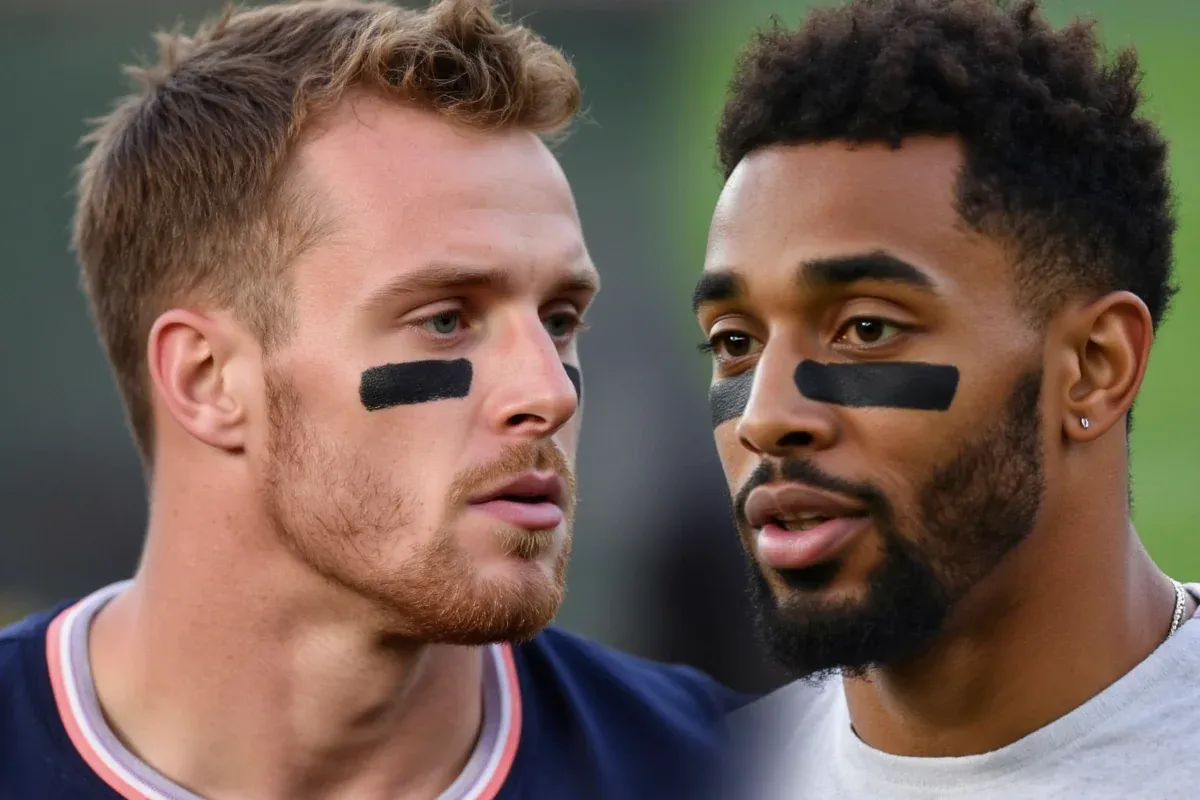
Why Do Football Players Wear Black Under Eyes?
Football players put black grease or stickers under their eyes to reduce glare from sunlight and stadium lights, improving visual clarity and reaction time during play.
Why Do Football Players Wear Black Under Their Eyes?
The dark markings beneath the eyes of football players—commonly known as eye black—are used primarily to reduce glare caused by bright sunlight or artificial lighting. This glare can impair contrast sensitivity and visual tracking, crucial for catching fast-moving balls or reacting to opponents. Eye black works by absorbing light rather than reflecting it, minimizing sun-induced distractions.
History and Evolution of Eye Black
Eye black has been part of sports culture since the early 20th century. Baseball and football players were among the first to adopt it, inspired by Native American warriors who used charcoal to reduce sun glare during hunting.
Key Milestones in Eye Black Use
- 1940s: Major League Baseball players like Babe Ruth popularized the use of eye black.
- 1960s: NFL athletes began adopting the practice during outdoor games. \li>
- 2000s: Commercial eye black strips and anti-glare stickers emerged as alternatives to grease.
- 2010s: Scientific studies validated its effectiveness in reducing glare.
How Eye Black Reduces Glare
Bright light reflects off the skin under the eyes, creating a glare that reduces contrast sensitivity. The dark pigment in eye black absorbs this light, enhancing visual performance.
Mechanisms Behind Glare Reduction
- Absorption of Light: Matte black substances absorb overhead light instead of reflecting it.
- Improved Contrast Sensitivity: Helps players distinguish objects against bright backgrounds.
- Enhanced Depth Perception: Critical for judging ball trajectory and player movement.
Types of Eye Black Used in Football
There are three main types of eye black used by athletes today:
| Type | Material | Advantages | Disadvantages |
|---|---|---|---|
| Grease Stick | Carbon-based wax | Cheap, customizable, highly effective | Can smudge, messy application |
| Adhesive Strips | Fabric with carbon coating | Clean, durable, consistent look | Less flexible placement |
| Temporary Tattoos | Water-activated ink | Custom designs, no smudging | Potential irritation, limited availability |
Scientific Evidence and Performance Impact
Multiple studies have evaluated the effectiveness of eye black in athletic performance. Below is a summary of key research findings:
| Study (Year) | Sample Size | Glare Reduction (%) | Contrast Sensitivity Improvement |
|---|---|---|---|
| DiGirolamo et al. (2003) | 46 athletes | ~20% | Statistically significant |
| Baden et al. (2005) | 30 athletes | 18–22% | Improved in 73% of subjects |
| NASA Human Research (2012) | Simulated models | Up to 30% | Validated absorption mechanics |
Data shows that eye black consistently reduces glare by 18–30%, with measurable improvements in visual contrast sensitivity. These benefits are especially pronounced in bright daylight conditions, making it a practical tool for outdoor athletes.
Myths and Misconceptions About Eye Black
Despite its widespread use, several myths persist about eye black:
- Myth: It improves night vision.
Fact: It’s ineffective in low-light conditions and may even reduce visibility. - Myth: It boosts aggression or intimidation.
Fact: While some players wear it for style, its primary function is optical, not psychological. - Myth: All eye black products perform equally.
Fact: Grease offers superior light absorption compared to thinner stickers.
FAQ About Why Football Players Wear Black Under Their Eyes
Does eye black actually work?
Yes, scientific studies confirm that eye black reduces glare by 18–30% and improves contrast sensitivity, helping athletes see better in bright conditions.
Is eye black only used in football?
No, it's also widely used in baseball, lacrosse, softball, and other outdoor sports where sun glare affects performance.
Can eye black be worn in any color?
While black is most effective, some leagues allow colored versions for branding, though they offer reduced glare protection.
Do all football players use eye black?
No, usage varies by position and preference. Receivers and defensive backs use it more frequently due to their need to track aerial balls.
Are there regulations on eye black in professional leagues?
Yes, the NFL and NCAA restrict messages on eye black; only non-distracting, non-commercial designs are permitted.
More Articles
 Don Bosco Football Schedule 2025: Full Game Dates & Times
 Where Did Josh Allen Play College Football? | Full Breakdown
 Will College Football 25 Be on Game Pass? No, Here's Why
 Who Owns Real Madrid? The Member-Owned Model Explained
 Where Did Jaden Daniels Play College Football?
 What Was the First Football Team? Oneida FC Explained
 Where Is the ACC Championship Football Game Played?
 When Did American Football Start? Origins & Evolution
 Where Did George Kittle Play College Football?
 Next Patriots Game: Date, Time, TV & Tickets