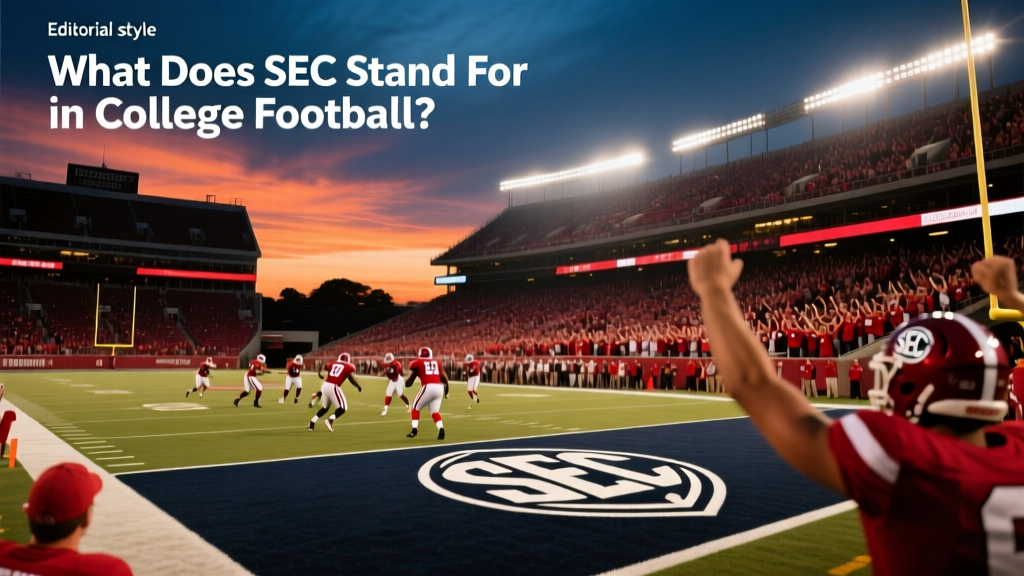
What Does SEC Stand For in College Football?
In college football, SEC stands for the Southeastern Conference, a powerhouse athletic conference comprising 16 universities primarily located in the Southern United States. Known for its elite competition, national championships, and passionate fanbases, the SEC is widely regarded as one of the most dominant conferences in NCAA Division I Football Bowl Subdivision (FBS).
What Is the SEC in College Football?
The Southeastern Conference (SEC) is one of the premier collegiate athletic conferences in the United States, particularly renowned for its dominance in college football. Established in 1932 and beginning play in 1933, the SEC operates under the National Collegiate Athletic Association (NCAA) Division I Football Bowl Subdivision (FBS). The conference has earned a reputation for high-level competition, producing numerous Heisman Trophy winners, All-Americans, and NFL draft picks.
Key Facts About the SEC
- Founded: December 9, 1932
- First Season: 1933
- Current Number of Member Schools: 16
- Headquarters: Birmingham, Alabama
- Commissioner: Greg Sankey (as of 2025)
- Sports Sponsored: 21 (including football, basketball, baseball, softball)
History and Evolution of the SEC
The SEC was formed from the remnants of the Southern Conference, which became too large to manage effectively. Thirteen schools broke away to create the SEC, with founding members including Alabama, Auburn, Florida, Georgia, Kentucky, LSU, Mississippi State, Ole Miss, Tennessee, Vanderbilt, and others.
Milestones in SEC Expansion
The conference has undergone several expansions to maintain competitiveness and geographic influence:
- 1992: Addition of Arkansas and South Carolina, bringing membership to 12 and enabling the creation of the SEC Championship Game.
- 2012: Missouri and Texas A&M joined, increasing membership to 14.
- 2024: University of Oklahoma and University of Texas officially joined, expanding the SEC to 16 teams.
SEC Football Structure and Format
The SEC is divided into two divisions: East and West. However, with the expansion to 16 teams in 2024, the conference eliminated divisions and now uses a new format to determine participants for the SEC Championship Game.
New Post-2024 Championship Format
- The top two teams in the final regular-season conference standings qualify for the SEC Championship Game.
- All teams play eight conference games per season.
- One permanent cross-division rivalry is maintained (e.g., Alabama vs. Tennessee), while other matchups rotate.
| Team | First SEC Title | Total SEC Championships (Football) | National Championships (AP/Coaches) | Heisman Winners |
|---|---|---|---|---|
| Alabama | 1933 | 30 | 18 | 4 |
| LSU | 1935 | 13 | 4 | 1 |
| Georgia | 1942 | 14 | 4 | 2 |
| Florida | 1984 | 8 | 3 | 3 |
| Tennessee | 1939 | 13 | 6 | 1 |
| Arkansas | 1975 | 2 | 0 | 0 |
| Texas A&M | 1998 | 3 | 1 | 1 |
| Oklahoma* | N/A | 0 | 7 | 7 |
| University of Texas* | N/A | 0 | 4 | 4 |
The data highlights Alabama's historic dominance in SEC football, both in conference titles and national championships. With the inclusion of traditional powers like Texas and Oklahoma, the SEC strengthens its claim as the most competitive conference in college football. The addition of these programs brings significant historical success and Heisman legacy into the conference fold.
Why the SEC Dominates College Football
Several factors contribute to the SEC's sustained excellence:
- Recruiting Power: SEC schools consistently rank at the top in signing elite high school prospects, especially across the Deep South.
- Stadium Capacity and Fan Engagement: SEC stadiums average over 80,000 fans per game, creating intimidating environments.
- Television Revenue: The SEC Network and media rights deals generate substantial income, reinvested into facilities and coaching.
- Coaching Excellence: Legendary coaches like Nick Saban, Bear Bryant, and Steve Spurrier have shaped the conference’s identity.
- Player Development: The SEC leads all conferences in NFL Draft selections year after year.
Frequently Asked Questions About the SEC in College Football
What does SEC stand for in college football?
SEC stands for the Southeastern Conference, an NCAA Division I Football Bowl Subdivision (FBS) athletic conference known for its elite competition in college football and composed of 16 member universities primarily in the Southern United States.
How many teams are in the SEC as of 2025?
As of 2025, the SEC consists of 16 teams. The conference expanded from 14 to 16 with the addition of the University of Oklahoma and the University of Texas in July 2024.
Which schools are members of the SEC?
The current 16 member institutions are: Alabama, Arkansas, Auburn, Florida, Georgia, Kentucky, LSU, Mississippi State, Missouri, Ole Miss, South Carolina, Tennessee, Texas A&M, Texas, Vanderbilt, and Oklahoma. These schools compete across all SEC sports, including football.
Does the SEC still have divisions in football?
No, the SEC eliminated its East and West divisions starting in the 2024 season. The top two teams in the overall conference standings now advance to the SEC Championship Game, regardless of divisional alignment.
Has the SEC won recent national championships in football?
Yes, SEC teams have won multiple College Football Playoff (CFP) National Championships in recent years. For example, Georgia won the CFP title in 2021 and 2022, and Alabama claimed the championship in 2020. The conference has produced champions in six of the last ten CFP seasons.
What is the SEC Championship Game?
The SEC Championship Game is an annual matchup between the two best teams in the conference standings at the end of the regular season. First held in 1992, it is played at Mercedes-Benz Stadium in Atlanta, Georgia, and serves as a key qualifier for the College Football Playoff.
Why is the SEC considered the best conference in college football?
The SEC is considered the best due to its consistent national title contention, superior recruiting, high NFL draft output, massive fan support, and financial strength. Its teams regularly dominate postseason play and rank at the top of the Associated Press and USA Today polls.
More Articles
 How Many Players on a College Football Team?
 How Many Teams Are in the CFL? 2025 Breakdown
 Swimming Guides Essentials: Equipment, Technique, and Safety for Swimmers of All Levels
 College Football Rankings Update Schedule (2026)
 How Many NFL Teams Are in Florida? (2025 Update)
 What Team Did Michael Strahan Play Football For?
 What Do Defensive Ends Do in Football? Key Roles Explained
 Who Plays Football at 1:00 Today? Schedule & Matchups
 BASE Supplement Alternatives: Safety & Science
 How To Start in Football Coaching: A Practical Guide