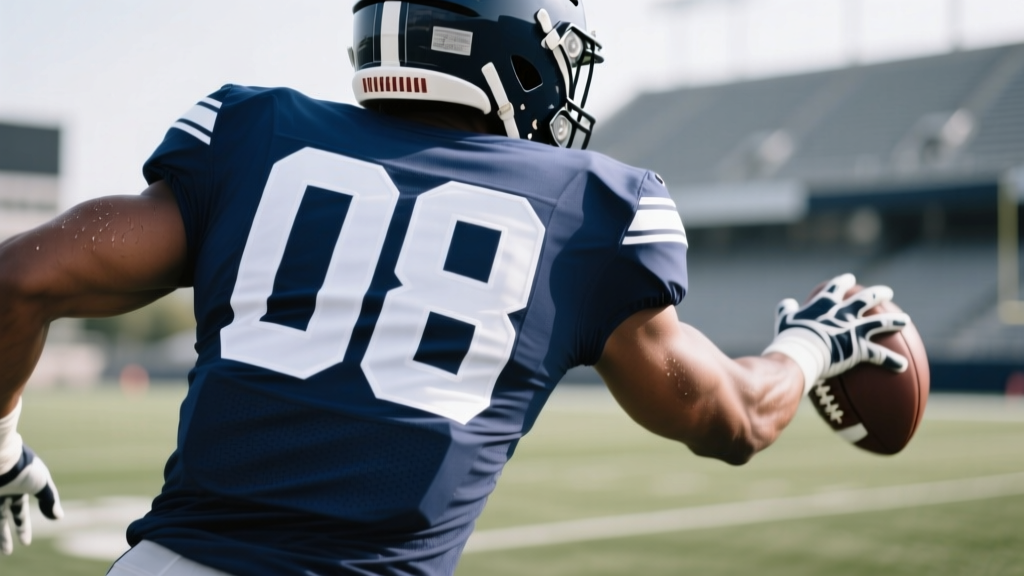
What Does DB Stand For in Football? Explained
In football, DB stands for Defensive Back, a key position in the defensive unit responsible for covering receivers, defending against passes, and supporting run defense. This group includes cornerbacks (CB) and safeties (S), who play behind the linebackers and are critical in modern pass-heavy offenses.
What Is a Defensive Back (DB) in Football?
The term DB refers to any player in the defensive secondary, primarily tasked with preventing the offense from completing forward passes. Defensive backs are typically among the fastest players on the field and must possess strong coverage skills, awareness, and tackling ability.
Types of Defensive Backs
- Cornerback (CB): Lines up opposite wide receivers, often responsible for man-to-man or zone coverage.
- Safety: Positioned deeper in the secondary; divided into free safety (FS) and strong safety (SS).
- Nickelback & Dimeback: Extra DBs used in subpackages when teams defend against multiple receivers.
Key Responsibilities of a DB
Defensive backs are essential in both pass and run defense. Their roles vary depending on scheme, down, distance, and offensive formation.
Primary Duties
- Pass coverage: Mirror receivers, maintain positioning, and prevent completions.
- Run support: Tackle ball carriers on sweeps or screens.
- Blitzing: Occasionally rush the quarterback on designed plays.
- Communication: Safeties often direct the secondary’s alignment and adjustments.
DB Performance Metrics in the NFL (2024 Season)
| Player | Team | Interceptions (INT) | Passes Defended (PD) | Total Tackles | Forced Fumbles |
|---|---|---|---|---|---|
| Marlon Humphrey | Baltimore Ravens | 5 | 14 | 68 | 2 |
| Darius Slay | Philadelphia Eagles | 3 | 11 | 54 | 1 |
| Jaire Alexander | Green Bay Packers | 2 | 9 | 41 | 0 |
| Justin Simmons | Denver Broncos | 4 | 10 | 73 | 1 |
| Tre'Davious White | Buffalo Bills | 3 | 8 | 49 | 1 |
The data shows that top-performing DBs combine high interception totals with consistent pass disruption and solid tackling. Marlon Humphrey led this group in passes defended (14) and tackles (68), highlighting his versatility. Interceptions remain a key benchmark, but passes defended better reflect overall coverage impact.
How DBs Fit Into Defensive Schemes
Defensive backs adapt their roles based on team strategy—such as Cover-2, Cover-3, or press-man coverage. In modern NFL defenses, flexibility and interchangeability among DBs are increasingly valued.
Common Coverage Schemes
- Cover-2: Two safeties split deep zones; corners cover short outside areas.
- Cover-3: Three defenders take deep thirds; corners drive sideline-to-sideline.
- Man-to-Man: Each DB shadows a specific receiver, often with safety help.
- Zone Blitz: DBs disguise coverages while linemen or LBs rush.
Frequently Asked Questions About DB in Football
What does DB stand for in football?
DB stands for Defensive Back, a position group including cornerbacks and safeties who defend against passing plays and support run defense.
Is a safety considered a DB?
Yes, safeties (both free and strong) are part of the defensive backfield and classified as DBs due to their coverage and deep support responsibilities.
What's the difference between a cornerback and a safety?
Cornerbacks typically cover wide receivers at the line of scrimmage and on the perimeter, while safeties play deeper, provide over-the-top support, and read the quarterback more frequently.
Who are some of the best DBs in NFL history?
Legends include Deion Sanders, Champ Bailey, Ed Reed, and Charles Woodson. Current stars like Stephon Gilmore and Minkah Fitzpatrick continue this tradition of elite playmaking.
Why is the DB position so important in today's NFL?
With the rise of pass-heavy offenses, elite DBs are crucial for disrupting timing, limiting big plays, and creating turnovers—directly impacting game outcomes.
More Articles
 Best Football Team All-Time: Real Madrid (2026)
 Houston Texans Game Time Today: Kickoff Schedule 2024
 When Did England Win the Football World Cup?
 How Many NFL Teams in California? (2025 Update)
 Husker Football Game Today: Start Time & How to Watch
 What Does PF Mean in Fantasy Football? Explained
 Quarterback Roles in Football: Key Duties Explained
 How Much Do Football Referees Get Paid? (2025 Data)
 Why Is Soccer Called Football? Explained
 Where Do the New York Jets Play Football?