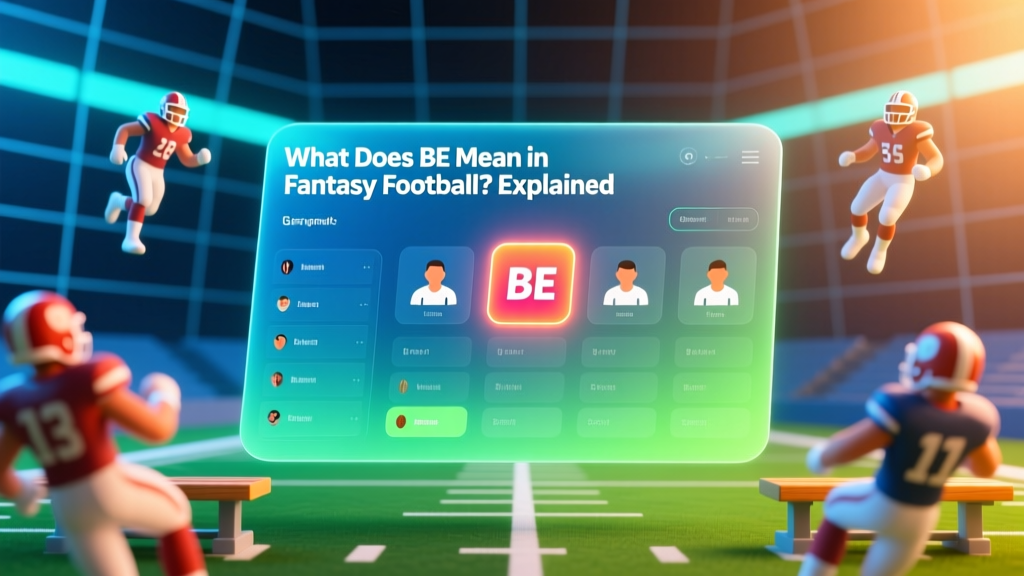
What Does BE Mean in Fantasy Football? Explained
In fantasy football, ‘BE’ stands for ‘Bench,’ referring to players on your roster who are not in your starting lineup. These players do not earn points for your team unless they are moved into an active position.
Understanding the Meaning of BE in Fantasy Football
The abbreviation ‘BE’ in fantasy football stands for ‘Bench.’ Players labeled as BE are part of your overall roster but are not currently contributing points because they are not in your starting lineup. Managing your bench effectively is crucial for long-term success, especially when dealing with injuries, byes, or underperforming starters.
Why Bench Management Matters
Your bench serves multiple strategic purposes in a fantasy season. It acts as a reserve pool from which you can draw replacements when starters are unavailable. A well-managed bench can be the difference between winning and losing close matchups.
- Provides depth during injuries and bye weeks
- Allows for performance-based lineup adjustments
- Enables trades and waiver wire flexibility
- Serves as trade bait or future assets
Key Bench Strategies
Successful fantasy managers use their bench not just for backup, but as a dynamic component of their team-building strategy.
- Stacking by Position: Keeping extra running backs or wide receivers based on positional scarcity.
- IR (Injured Reserve) Optimization: Some leagues allow an IR spot, letting you stash an injured player while activating a healthy one.
- Future-Proofing: Holding young or breakout candidates who may become starters later in the season.
Bench vs. Starting Roster: Key Differences
The primary distinction between bench (BE) and starting players is point eligibility. Only players in active positions score points for your team.
| Category | Starting Player | Bench (BE) Player |
|---|---|---|
| Points Scored | Yes | No |
| Weekly Lineup Change | Required | Optional |
| Roster Limit Impact | Counts toward starter cap | Counts toward total roster |
| Eligibility for Trade | Yes | Yes |
| Waiver Wire Claims | Affects active roster | Typically added here first |
The table highlights that bench players, while inactive, still occupy valuable roster space and play critical roles in team management. Most new acquisitions land on the bench first, making it essential to maintain enough open spots.
How to Optimize Your Bench
Maximizing the value of your bench requires foresight and adaptability throughout the season.
Monitor Performance Trends
Keep an eye on emerging players who may outperform your current starters. Streaming defenses or tight ends often begin on the bench before becoming weekly starters.
Use Waiver Wire Wisely
Claiming players before they break out gives you an edge. Many top performers start the season as bench options.
Plan Around Bye Weeks
Ensure you have backups for players with overlapping bye weeks, especially at premium positions like QB and TE.
Frequently Asked Questions About BE in Fantasy Football
What does BE mean on ESPN fantasy football?
On ESPN fantasy football, BE stands for ‘Bench.’ It identifies players on your roster who are not in your starting lineup and therefore not scoring points for your team.
Can bench players score points in fantasy football?
No, bench players do not score points unless they are moved into an active starting position before the player's game begins.
How many bench players should I keep?
Most leagues allow 6–7 bench spots. It’s recommended to keep 4–6 bench players to balance flexibility and roster depth without overcrowding.
Should I draft players for my bench?
Yes, drafting sleepers and backups for key positions is a smart strategy. Late-round picks often end up as valuable bench contributors or trade assets.
Does BE include injured players?
Yes, injured players typically remain on the bench unless your league uses an Injured Reserve (IR) slot, which frees up a bench spot while keeping the player on your team.
More Articles
 How Many Football Players on a Team? Full Breakdown
 Did Kevin Burkhardt Play Football? Truth Revealed
 Who Is the Highest-Paid Footballer in 2025?
 What Will Football Look Like in the Future? Key Trends
 What Does a Cornerback Do in Football? Key Roles Explained
 Monday Night Football Announcers 2026 | ESPN Team
 Football Matches Tomorrow: Key Games & Times
 When Is Flag Football Season? 2025 Schedule Guide
 When Is Football Halftime? NFL, NCAA & Soccer Break Times
 Who Does IU Football Play Today? Game Time & TV Info