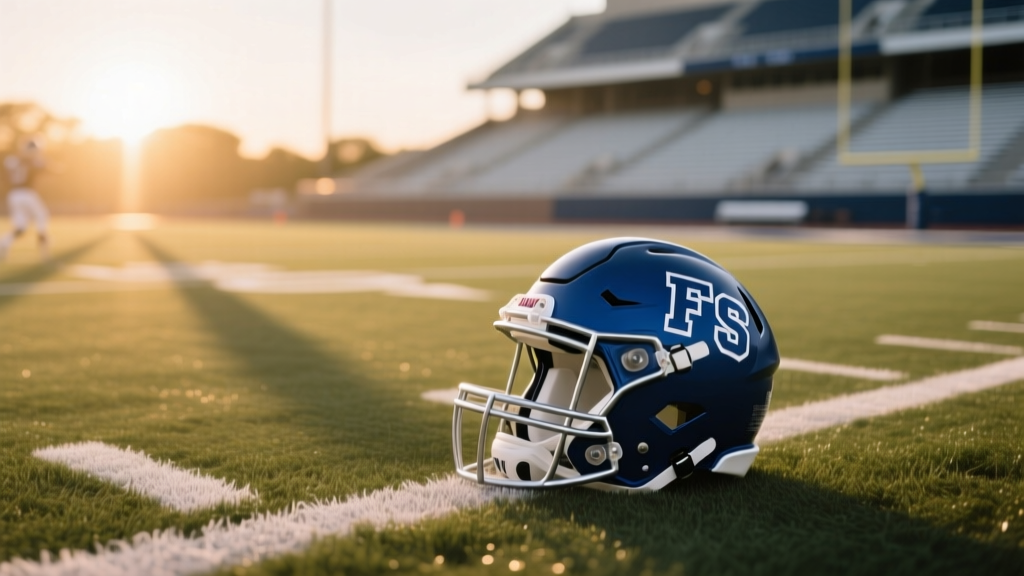
How Many FCS Football Teams Are There? (2025 List)
As of the 2025 season, there are 133 Football Championship Subdivision (FCS) football teams competing in NCAA Division I. These teams are spread across 14 conferences and represent a mix of public and private institutions from across the United States.
Understanding FCS Football: Structure and Overview
The Football Championship Subdivision (FCS) is the second-highest level of college football in the U.S., just below the Football Bowl Subdivision (FBS). Unlike the FBS, which uses a bowl system to conclude its season, the FCS determines its national champion through a 24-team playoff tournament sanctioned by the NCAA.
Key Characteristics of FCS Football
- Maximum of 63 athletic scholarships allowed per team
- Regular season typically consists of 11–12 games
- Postseason features a 24-team single-elimination playoff
- Teams must meet minimum attendance requirements (15,000 average or $100,000 in gross revenue)
- Autonomous conference scheduling with regional emphasis
FCS Conferences and Team Distribution
FCS teams are organized into 14 distinct athletic conferences, each with unique geographic footprints and competitive profiles. Some conferences sponsor football only, while others are multi-sport leagues. A few independent programs also compete at the FCS level.
Major FCS Conferences
- Big Sky Conference
- Colonial Athletic Association (CAA) Football
- Missouri Valley Football Conference (MVFC)
- Southland Conference
- Ivy League
- Ohio Valley Conference (OVC)
- Pioneer Football League
- Southern Conference (SoCon)
- Mid-Eastern Athletic Conference (MEAC)
- Northeast Conference (NEC)
- Patriot League
- Big South-OVC Football Association (merged league)
- Atlantic Sun Conference (ASUN)
- Western Athletic Conference (WAC)
Detailed Breakdown of FCS Teams by Conference (2025 Season)
| Conference | Number of Teams | Notable Programs | First Season |
|---|---|---|---|
| Big Sky Conference | 13 | Montana, Sacramento State, UC Davis | 1963 |
| CAA Football | 15 | Delaware, Villanova, Richmond | 2007 |
| Missouri Valley Football Conference | 10 | North Dakota State, South Dakota State, Southern Illinois | 1985 |
| Southland Conference | 9 | Lamar, McNeese, Southeastern Louisiana | 1963 |
| Ivy League | 8 | Harvard, Yale, Penn | 1956 |
| Ohio Valley Conference | 7 | Tennessee State, UT Martin | 1948 |
| Pioneer Football League | 11 | Dayton, San Diego, Davidson | 1993 |
| Southern Conference | 10 | Samford, Furman, Chattanooga | 1921 |
| Mid-Eastern Athletic Conference | 6 | Howard, North Carolina Central | 1972 |
| Northeast Conference | 7 | Central Connecticut, Duquesne | 1996 |
| Patriot League | 10 | Lehigh, Lafayette, Holy Cross | 1986 |
| Big South-OVC Football Association | 11 | Gardner-Webb, Eastern Kentucky | 2023 |
| ASUN Conference | 6 | Florida A&M, Central Arkansas | 2021 |
| Western Athletic Conference | 6 | Tarleton State, Southern Utah | 2021 |
| Independent | 1 | Hampton University | - |
| Total | 133 | - | - |
The table shows that CAA Football is currently the largest FCS conference with 15 teams, followed closely by the Big Sky and Big South-OVC alliance. The merger between the Big South and OVC has stabilized membership numbers after several years of realignment. Independent programs like Hampton maintain FCS status while seeking full conference affiliation.
Growth and Realignment Trends in FCS Football
The FCS landscape has evolved significantly over the past decade due to conference realignment. Several schools have moved up from Division II, while others have transitioned from FBS to FCS for financial and competitive reasons. Recent examples include Jacksonville State and Sam Houston, which moved to FBS in 2023, slightly reducing the total FCS count.
Factors Influencing FCS Expansion
- Cost efficiency compared to FBS programs
- Regional scheduling advantages
- Playoff access and national exposure
- Institutional fit for mid-sized universities
- Stable revenue models with lower overhead
Common Questions About FCS Football Teams
How many teams make the FCS playoffs?
Twenty-four teams qualify for the FCS playoffs each season. The top eight seeds receive first-round byes. The remaining 16 teams play in the opening round, leading to a 16-team bracket in the second round. The tournament concludes with the National Championship game in January.
What's the difference between FBS and FCS football?
The main differences lie in scholarship limits, postseason structure, and program size. FBS allows 85 full scholarships, uses a bowl system, and generally features larger schools. FCS permits 63 scholarships, hosts a 24-team playoff, and emphasizes competitive balance among mid-major programs.
Which FCS conference is the strongest?
The Missouri Valley Football Conference (MVFC) is widely regarded as the strongest FCS conference. It has consistently produced national champions, including multiple titles won by North Dakota State. The MVFC regularly earns high seed placements in the FCS playoffs and dominates strength-of-schedule metrics.
Can FCS teams play against FBS teams?
Yes, FCS teams frequently schedule games against FBS opponents. These matchups often occur early in the season and serve as lucrative “guarantee games” for FCS schools. An FCS team can earn an automatic qualifier (AQ) spot in the playoffs by defeating an FBS team that meets NCAA attendance and revenue thresholds.
Has an FCS team ever beaten an FBS team?
Yes, several FCS teams have defeated FBS opponents, especially in season openers. Notable examples include Appalachian State’s 2007 win over Michigan and James Madison’s 2010 victory against Virginia Tech. Such upsets are rare but demonstrate the competitive potential of top-tier FCS programs.
Conclusion
As of 2025, the FCS football landscape includes 133 teams organized across 14 conferences and one independent institution. This subdivision offers a competitive, cost-effective model of college football with a structured playoff system and growing national visibility. With ongoing realignment and strategic expansion, the FCS remains a vital and dynamic tier within NCAA Division I football.
More Articles
 How Long Is a Football Quarter? NFL, College & HS Times
 Who Invented Football and When Was It Created?
 What Channel Is Oregon Football On Today?
 Speed Tips for Football: Training and Recovery Guide
 Did Messi Retire From International Football? (2025 Update)
 Where to Watch Football Free in 2025 | Legal Streaming Guide
 Where to Watch College Football Championship 2025
 Where Do the Chicago Bears Play Football?
 What Does D Mean in Fantasy Football? Explained
 How Many Acres in a Football Pitch? Size Explained