Why Do Basketball Players Wear Masks?
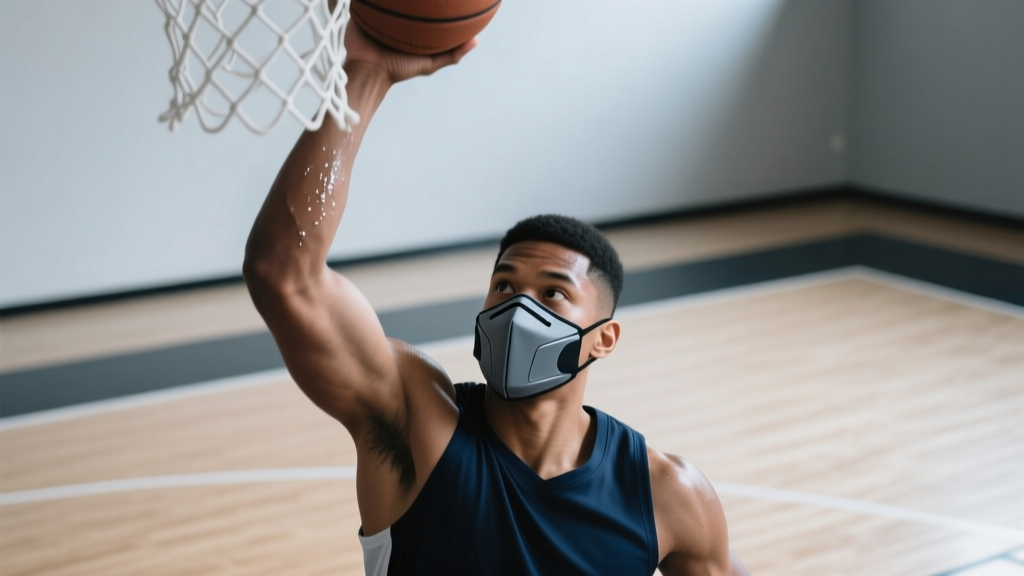
Basketball players wear masks primarily to protect facial injuries such as broken noses, cheekbones, or eye sockets while continuing to play safely. These clear polycarbonate masks shield vulnerable areas without obstructing vision or performance.
Why Do Basketball Players Wear Masks?
Professional and amateur basketball players often wear protective face masks during games and practices to continue playing after sustaining facial injuries. These custom-fitted, transparent shields are typically made from durable polycarbonate material, allowing athletes to stay competitive while healing fractures, nasal injuries, or orbital bone damage.
Common Injuries Leading to Mask Use
- Broken nose (nasal fracture)
- Orbital blowout fracture (eye socket injury)
- Zygomatic fracture (cheekbone break)
- Dental or jaw trauma requiring protection
- Post-surgical recovery in facial regions
History and Evolution of Protective Face Masks in Basketball
The use of face masks in basketball gained prominence in the 1980s but became more widespread in the 2000s as sports medicine advanced. Early versions were bulky and restrictive, but modern designs prioritize aerodynamics, comfort, and optical clarity.
Milestones in Mask Adoption
- 1980s: Rudimentary plastic shields introduced for post-injury protection.
- 2007: LeBron James wore a mask after breaking his nose, increasing public awareness.
- 2012: Derrick Rose and Rajon Rondo used sleeker, form-fitting models during NBA playoffs.
- 2020s: Custom 3D-printed masks with anti-fog coatings and UV protection emerge.
Benefits of Wearing a Basketball Face Mask
Athletes who wear protective masks gain several advantages beyond basic injury prevention.
Performance and Safety Advantages
- Injury Prevention: Shields fragile bones during physical contact.
- Continuity of Play: Allows return to competition without prolonged downtime.
- Confidence Boost: Reduces fear of re-injury, improving on-court aggression.
- Psychological Edge: Some players report increased focus when wearing a mask.
Materials and Design: How Basketball Masks Are Made
Modern basketball face masks are engineered using high-impact polycarbonate or acrylic composites. They are lightweight (typically under 4 ounces) and designed to fit securely over standard athletic eyewear or directly on the face using adjustable straps.
Key Features of High-Performance Masks
| Feature | Description |
|---|---|
| Material | Polycarbonate (Lexan or Makrolon) |
| Weight | 80–110 grams (2.8–3.9 oz) |
| Fit System | Adjustable elastic straps with silicone grips |
| Optical Clarity | Anti-scratch and anti-fog coating |
| Customization | 3D scanning for personalized molds |
Notable NBA Players Who Wore Face Masks
| Player | Team(s) | Injury | Season(s) | Games Played with Mask |
|---|---|---|---|---|
| LeBron James | Miami Heat, Cleveland Cavaliers | Broken nose | 2007, 2014 | 23 |
| Kawhi Leonard | San Antonio Spurs | Nasal fracture | 2015 | 14 |
| Kevin Love | Cleveland Cavaliers | Facial fracture | 2016 | 18 |
| Joel Embiid | Philadelphia 76ers | Orbital fracture | 2018 | 31 |
| Anthony Davis | New Orleans Pelicans | Nose fracture | 2017 | 12 |
The data shows that elite players frequently return to action quickly after facial trauma, thanks to protective masks. Joel Embiid played the most games (31) with a mask, indicating its effectiveness in enabling long-term recovery while maintaining performance. LeBron James and Kevin Love both wore masks during playoff runs, underscoring their importance in high-stakes environments.
Rules and Regulations on Mask Usage
The NBA, NCAA, and FIBA permit face masks as long as they do not pose a danger to other players. Guards must ensure edges are smooth and non-abrasive. Tinted masks are generally prohibited unless medically approved.
League Guidelines Summary
- NBA: Maks allowed if made of soft, transparent material.
- NCAA: Requires pre-approval; no protruding parts.
- FIBA: Similar to NBA; safety inspection before games.
Frequently Asked Questions About Why Basketball Players Wear Masks
Why do basketball players wear masks after an injury?
Basketball players wear masks after facial injuries like broken noses or cheekbones to protect healing bones while continuing to compete. The mask acts as a barrier against further impact without limiting vision or mobility.
Are face masks mandatory in professional basketball?
No, face masks are not mandatory. They are optional protective gear used at the discretion of the player and medical staff following facial trauma or surgery.
Can wearing a mask improve a player’s performance?
While masks don’t enhance physical ability, they can boost confidence by reducing fear of re-injury. Some players report feeling more aggressive and focused when protected.
Do face masks affect breathing or vision?
No, modern basketball masks are designed with optimal airflow and optical clarity. They do not impair breathing and are made from transparent materials that minimize visual distortion.
How are basketball face masks customized for individual players?
Many professional players use 3D facial scanning to create custom-fit masks. These are molded precisely to the contours of their face for maximum comfort, stability, and protection.
More Articles
 What Channel Is IU Basketball On Tonight? (2025)
 What Channel Is Kentucky Basketball On Tonight?
 When Do UConn Women Play Next? Next Game & Schedule 2025
 Basketball Court Dimensions: NBA, NCAA, FIBA, High School
 How Tall Are Basketball Players? NBA & WNBA Averages
 When Does Michigan Play Basketball? 2024-2025 Schedule
 Olympics Basketball Final 2024: Date and Time
 Michigan State Basketball Next Game & Schedule (2026)
 Wisconsin Badgers Basketball Score Today & Recent Results
 How Many People Play Basketball in the World?