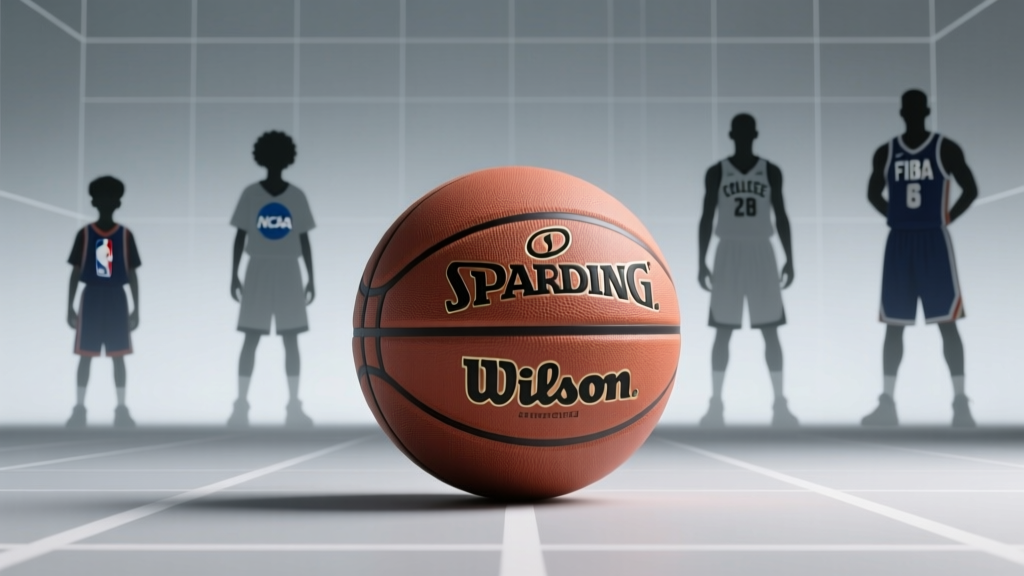
Standard Basketball Size by League & Age
The standard size of a basketball varies by league and player demographics, but for professional men's play, the NBA and FIBA specify a Size 7 ball with a circumference of 29.5 inches (75 cm) and a weight of 22 ounces (624 g). Women's professional leagues like the WNBA use a Size 6 ball, measuring 28.5 inches (72 cm) in circumference and weighing 20 ounces (567 g). Youth and recreational leagues adjust sizes based on age and hand size to ensure proper skill development.
Understanding Basketball Sizes by League and Level
Basketball size is standardized across major organizations to ensure consistency in gameplay, training, and equipment manufacturing. The size is primarily determined by the ball's circumference and weight, which vary depending on the age, gender, and competitive level of the players.
Key Factors That Determine Basketball Size
- Player age: Younger players use smaller balls to accommodate hand size and strength.
- Gender: Men’s and women’s leagues typically use different standard sizes.
- League regulations: NBA, FIBA, NCAA, and youth organizations each have defined specifications.
- Playing surface: Indoor vs. outdoor use may influence material, but not size standards.
Standard Basketball Sizes Across Major Leagues
Different leagues enforce specific ball dimensions to maintain fairness and performance consistency. Below is a detailed comparison of official basketball sizes used globally.
| League/Organization | Ball Size | Circumference (inches) | Circumference (cm) | Weight (oz) | Weight (g) | Inflation Pressure (psi) |
|---|---|---|---|---|---|---|
| NBA | Size 7 | 29.5 | 75 | 22 | 624 | 7.5–8.5 |
| WNBA | Size 6 | 28.5 | 72 | 20 | 567 | 7.5–8.5 |
| FIBA Men | Size 7 | 29.5 | 75 | 22 | 624 | 7.5–8.0 |
| FIBA Women | Size 6 | 28.5 | 72 | 20 | 567 | 7.5–8.0 |
| NCAA Men | Size 7 | 29.5 | 75 | 22 | 624 | 7.5–8.5 |
| NCAA Women | Size 6 | 28.5 | 72 | 20 | 567 | 7.5–8.5 |
| Junior (Ages 9–11) | Size 5 | 27.5 | 70 | 17 | 482 | 7.5–8.5 |
| Youth (Ages 5–8) | Size 4 | 25.5 | 65 | 14 | 397 | 7.5–8.5 |
The data shows a clear distinction between men’s and women’s professional basketballs, with a consistent 1-inch difference in circumference. Size 7 is the global standard for male players at elite levels, while Size 6 dominates in women’s competition. Youth sizes are significantly smaller, promoting better ball control and long-term skill development. Inflation pressure remains relatively uniform across categories, ensuring consistent bounce and feel.
Breakdown of Basketball Size Categories
Basketballs are categorized numerically from Size 4 to Size 7, with each serving a specific demographic. Understanding these categories helps coaches, parents, and players select the appropriate ball.
Size 7 – Official Game Ball for Men
Used in the NBA, NCAA men’s basketball, and FIBA men’s competitions, Size 7 is designed for players aged 12 and up, particularly those with larger hands. It offers optimal grip and shooting mechanics for advanced players.
Size 6 – Standard for Women’s Competition
Adopted by the WNBA, NCAA women’s basketball, and FIBA women’s events, Size 6 allows for better handling and shooting accuracy among female athletes. Its smaller diameter improves dribbling control and passing precision.
Size 5 – Ideal for Youth Players (Ages 9–11)
This intermediate size bridges the gap between beginner and full-size balls. It is commonly used in middle school leagues and youth camps to develop proper technique without straining young hands.
Size 4 – Designed for Young Children (Ages 5–8)
Often used in introductory programs and elementary physical education, Size 4 helps young children build confidence and fundamental motor skills with a lightweight, easy-to-handle ball.
Frequently Asked Questions About Basketball Size
What is the standard size of a basketball in the NBA?
The NBA uses a Size 7 basketball with a circumference of 29.5 inches (75 cm) and a weight of 22 ounces (624 g). This is the official game ball for all professional men’s games.
Is a men’s basketball always 29.5 inches?
Yes, in professional and collegiate men’s basketball (NBA, NCAA, FIBA), the standard circumference is consistently 29.5 inches. Smaller sizes are used only for youth or junior divisions.
Why is the WNBA basketball smaller than the NBA’s?
The WNBA uses a Size 6 ball (28.5 inches) to accommodate the average hand size of female players, improving ball control, shooting form, and overall performance. This adjustment supports technical skill development tailored to physiological differences.
What size basketball should a 10-year-old use?
A 10-year-old should typically use a Size 5 basketball, which has a 27.5-inch circumference and weighs 17 ounces. This size is ideal for children ages 9 to 11 and is recommended by most youth leagues and coaching programs.
Are indoor and outdoor basketballs the same size?
Yes, indoor and outdoor basketballs are the same size for a given category. However, outdoor balls are usually made with composite or rubber materials to withstand rough surfaces, while indoor balls use leather or synthetic leather for better grip on smooth courts.
More Articles
 Michigan State Basketball Next Game: 2026
 What Does SF Mean in Basketball? Explained
 Basketball Foul Types and Penalties
 Where Is the SEC Basketball Tournament Held in 2025?
 How Many Quarters in NCAA Basketball? Full Breakdown
 What Does a Double-Double Mean in Basketball?
 Best Basketball Shoes: Performance and Fit
 Official Basketball Size: By League, Age & Gender
 Who Won NCAA Basketball 2024? UConn Claims Title
 How Many Gold Medals Does USA Basketball Have?