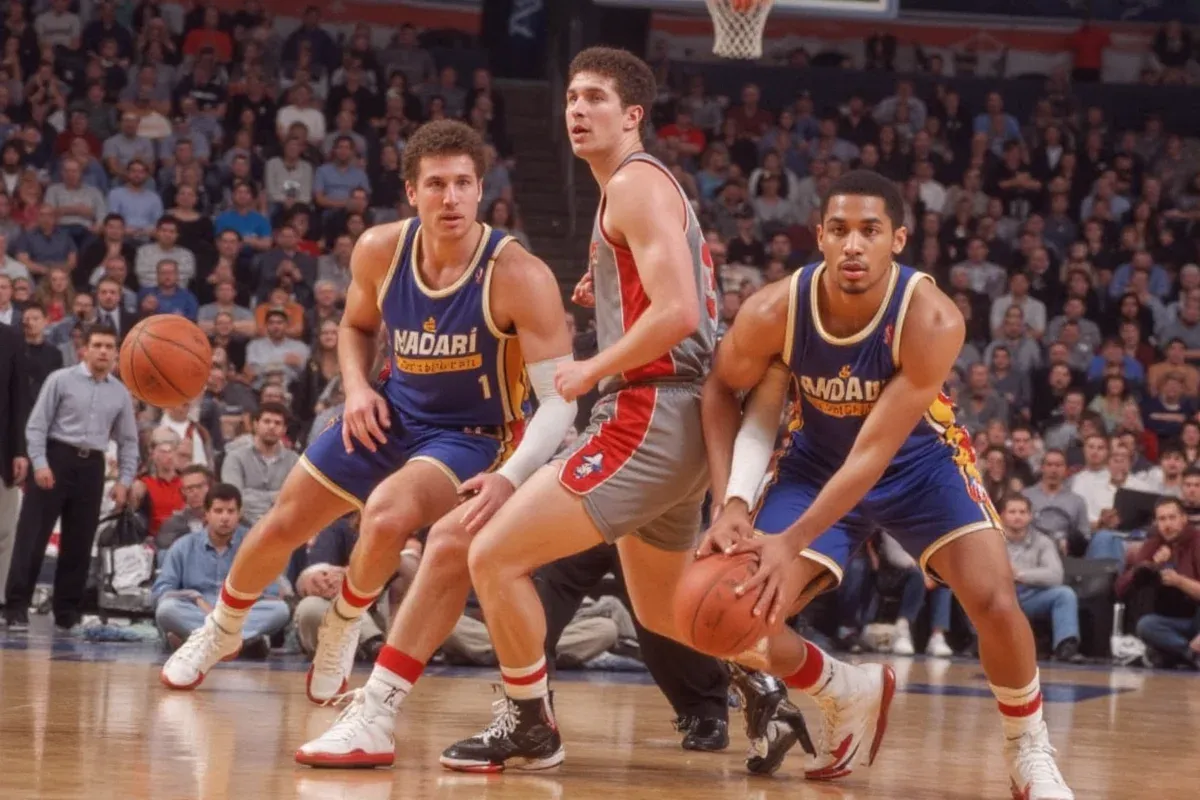
What Does ISO Mean in Basketball? Explained
In basketball, ISO stands for isolation, a offensive strategy where one player is given the ball with teammates clearing space to create a one-on-one scoring opportunity. This tactic leverages individual skill against defensive matchups and is commonly used in late-clock or clutch situations.
Understanding Isolation (ISO) in Basketball
Isolation, often abbreviated as “ISO,” is a fundamental offensive play in basketball designed to exploit a favorable one-on-one matchup. During an ISO play, the ball handler operates on one side of the court while the other four players clear out, allowing minimal interference from defenders.
Key Characteristics of ISO Plays
- One primary scorer handles the ball
- Teammates move away from the driving lane
- Focused on exploiting mismatches (e.g., slower defender)
- Commonly used in half-court sets
- High usage in end-of-shot-clock scenarios
When Coaches Use ISO Strategies
Coaches deploy isolation plays based on personnel strengths and game context. Below are common scenarios:
Late-Game Situations
With limited time on the shot clock or at the end of a close game, teams rely on their best scorers in ISO to minimize turnovers and maximize efficiency.
Mismatch Exploitation
If a smaller, quicker guard is guarded by a larger forward, or a skilled wing faces a weaker defender, coaches call ISO to capitalize on the advantage.
Star Player Empowerment
Elite players like Stephen Curry, Kevin Durant, and James Harden frequently operate in ISO due to their high scoring ability and decision-making under pressure.
Effectiveness and Efficiency of ISO Plays
While ISO can be effective, it's not always the most efficient option. Over-reliance can reduce ball movement and increase turnover risk. However, when executed by elite players, ISO generates high-value shots.
| Player | Season | ISO Possessions (per 100 plays) | Points Per ISO Play | Usage Rate (%) |
|---|---|---|---|---|
| James Harden | 2018-2019 | 12.3 | 1.13 | 35.6 |
| Kevin Durant | 2021-2022 | 9.7 | 1.08 | 29.4 |
| LeBron James | 2020-2021 | 8.9 | 1.05 | 32.1 |
| Giannis Antetokounmpo | 2022-2023 | 7.6 | 1.10 | 27.8 |
| Stephen Curry | 2023-2024 | 6.4 | 1.02 | 26.7 |
The data shows that top-tier scorers average between 6.4 and 12.3 isolation possessions per 100 plays, with points per possession ranging from 1.02 to 1.13. James Harden leads in both volume and usage, indicating his central role in Houston’s offensive system during his peak years.
Despite lower frequency, players like Stephen Curry maintain high efficiency, demonstrating that ISO effectiveness isn't solely dependent on volume.
Types of ISO Plays
There are several variations of isolation basketball, each tailored to player strengths:
Wing ISO
The ball handler starts at the wing (side of the three-point line) and attacks off the dribble. Common for shooting guards and small forwards.
Top of the Key ISO
Begins at the center of the court, allowing drives to either side. Favored by point guards and versatile wings.
Post-Up ISO
Larger wings or big men back down defenders near the basket. While not traditional perimeter ISO, it’s a form of one-on-one isolation.
Elbow ISO
Initiated from the elbow area (corner of the free-throw line), enabling mid-range pull-ups or drive-and-kick actions.
Pros and Cons of Using ISO
Advantages
- Maximizes star player impact
- Reduces complexity in critical moments
- Exploits weak defenders effectively
- Can draw double teams, creating open shots for teammates
Disadvantages
- Decreases ball movement and team rhythm
- Risk of low-percentage shots if defense holds position
- Can lead to stagnation if overused
- Higher turnover potential under pressure
Common Questions About ISO in Basketball
What does ISO mean in basketball slang?
ISO is short for “isolation,” referring to a play where one offensive player takes on a defender one-on-one while teammates clear space.
Who are the best ISO players in NBA history?
Michael Jordan, Kobe Bryant, LeBron James, Kevin Durant, and James Harden are widely regarded as the most effective isolation scorers due to their combination of skill, strength, and decision-making.
How is ISO different from pick-and-roll?
ISO isolates one player without screens, relying on individual offense. Pick-and-roll involves teamwork, using a screen to create options for both the ball handler and roller to the basket.
Is ISO a good offensive strategy?
It depends on personnel and context. For elite scorers in crunch time, ISO is highly effective. However, excessive use can hurt team flow and reduce overall offensive efficiency.
How do defenses stop ISO plays?
Defenders use strong on-ball pressure, deny passing lanes, force the offensive player into help defense, and avoid fouling. Team defense coordination is crucial to prevent easy drives or kick-outs.
More Articles
 NBA Games Tonight: Oct 25, 2026 TV Schedule & How to Watch
 How Long Is a Basketball Game? By League Explained
 What NBA Teams Play Today? Oct 25, 2025 Schedule
 How Tall Is the Average Basketball Player in 2025?
 Who Won the NCAA Basketball Tournament in 2008?
 Why Are Basketball Players So Tall?
 Where to Watch Olympic Basketball Live in 2025
 2025 College Basketball Championship Location
 When Did Dennis Rodman Start Playing Basketball?
 Where Did Cooper Flagg Play High School Basketball?