What Does a Forward Do in Basketball? Key Roles Explained
What Does a Forward Do in Basketball?
In basketball, a forward is responsible for scoring, rebounding, defending multiple positions, and facilitating offense. There are two main types—small forwards and power forwards—each with distinct but overlapping roles that adapt to modern NBA and international play styles.
Understanding the Forward Position
The forward position in basketball bridges the gap between guards and centers. Forwards are typically versatile athletes who contribute across scoring, defense, and rebounding. Their responsibilities vary based on whether they play as a small forward (SF) or power forward (PF), though positional lines have blurred in today's pace-and-space NBA.
Types of Forwards
- Small Forward (SF): Often the most versatile player, excelling in scoring from all levels, perimeter defense, and transition play.
- Power Forward (PF): Traditionally a physical interior player, now often a stretch four who can shoot from beyond the arc and switch defensively.
Primary Responsibilities of a Forward
Forwards must be well-rounded contributors. Their duties span both ends of the floor and evolve with team strategy and league trends.
Scoring
- Score inside the paint through cuts, post-ups, and offensive rebounds.
- Hit mid-range jumpers and three-pointers, especially for modern stretch forwards.
- Finish in transition and act as secondary or primary scorers depending on team role.
Rebounding
- Box out opponents to secure defensive rebounds.
- Crash the offensive glass to extend possessions.
- Power forwards typically average more rebounds than small forwards due to proximity to the basket.
Defense
- Guard both wing players and bigger post men, requiring lateral quickness and strength.
- Switch on screens in modern defensive schemes.
- Protect the rim when rotating from the high post or weak side.
Playmaking and Floor Spacing
- Facilitate ball movement from the elbows or high post.
- Act as a secondary playmaker in pick-and-pop or drive-and-kick actions.
- Provide floor spacing by shooting threes, particularly critical for power forwards in modern offenses.
Evolution of the Forward Role in Modern Basketball
The NBA's shift toward small-ball lineups and three-point shooting has redefined the forward position. Traditional post-oriented power forwards like Tim Duncan have given way to versatile 'stretch fours' like Kevin Love and Kristaps Porziņģis, who can shoot from deep and defend on the perimeter.
Key Trends Shaping the Forward Position
- Rise of the 'point forward'—players like LeBron James and Draymond Green who initiate offense.
- Increased three-point volume from forwards: In the 2023-24 season, PFs averaged over 3 made threes per 100 possessions, up from 0.8 in 2010-11 1.
- Positionless basketball emphasizes versatility, athleticism, and IQ over traditional size.
| Player | Position | PPG | RPG | APG | 3P% | Team (2023-24) |
|---|---|---|---|---|---|---|
| LeBron James | SF/PF | 25.7 | 7.9 | 8.3 | 38.5% | Los Angeles Lakers |
| Giannis Antetokounmpo | PF | 30.4 | 11.5 | 6.5 | 23.9% | Milwaukee Bucks |
| Kevin Durant | SF | 29.1 | 7.2 | 5.9 | 35.5% | Phoenix Suns |
| Julius Randle | PF | 22.1 | 9.7 | 4.1 | 34.8% | New York Knicks |
| Paul George | SF | 22.9 | 6.9 | 5.1 | 40.1% | LA Clippers |
This table illustrates how elite forwards combine scoring, rebounding, and playmaking. Notice the high assist totals from LeBron James and Giannis, reflecting their role as offensive engines. Additionally, players like Paul George and Kevin Durant showcase elite three-point efficiency, underscoring the importance of floor spacing at the forward position.
Frequently Asked Questions About Forwards in Basketball
What is the difference between a small forward and a power forward?
The small forward is typically faster and more agile, focusing on perimeter scoring, defense, and transition play. The power forward is usually stronger and more physical, operating near the basket, rebounding, and defending big men. However, in modern basketball, many power forwards stretch the floor with three-point shooting, blurring these distinctions.
Can a forward be the best player on a team?
Yes, many MVPs and champions are forwards. Players like LeBron James, Kevin Durant, and Giannis Antetokounmpo are primary offensive options and defensive anchors. Forwards often have the ideal blend of size, skill, and athleticism to lead teams at the highest level.
Do forwards need to shoot three-pointers?
While not mandatory, the ability to shoot threes is increasingly valuable for forwards. Stretch forwards open driving lanes and force defenses to spread out. In today’s NBA, even power forwards are expected to hit catch-and-shoot threes consistently to stay on the court.
Who are some of the greatest forwards in NBA history?
Legends include Larry Bird, Julius Erving, Tim Duncan, Scottie Pippen, and Karl Malone. Modern greats include LeBron James, Kevin Durant, and Kawhi Leonard. These players combined scoring, defense, and leadership, often defining eras of basketball excellence.
How do you train to become a better forward?
Focus on developing a complete skill set: work on footwork in the post, improve shooting range, build strength for rebounding, and enhance defensive agility. Watch film to study elite forwards and practice reading defenses. Versatility, basketball IQ, and conditioning are key traits to cultivate.
More Articles
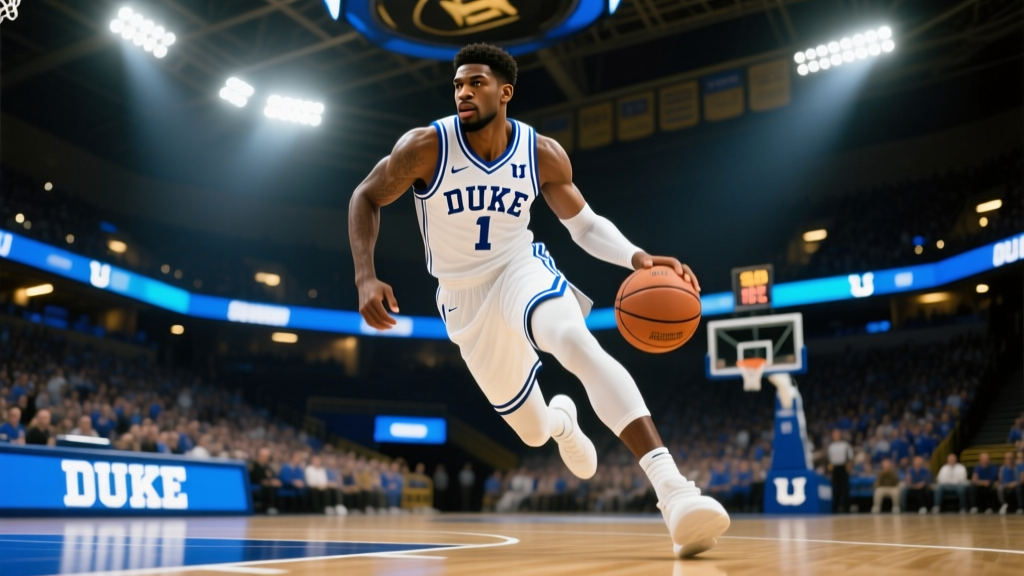 Duke Basketball Game Tonight Time & How to Watch
 How Many Division I Basketball Teams Are There? (2025)
 Who Invented Basketball? The True Story
 Best NBA Basketball Team: Warriors' Dynasty Explained
 Basketball Equipment Care: Pro Maintenance Protocol
 NBA Basketball Size: Official Dimensions (2026)
 What Basketball Team Does Michael Jordan Own? | Full Details
 Who Won Most NCAA Basketball Championships?
 How Many Steps Is Traveling in Basketball?
 How Many Fouls in NBA Basketball Before Fouling Out?