How Are Basketballs Made? Materials, Process & Science
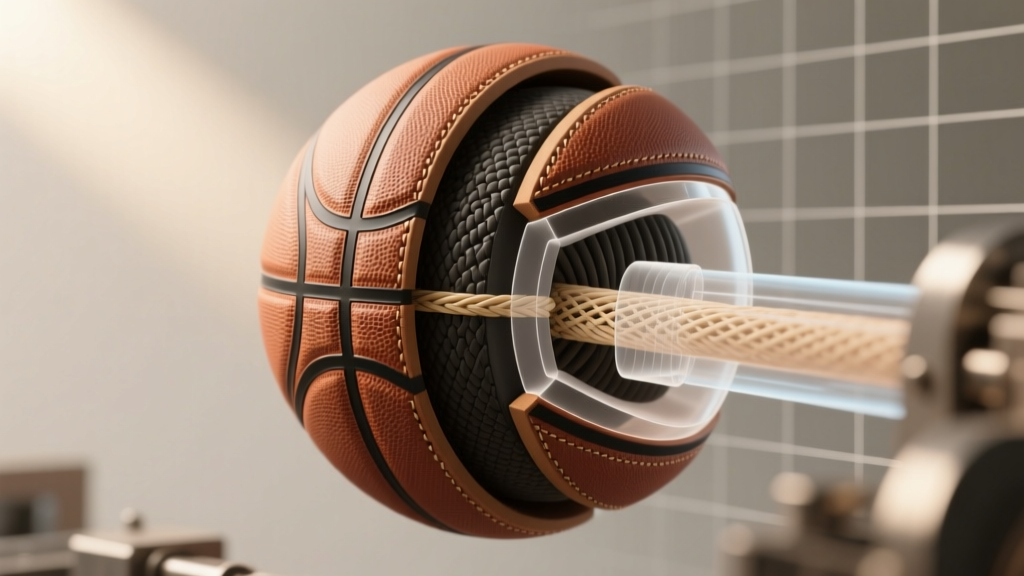
Basketballs are made through a precise manufacturing process involving layers of rubber, composite leather, or genuine leather wrapped around an inflatable bladder, then molded and textured for grip and performance.
How Basketballs Are Constructed: Materials and Design
The construction of a basketball begins with selecting the right materials based on intended use—indoor, outdoor, or competitive play. The outer cover, carcass, and inner bladder each play a critical role in bounce, durability, and feel.
Key Components of a Basketball
- Outer Cover: Made from leather, synthetic composite, or rubber; affects grip and longevity.
- Carcass Layer: A reinforced mesh (usually nylon or polyester) that maintains shape and supports air retention.
- Inflatable Bladder: Typically made from butyl rubber, responsible for air retention and bounce consistency.
Professional leagues like the NBA use full-grain leather covers for superior touch, while recreational balls often use composite or rubber for weather resistance and cost efficiency.
Manufacturing Process Step by Step
Creating a high-quality basketball involves several controlled stages to ensure uniformity, pressure stability, and surface texture.
- Bladder Molding: Butyl rubber is molded into a spherical shape and tested for air retention.
- Carcass Wrapping: Nylon or polyester threads are hand- or machine-wound around the bladder for structural integrity.
- Panel Shaping: Eight pebbled panels are cut from selected material (leather or composite) and prepared for bonding.
- Assembly and Bonding: Panels are glued and pressed onto the carcass under heat to form a seamless sphere.
- Inflation and Curing: The ball is inflated and placed in a curing oven to set the adhesive and stabilize shape.
- Quality Testing: Each ball undergoes checks for roundness, bounce height, water absorption, and weight compliance.
Differences Between Indoor and Outdoor Basketballs
Not all basketballs are suited for every environment. Material choice directly impacts performance and lifespan depending on the playing surface.
- Indoor Balls: Use genuine or premium composite leather for soft touch and responsive grip on smooth courts.
- Outdoor Balls: Made from durable rubber or all-synthetic composites to withstand asphalt and weather exposure.
- Indoor/Outdoor Hybrids: Balance feel and toughness using high-grade composites suitable for both surfaces.
Regulation Standards Across Leagues
Different leagues enforce specific size, weight, and material standards to maintain fairness and consistency.
| League/Organization | Ball Size | Circumference (inches) | Weight (oz) | Material |
|---|---|---|---|---|
| NBA | Size 7 | 29.5 | 22 | Full-grain leather |
| NCAA Men's | Size 7 | 29.5 | 22 | Leather or composite |
| NCAA Women's | Size 6 | 28.5 | 20 | Leather or composite |
| FIBA | Size 7 (Men), Size 6 (Women) | 29.5 (M), 28.5 (W) | 22 (M), 20 (W) | Synthetic leather |
| Spalding TF-1000 (Recreational) | Size 7 | 29.5 | 21 | Composite leather |
| Wilson Evolution (NCAA Official) | Size 7 | 29.5 | 22 | Composite cover |
The data shows consistent sizing between major men's leagues (NBA, NCAA, FIBA), all using a 29.5-inch circumference ball. Women's divisions standardize on a smaller 28.5-inch model for better handling. Material trends show a shift toward synthetic and composite leather for durability and lower maintenance, especially in international competitions.
Technology and Innovation in Modern Basketballs
Recent advancements have improved consistency, moisture resistance, and player feedback.
- Microfiber Composite Covers: Offer leather-like feel with enhanced durability and water resistance.
- Moisture-Wicking Liners: Help manage sweat absorption during intense play.
- Internal Pressure Monitoring: Some smart basketballs now include sensors to track dribble speed and shot arc.
- Eco-Friendly Production: Brands are exploring recycled rubber and low-emission adhesives.
Frequently Asked Questions About How Basketballs Are Made
What material is used inside a basketball?
The inner core of a basketball is a butyl rubber bladder, which holds air and provides consistent bounce. This bladder is surrounded by a windings layer of nylon or polyester thread that helps maintain shape and structural support.
Are NBA basketballs made of real leather?
Yes, official NBA game balls are made with full-grain Horween leather, known for its soft texture, durability, and superior grip. The leather is tanned and treated to meet strict performance standards before being assembled in China.
How much does a regulation basketball weigh?
A regulation-size basketball (Size 7) weighs 22 ounces (1.375 pounds). Women’s regulation balls (Size 6) weigh 20 ounces. Slight variations exist in recreational models, typically ranging from 20–22 oz.
Why do basketballs have bumps or pebbles on the surface?
The pebbling on a basketball enhances grip and control, allowing players to dribble, pass, and shoot more effectively. It also reduces slippage caused by sweat and improves tactile feedback during fast-paced movements.
Can you make a basketball at home?
While it's not feasible to replicate industrial manufacturing at home, DIY kits exist for decorating or customizing pre-made balls. True production requires specialized molds, heat presses, and precision equipment unavailable to consumers.
More Articles
 What NBA Teams Did Michael Jordan Play For?
 When Do the Warriors Play Next? Game Schedule 2025
 When Do NCAA Basketball Rankings Come Out?
 Watch Basketball Tonight: Live Streams & TV (2026)
 When Is the First NBA Basketball Game? Key Dates & History
 Who Is Michigan Basketball Coach? Dusty May Profile
 How Many NBA Teams Are in California? (2025)
 When Did Michael Jordan Retire from Basketball?
 How Many People Play Basketball in the World?
 What Channel Is UNC Basketball On Today? - Oct 2025