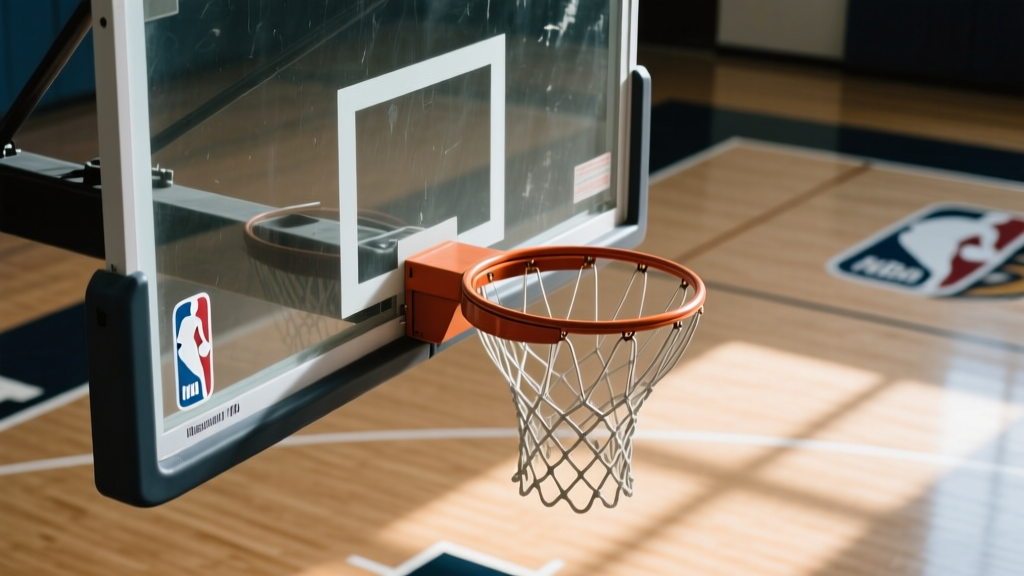
How Tall Is an NBA Basketball Hoop? 10 Feet Explained
The standard height of an NBA basketball hoop is 10 feet (3.05 meters) above the ground, a regulation that has been in place since the sport's inception in 1891. This uniform rim height is used across all professional, collegiate, and high school courts in the United States and internationally under FIBA rules.
Why Is the NBA Hoop Height Set at 10 Feet?
The 10-foot rim height is more than just a tradition—it’s a foundational element of basketball’s structure and challenge. Understanding why this height was chosen helps explain its lasting impact on gameplay, athlete performance, and court design.
Historical Origins of the 10-Foot Standard
Basketball was invented by Dr. James Naismith in December 1891 at Springfield College in Massachusetts. He nailed a peach basket to the balcony of a gymnasium, which happened to be exactly 10 feet off the floor. Despite the makeshift setup, the height proved ideal for balance between scoring and defensive difficulty, so it was standardized.
- The first basketball game used a fruit basket mounted at 10 feet.
- No ladders were used initially; someone had to retrieve the ball after each made shot.
- In 1906, the bottom of the basket was removed, evolving into the modern net system.
- The 10-foot rule was formally adopted by the National Basketball League (predecessor to the NBA) and maintained through today.
Is the Hoop Height Different Across Leagues?
While the NBA maintains a strict 10-foot standard, youth and recreational leagues sometimes adjust rim heights to accommodate player development. However, by high school level and beyond, the 10-foot rule is universally enforced.
Rim Heights by Age and Competition Level
To support skill growth and safety, younger players often use lower hoops. Here's how standards vary:
| League or Age Group | Hoop Height (feet) | Hoop Height (meters) | Notes |
|---|---|---|---|
| NBA, WNBA, NCAA Men & Women | 10 | 3.05 | Professional and collegiate standard |
| High School (NFHS) | 10 | 3.05 | Matches NBA regulation |
| Junior High (Grades 7–8) | 9 | 2.74 | Sometimes 10 feet; depends on district |
| Youth (Ages 9–11) | 8–9 | 2.44–2.74 | Adjustable rims common |
| Children (Under 9) | 6–8 | 1.83–2.44 | Focused on form and accessibility |
| FIBA International | 10 | 3.05 | Same as NBA |
The data shows remarkable consistency at elite levels—NBA, WNBA, NCAA, and FIBA all use the same 10-foot standard. Variations occur only in developmental settings, where lowering the rim encourages proper shooting mechanics and confidence in young athletes. The transition to 10 feet typically occurs by age 13 or at the high school level.
How Does Rim Height Affect Gameplay and Player Performance?
The fixed 10-foot rim creates a consistent challenge that shapes player development, strategy, and athleticism in the NBA.
Key Impacts of the 10-Foot Standard
- Shot Arc and Form: Players must develop a high release and optimal arc to score efficiently.
- Dunking Difficulty: Despite average NBA player height being around 6'7", dunking requires elite vertical leap due to the 10-foot gap.
- Defensive Timing: Shot-blocking and contesting are calibrated around this height, influencing defensive schemes.
- Game Strategy: Coaches emphasize spacing and mid-range efficiency because of the rim’s elevation.
Interestingly, while players have grown taller and more athletic over time, the rim has remained unchanged—making basketball a rare sport where increased physical ability doesn’t alter fundamental equipment dimensions.
Frequently Asked Questions About NBA Hoop Height
How high is an NBA basketball hoop in feet?
An NBA basketball hoop is exactly 10 feet (3.05 meters) high from the ground to the top of the rim.
Has the NBA ever changed the height of the rim?
No, the NBA has never changed the rim height. It has remained 10 feet since basketball was invented in 1891, and the league continues to uphold this standard.
Are all basketball hoops the same height as the NBA?
At the professional, college, and high school levels in the U.S. and internationally (FIBA), yes—the standard is uniformly 10 feet. However, youth leagues often use lower rims (8–9 feet) for developmental purposes.
Why don’t they raise the NBA rim to counteract player height increases?
Although NBA players are taller and more athletic today, raising the rim would fundamentally alter the game’s history, records, and skill balance. The 10-foot standard is seen as a timeless challenge that tests verticality, precision, and finesse.
Can you adjust an NBA regulation hoop height?
NBA regulation hoops are fixed at 10 feet and cannot be adjusted during games. However, many recreational and home hoops are adjustable for training or youth play.
Conclusion
The NBA basketball hoop height of 10 feet is a cornerstone of the sport, rooted in history and preserved for competitive integrity. From playgrounds to professional arenas, this universal standard ensures consistency in skill development, game strategy, and athletic achievement. While youth programs may modify rim heights for developmental reasons, the 10-foot rule remains unchallenged at the highest levels of basketball.
More Articles
 NBA Hoop Height: How Tall Is a Basketball Rim?
 Next Olympic Basketball Games: Paris 2024 Schedule & Info
 Michael Jordan NBA Career Length: How Long Did He Play?
 Team USA Basketball Schedule 2026 | Next Game
 The Essential Basketball Tools Checklist: Equipment, Metrics, and Maintenance for Coaches, Players, and Facilities
 What Happened to Sagarin College Basketball Ratings?
 When Do Basketball Playoffs Start? 2025 NBA Schedule
 High School Basketball Months: Season Schedule Explained
 Where to Watch USA Basketball Games Live in 2025
 How Much Do Overseas Basketball Players Make? (2025 Data)