
Why Was Basketball Invented? Origins & Purpose
Basketball was invented in 1891 by Dr. James Naismith, a Canadian physical education instructor, to keep his students active indoors during the cold Massachusetts winter while minimizing injury risk and promoting teamwork.
The Origins of Basketball
Dr. James Naismith created basketball out of necessity. In December 1891, while working at the International YMCA Training School in Springfield, Massachusetts, he faced the challenge of engaging young men in physical activity during the harsh New England winter. Outdoor sports were impractical, and existing indoor games led to frequent injuries.
Naismith sought a game that was:
- Playable indoors on a smaller court
- Less physically aggressive than football or rugby
- Required skill, strategy, and cooperation
- Had minimal contact to reduce injuries
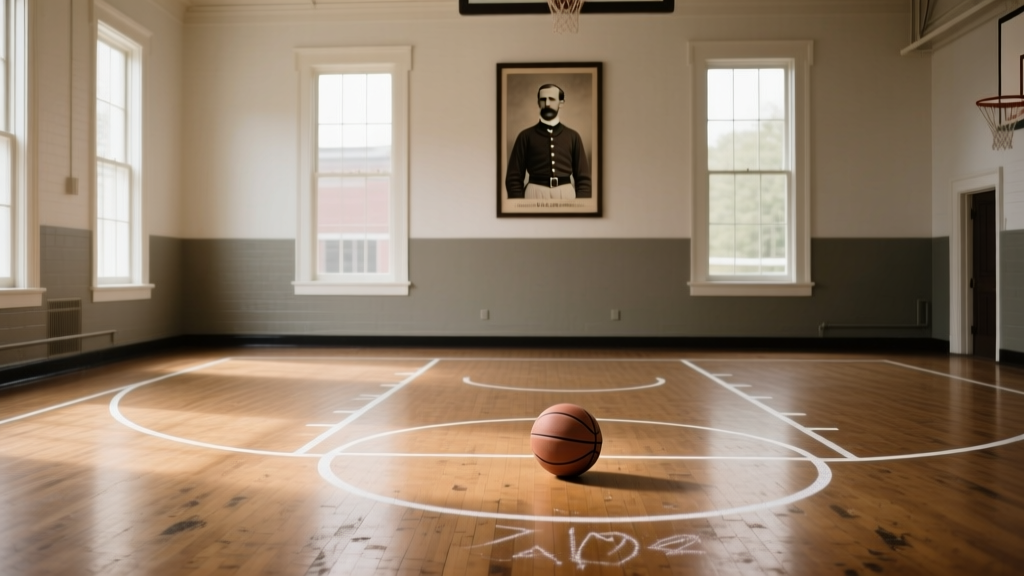
After experimenting with various ideas, he devised a game involving a soccer ball and two peach baskets nailed to a balcony 10 feet high—giving rise to the name "basket ball." The original 13 rules emphasized passing and shooting, laying the foundation for modern basketball.
James Naismith: The Inventor
Background and Motivation
Naismith held a degree in physical education and theology. Tasked with creating a new indoor game, he drew inspiration from childhood games like "Duck on a Rock," which involved throwing objects at a target. He combined this concept with elements of soccer and hockey but eliminated tackling and rough play.
Development of the First Game
The first official basketball game was played on December 21, 1891, with nine players per team. The final score was just 1–0, highlighting the game’s early difficulty. Peach baskets had to be manually retrieved after each score until metal hoops with backboards were introduced later.
Evolution of the Game
From its humble beginnings, basketball quickly gained popularity across YMCAs and colleges. Key milestones include:
- 1893: First women's game played at Smith College
- 1895: Backboards introduced to prevent interference from spectators
- 1936: Basketball became an Olympic sport at the Berlin Games
- 1946: Formation of the Basketball Association of America (BAA), precursor to the NBA
- 1949: Merger forming the NBA
Rule Changes That Shaped Modern Basketball
| Year | Rule Change | Impact |
|---|---|---|
| 1891 | Original 13 Rules established | Defined dribbling, fouls, and scoring |
| 1896 | Dribbling allowed | Increased pace and ball movement |
| 1906 | Eliminated running with the ball (dribbling formalized) | Reduced physical contact |
| 1937 | Center jump after every basket removed | Speeded up gameplay significantly |
| 1954 | 24-second shot clock introduced (NBA) | Boosted scoring and excitement |
This progression shows how strategic rule changes enhanced fairness, safety, and entertainment. The introduction of the shot clock revolutionized professional basketball, increasing average points per game from 79 in 1954 to over 110 by the 1960s.
Global Growth and Cultural Impact
Basketball spread rapidly beyond North America. By the mid-20th century, it had become popular in Europe, South America, and Asia. The NBA’s global marketing efforts, especially since the 1990s, elevated stars like Michael Jordan, Kobe Bryant, and LeBron James into international icons.
Today, FIBA governs international competition with over 215 national federations. The sport is celebrated for promoting:
- Youth fitness and discipline
- Community engagement through school and streetball culture
- Gender equality, with WNBA and women’s Olympic basketball thriving
| Year | Event | Participation / Viewership |
|---|---|---|
| 1936 | Berlin Olympics – First Olympic basketball tournament | Over 40,000 live spectators |
| 1992 | Barcelona Olympics – Dream Team debut | Global TV audience: ~3 billion cumulative |
| 2020 | Tokyo Olympics – 3x3 basketball debut | 120+ countries participated in qualifiers |
| 2023 | FIBA Basketball World Cup | 800 million+ global viewers (final alone) |
| 2024 | NBA season average attendance | 18,649 per game (all teams) |
The data illustrates basketball’s exponential growth in reach and popularity. The 2023 FIBA World Cup reached nearly one billion viewers, confirming basketball as one of the world’s most-watched sports. Increased participation in 3x3 formats also signals adaptability to urban environments and younger audiences.
Frequently Asked Questions About Why Basketball Was Invented
Why did James Naismith invent basketball?
James Naismith invented basketball in 1891 to provide a safe, engaging indoor physical activity for students during the winter months at the YMCA Training School in Springfield, Massachusetts.
What problem was basketball designed to solve?
Basketball was created to reduce injuries associated with indoor versions of football and rugby while maintaining physical exertion and teamwork in a confined space.
Was basketball originally played with a basketball?
No, the first games used a soccer ball. Specialized basketballs were not introduced until 1894, when lace-free leather balls were developed for better handling.
How many original rules were there in basketball?
There were 13 original rules written by James Naismith, covering aspects such as fouls, scoring, ball movement, and player conduct.
Why are basketball hoops 10 feet high?
The height of 10 feet comes from the balcony level where the first peach baskets were placed. This standard has remained unchanged since 1891 for consistency and fairness.
More Articles
 How Long Is a High School Basketball Court? Full Dimensions
 Where to Buy a Basketball Near Me Today
 How Many Halves in College Basketball? Full Breakdown
 What Does a Shooting Guard Do in Basketball?
 When Is Basketball in the Olympics? 2024 Schedule & Details
 What Does DNP Mean in Basketball? Definition & Impact
 How Many Basketball Teams Does California Have?
 NCAA Basketball Tournament 2025 Dates & Schedule
 Team USA Basketball Coach 2026: Full Staff Revealed
 Where Was Basketball Founded? Springfield, MA