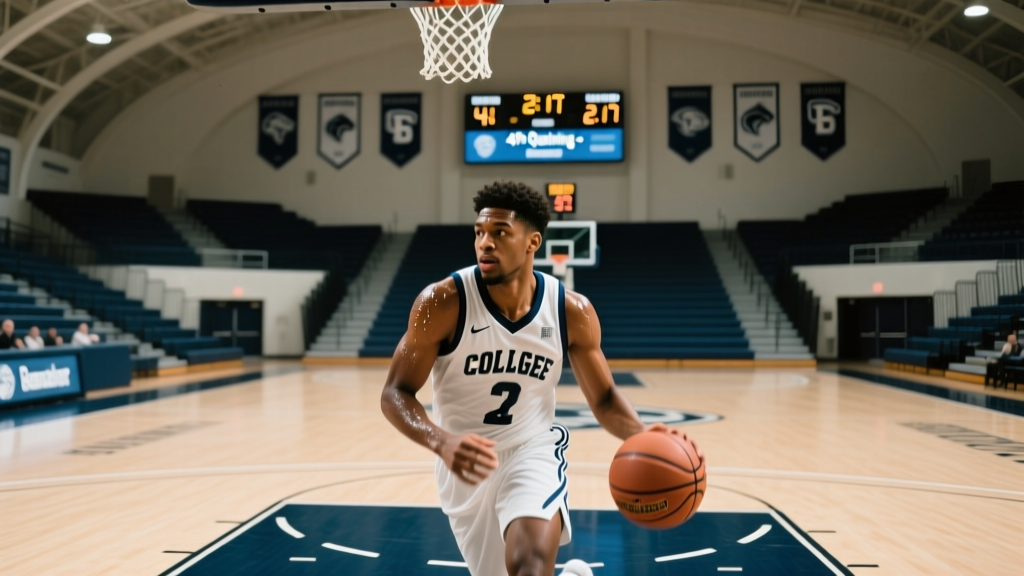
How Long Are College Basketball Quarters? (Real Answer)
College basketball games are divided into two 20-minute halves, not quarters, for both men's and women's NCAA competitions. This structure differentiates college basketball from professional leagues like the NBA, which use 12-minute quarters.
Understanding College Basketball Game Structure
Unlike professional and international basketball formats that use quarters, NCAA basketball operates on a two-half system. Each half lasts 20 minutes, resulting in a total of 40 minutes of regulation play. This format applies to both Division I men's and women's college basketball, as governed by the National Collegiate Athletic Association (NCAA).
Key Differences Between College and Professional Basketball Timing
- NCAA games consist of two 20-minute halves
- NBA games use four 12-minute quarters
- FIBA (international) games use four 10-minute quarters
- College overtime periods last 5 minutes per session
- NCAA shot clock is 30 seconds (reduced from 35 in 2015)
Men's vs. Women's College Basketball Format
Since the 2015-2016 season, both NCAA men's and women's basketball have used the same game structure: two 20-minute halves. Prior to this change, women's games were played in four 10-minute quarters. The shift was made to streamline broadcast timing and improve consistency across collegiate programs.
Why the NCAA Uses Halves Instead of Quarters
The traditional half-based format preserves historical continuity with college basketball's origins. It also allows for longer continuous stretches of gameplay, which affects coaching strategies, player stamina management, and television broadcasting patterns. The extended halftime break (typically 15 minutes) provides teams with more time for strategic adjustments compared to quarter-based systems.
| League/Level | Period Length | Number of Periods | Total Regulation Time | Shot Clock |
|---|---|---|---|---|
| NCAA Men's Basketball | 20 minutes | 2 halves | 40 minutes | 30 seconds |
| NCAA Women's Basketball | 20 minutes | 2 halves | 40 minutes | 30 seconds |
| NBA | 12 minutes | 4 quarters | 48 minutes | 24 seconds |
| FIBA | 10 minutes | 4 quarters | 40 minutes | 24 seconds |
| NFHS (High School) | 8 minutes | 4 quarters | 32 minutes | 35 seconds (varies by state) |
The data shows that while NCAA men's and women's basketball now share identical timing structures, they differ significantly from professional and high school formats. The 40-minute regulation time aligns with FIBA standards but uses a different period configuration. The 30-second shot clock in college basketball allows for a slightly more deliberate offensive pace compared to the NBA's 24-second rule.
Overtime and Game Duration Realities
In the event of a tie at the end of regulation, NCAA basketball employs 5-minute overtime periods until a winner is determined. Unlike the NBA, there is no limit on the number of overtimes. The actual duration of a college basketball game typically exceeds two hours due to timeouts, halftime, fouls, and media breaks—even though live play totals only 40 minutes.
Factors That Extend Actual Game Time
- Halftime intermission (15 minutes)
- Team timeouts (up to five per game)
- Media timeouts (four per half)
- Instant replay reviews
- Foul shots and substitutions
Frequently Asked Questions About College Basketball Quarters
Does college basketball have quarters?
No, NCAA basketball games are structured into two 20-minute halves, not quarters. This applies to both men's and women's divisions at all collegiate levels.
How long is a college basketball game in real time?
A typical college basketball game lasts about 2 hours and 10 minutes, even though regulation play is only 40 minutes. Delays from timeouts, halftime, fouls, and broadcasts extend the actual duration.
When did women's college basketball switch from quarters to halves?
Women's college basketball actually switched from quarters to halves in the 2015-2016 season. Before that, it used four 10-minute quarters. The change aligned women's rules with men's NCAA basketball.
Are there any exceptions to the two-half rule in college basketball?
No, all NCAA-sanctioned basketball competitions—regardless of division or gender—use the two-half format. This includes Division I, II, and III programs across the United States.
How does the shot clock work in college basketball?
The NCAA uses a 30-second shot clock, reduced from 35 seconds in 2015. The timer resets to 20 seconds after an offensive rebound, encouraging faster-paced play following missed shots.
More Articles
 How Long Is Halftime in College Basketball?
 What Channel Is the Florida Gators Basketball Game On?
 Team Basketball Gear Guide for Coaches
 Basketball Court Dimensions by Level
 When Is NBA Basketball Season 2025? Dates & Schedule
 Alabama Basketball Next Game & Schedule (2026)
 MSU Basketball Game Today Start Time & How to Watch
 When Is Basketball Season Over? Key Dates by League
 Where to Watch Unrivaled Basketball in 2025
 How Many Players on a Basketball Team? Full Breakdown