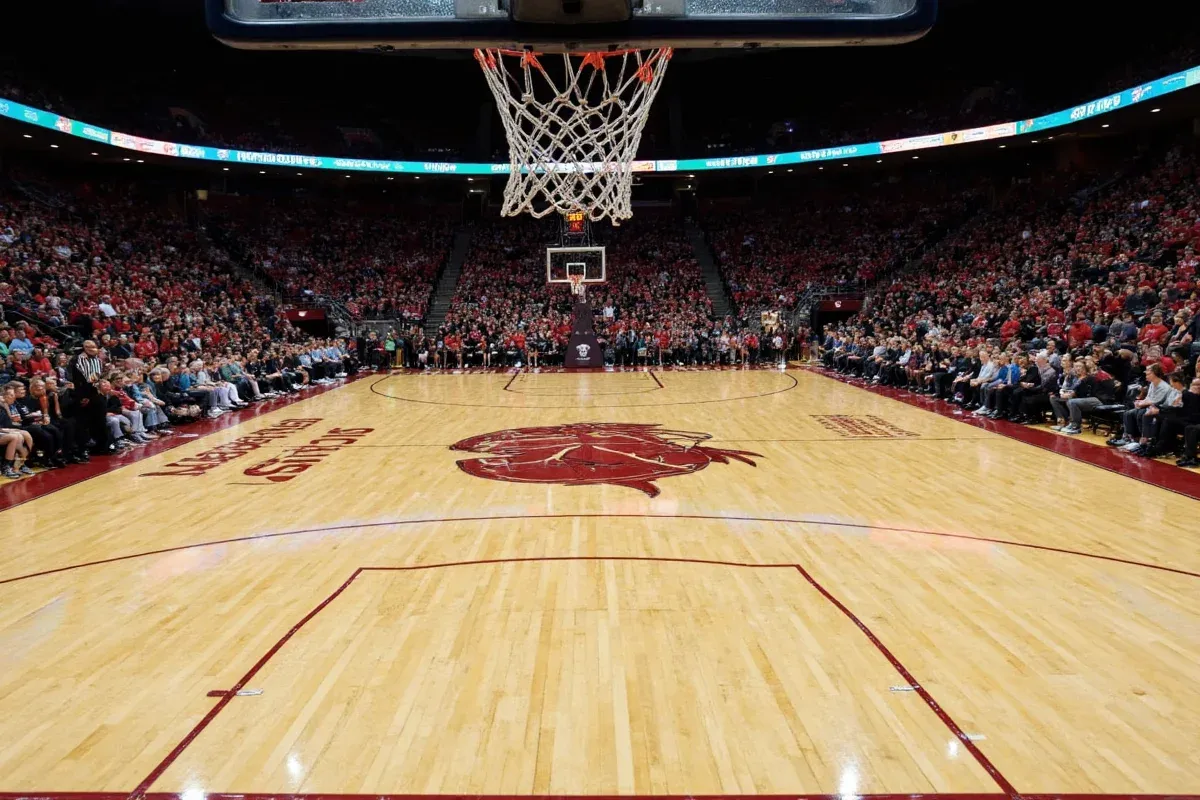
How Long Are High School Basketball Games?
High school basketball games typically last about 32 minutes of playing time, divided into four 8-minute quarters, though the total event duration is usually between 1.5 to 2 hours due to halftime, timeouts, fouls, and stoppages.
Structure of a High School Basketball Game
The length of a high school basketball game can vary depending on state regulations, level of play (varsity vs. junior varsity), and specific league rules. However, the standard structure follows guidelines set by the National Federation of State High School Associations (NFHS).
Game Duration by Segment
- Quarters: Four quarters, each lasting 8 minutes
- Halftime: Typically 10 minutes long \li>
- Timeouts: Each team gets five timeouts (three 60-second and two 30-second)
- Overtime: If tied, a 4-minute overtime period is played; additional periods if needed
- Jump Ball: Starts the game and alternating possession thereafter
Variations Across States
While NFHS sets national standards, individual state athletic associations may modify game length. For example, some states use two 16-minute halves instead of four quarters, particularly in lower divisions or rural schools.
| State | Quarter Length (Minutes) | Halftime (Minutes) | Overtime (Minutes) | Regulation Time (Total Minutes) |
|---|---|---|---|---|
| California | 8 | 10 | 4 | 32 |
| Texas | 8 | 10 | 4 | 32 |
| New York | 8 | 10 | 4 | 32 |
| Kentucky | 7.5 | 10 | 4 | 30 |
| Iowa | 7 | 10 | 3 | 28 |
| Maine | 9 | 10 | 3.5 | 36 |
The table illustrates that while most states adhere closely to the NFHS standard of 32 minutes of regulation play, variations exist—especially in quarter length. Maine uses longer 9-minute quarters, totaling 36 minutes, while Iowa plays shorter 7-minute quarters for a 28-minute game. These differences reflect regional preferences and scheduling constraints.
Factors That Extend Game Duration
Although the official playing time is around 32 minutes, actual game length often exceeds 90 minutes due to several factors:
- Timeouts: Coaches use strategic breaks, and media timeouts in larger events add time
- Fouls and Free Throws: Frequent fouling leads to stoppages and multiple free-throw attempts
- Substitutions: Frequent player changes interrupt flow
- Halftime and Pre-game Ceremonies: Especially during playoffs or senior nights
- Overtime Periods: One or more 4-minute overtimes can extend games significantly
Comparison with Other Levels of Play
Understanding how high school games compare to college and professional levels helps contextualize their structure.
Key Differences
- NBA: Four 12-minute quarters (48 minutes total)
- NCAA College: Two 20-minute halves (40 minutes total)
- High School: Four 8-minute quarters (32 minutes total)
- Youth Leagues: Often six-minute quarters or continuous clock after large leads
This progression reflects increasing physical stamina and competitive intensity as players advance.
Frequently Asked Questions About High School Basketball Game Length
How long is a typical high school basketball game?
A typical high school basketball game lasts about 1.5 to 2 hours from start to finish, including warmups, halftime, and potential overtime. The actual playing time is 32 minutes across four 8-minute quarters.
Are all high school basketball games the same length?
No, game length varies by state and league. While most states use 8-minute quarters, some use shorter or longer quarters. For example, Iowa uses 7-minute quarters, while Maine uses 9-minute quarters.
How long is halftime in a high school basketball game?
Halftime is typically 10 minutes long, providing teams time to regroup and strategize. Some tournaments may shorten halftime to 5–7 minutes to accommodate multiple games in one day.
How many timeouts do teams get in a high school basketball game?
Each team is allowed five timeouts per game: three 60-second timeouts and two 30-second timeouts. Unused timeouts do not carry over to overtime.
What happens if a high school basketball game is tied?
If the game is tied at the end of regulation, a 4-minute overtime period is played. If still tied, additional overtime periods are played until a winner is determined.
More Articles
 What Does a Point Guard Do in Basketball?
 Warriors Next Game: Date, Time & How to Watch
 Who Playing Basketball Today: NBA Schedule & Matchups
 Who Invented Basketball? The True Story of James Naismith
 Greatest Basketball Players of All Time
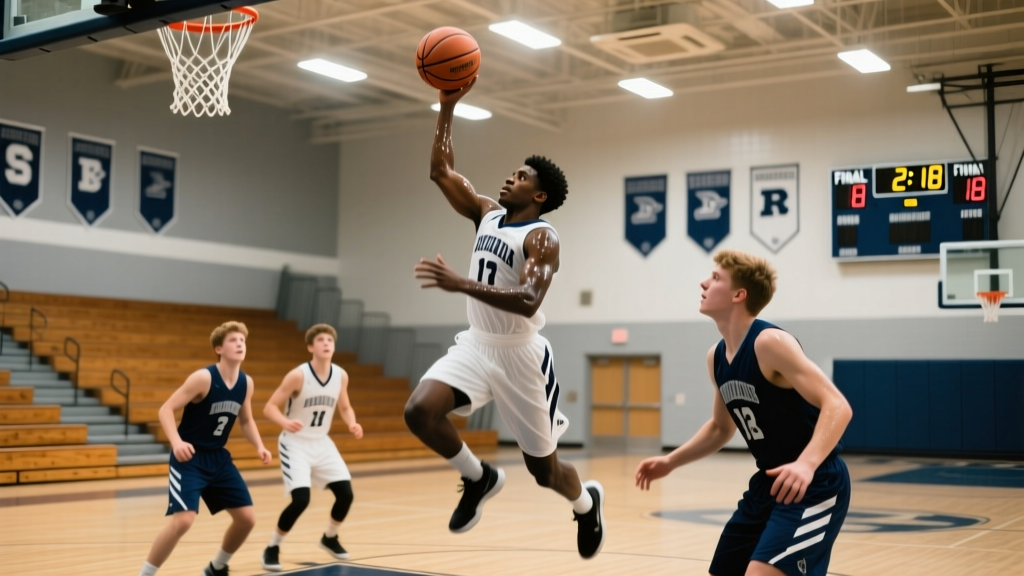 When Does High School Basketball Season End?
 Will Ferrell Basketball Film: The Truth About Semi-Pro
 How Much Do NBA Players Make in 2025?
 How Many People Watch Basketball? Global Stats 2025
 How Many Games in NCAA Basketball Season?