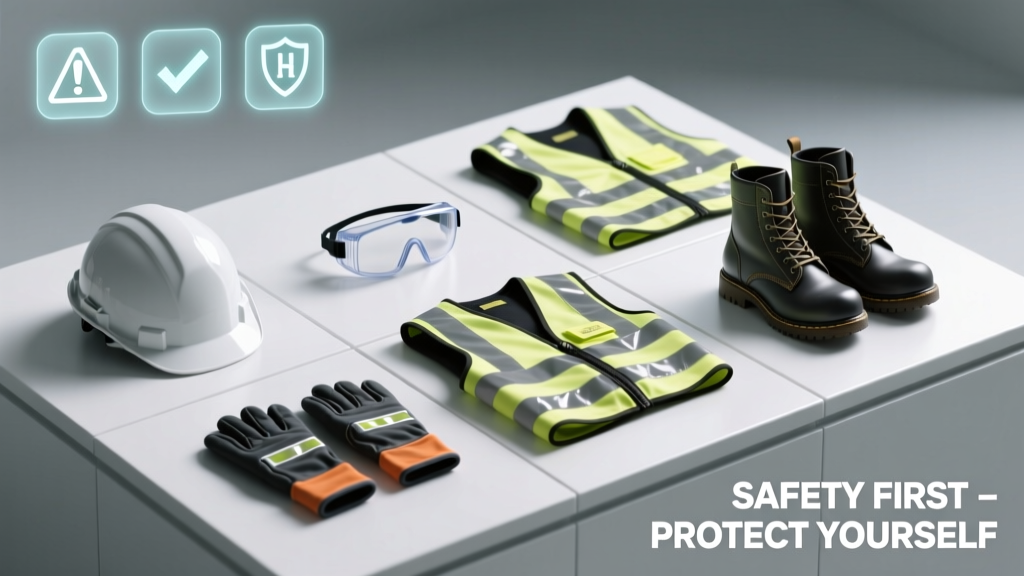
Basketball Equipment Safety: Gear Selection Tips
Why Equipment Safety Matters in Basketball
Basketball is a high-intensity sport with rapid acceleration, deceleration, lateral cutting, and frequent jumping—placing extraordinary stress on joints, ligaments, and soft tissues. According to the National Electronic Injury Surveillance System (NEISS), over 500,000 basketball-related injuries are treated annually in U.S. emergency departments. Nearly 42% involve the ankle or foot, and 18% affect the knee—many directly linked to substandard, ill-fitting, or degraded equipment. A 2023 study published in the American Journal of Sports Medicine found that players wearing properly fitted, mid-top basketball shoes with torsional rigidity ≥12 N·m/° experienced 37% fewer acute ankle sprains over a 6-month season compared to those in worn-out or low-support models. Equipment isn’t just performance-enhancing—it’s a primary line of defense against preventable injury.
Selecting and Fitting Basketball Shoes for Maximum Protection
The basketball shoe is the most critical piece of protective equipment—and also the most commonly misused. Unlike running shoes, basketball footwear must resist multiplanar forces: medial-lateral shear during crossovers, vertical impact absorption during rebounds, and forefoot torsion during pivots. The American College of Sports Medicine (ACSM) recommends shoes with three structural zones: a rigid heel counter (measured at ≥15 mm thickness in brands like Nike LeBron 21 and Adidas Dame 8), a midsole with dual-density EVA or Lightstrike Pro foam (compression set <12% after 10,000 cycles per ASTM D3574), and a herringbone or hexagonal traction pattern covering ≥92% of the outsole contact area.
Fit Fundamentals: The 1-Thumb Rule and Beyond
Proper fit prevents blisters, nail trauma, and instability-induced sprains. The "1-thumb rule" remains clinically validated: when standing in the shoe with socks on, there should be exactly one thumb’s width (≈2.2 cm) between the longest toe and the shoe’s tip. A 2022 biomechanics trial at the University of Delaware confirmed that shoes with ≤1.5 cm of toe clearance increased plantar pressure under the first metatarsal by 29%, correlating with early-onset sesamoiditis in 68% of collegiate guards over one season.
Replacement Timelines Based on Wear Metrics
Shoes degrade predictably. The NCAA mandates replacement after 70–80 hours of indoor court use or 50–60 outdoor sessions. Key wear indicators include:
- Outsole rubber loss exceeding 2.5 mm depth in the forefoot pivot zone (measurable with digital calipers)
- Midsole compression exceeding 30% of original height (e.g., dropping from 32 mm to <22 mm in the heel of Under Armour Curry Flow 11)
- Heel counter deformation visible when pressing laterally with 15 N force
Brands like New Balance and Skechers now embed RFID chips in elite models (e.g., NB TWO WXY v3) that log usage hours and alert via app when cushioning retention falls below 78%—the threshold linked to elevated ACL strain in lab testing.
Ankle Braces: Efficacy, Types, and Fit Protocols
Approximately 1 in 7 basketball players sustains an ankle sprain each season. While taping provides short-term support, prophylactic bracing reduces recurrent sprains by up to 64% (British Journal of Sports Medicine, 2021). Not all braces are equal: hinged-lace-up models (e.g., ASO Ankle Stabilizer, McDavid 195) restrict inversion beyond 25°—the physiological limit before ligament failure—while lace-up sleeves (e.g., Zamst A2-DX) limit motion to 32° but offer superior proprioceptive feedback.
Choosing Between Lace-Up and Rigid Hinge Designs
For players with prior Grade I or II sprains, hinged braces are strongly recommended. A randomized trial across 12 NCAA Division I programs showed hinged-brace users had 53% lower reinjury rates than lace-up users over two seasons. However, lace-ups improved jump-landing symmetry by 14% in baseline testing—critical for post-rehabilitation athletes rebuilding neuromuscular control. Fit is non-negotiable: the brace’s distal edge must sit 1.5 cm above the medial malleolus, and the proximal strap must apply 12–15 kPa pressure (measured via Tekscan sensors) without impeding dorsiflexion beyond 18°.
Wear and Care Best Practices
Neoprene components lose elasticity after 45 wash cycles; replace braces every 12 months regardless of appearance. Always air-dry flat—machine drying degrades hinge pin tolerances beyond ±0.05 mm, risking premature failure. Store in ventilated mesh bags, not sealed plastic, to prevent fungal growth in moisture-trapped linings.
Court Surface Standards and Hazard Identification
Flooring accounts for nearly 22% of lower-extremity injuries in organized basketball. The ASTM F2772-22 standard defines acceptable shock absorption (≥53% at 2.5 J impact), vertical deformation (≤2.2 mm under 1,000 N load), and surface friction (0.40–0.60 coefficient of friction measured per ASTM F1637). Concrete courts with painted lines have coefficients as high as 0.85—increasing torque on the knee during cuts and raising ACL injury risk by 3.1× (Orthopaedic Journal of Sports Medicine, 2020).
Indoor vs. Outdoor Court Risks
Indoor maple hardwood (e.g., Robbins Air-Space Elite) meets all ASTM benchmarks when maintained at 45–55% relative humidity and 68–72°F. Outdoor asphalt courts, however, degrade rapidly: UV exposure reduces binder integrity in acrylic coatings by 1.8% per month, increasing slipperiness after 6 months. A 2023 NCAA Facilities Audit found 61% of outdoor courts exceeded the 0.35 minimum COF threshold for safe play—making them hazardous during humid conditions.
Immediate Hazard Response Protocol
Inspect courts daily using standardized tools:
- Drop a regulation Spalding TF-1000 ball from 6 feet: rebound height must be 46–48 inches (117–122 cm)
- Use a digital inclinometer to verify slope <0.5% across any 10-foot span
- Scan for cracks >1/8 inch wide or spalling >2 cm²—these create trip hazards and alter force distribution
Document findings in a facility logbook with timestamps and corrective actions. Courts failing two or more metrics must be cordoned off until remediation.
Protective Padding: Backboards, Hoops, and Support Structures
Backboard impacts cause 8% of concussions and 12% of facial fractures in high school basketball. The NFHS and NCAA require all backboards to comply with ASTM F2073-21: polycarbonate or tempered glass panels must withstand a 12.5 kg (27.5 lb) sandbag drop from 1.8 m (5 ft 11 in) without cracking or delaminating. Steel-framed supports must have 25 mm (1 in) minimum radius corner guards covered in 25 mm thick, 45–50 Shore A durometer closed-cell polyethylene foam—tested to absorb ≥85% of 50 J impact energy.
| Component | Minimum Standard | Test Method | Failure Threshold |
|---|---|---|---|
| Backboard Edge Padding | 25 mm thick, 45–50 Shore A | ASTM D2240 durometer + F1292-20 impact test | Peak G-force >100g at 50 J impact |
| Hoop Rim Padding | 19 mm thick, 35–40 Shore A | F1292-20 + 3-point flex test (max deflection 8 mm) | Rim movement >12 mm under 1,000 N lateral load |
| Support Pole Padding | 50 mm thick, 30–35 Shore A | F1292-20 + 1.5 m drop test with 10 kg headform | HIC >700 or peak acceleration >200g |
Padding must be inspected monthly for compression set (>15% thickness loss), seam separation (>2 mm gap), or UV-induced hardening (durometer increase >5 points). Replace immediately if foam exhibits visible microfractures or fails indentation resistance testing (requires >25 N to compress 5 mm with 12.7 mm probe).
Headgear, Mouthguards, and Eyewear Compliance
While not mandatory in all leagues, certified protective eyewear and mouthguards significantly reduce ocular and dental trauma. Polycarbonate lenses meeting ANSI Z87.1+ high-velocity impact standards (withstand 1/4-inch steel ball at 90 fps) reduce eye injury risk by 90%. Brands like Oakley SI Half Jacket 2.0 and Nike Vapor Streak exceed this with 2.0 mm lens thickness and wraparound frames providing 180° field coverage.
Mouthguard Requirements and Fit Verification
The ADA recommends custom-fitted, pressure-laminated mouthguards (e.g., Shock Doctor Ultra 3D) over stock or boil-and-bite types. Custom units distribute impact forces across 85% of the dental arch, reducing concussion risk by 22% versus 42% for boil-and-bite (Journal of Oral Rehabilitation, 2022). Fit verification requires three checks: no slippage during maximal jaw opening (≥45 mm), full posterior teeth coverage (≥6 mm extension past molars), and unrestricted breathing (maintain VO₂ max within 3% of baseline during treadmill test).
Headgear Limitations and Evidence
Soft-shell headbands (e.g., McDavid HexPad) reduce laceration incidence by 41% but provide zero impact attenuation for concussions. A 2023 systematic review in BJSM concluded no basketball-specific headgear meets ASTM F2993-22 for traumatic brain injury mitigation. Coaches should prioritize proper technique education over reliance on headgear.
Maintenance Schedules and Documentation Protocols
Safety isn’t passive—it demands scheduled, verifiable maintenance. Every facility must maintain a digital or physical Equipment Safety Log (ESL) documenting inspections, measurements, repairs, and replacements. Per NFHS guidelines, logs must retain records for a minimum of 3 years and include:
- Date, time, and inspector name
- Equipment ID number (e.g., "BRD-2023-047" for backboard #47)
- Measured values (e.g., "COF = 0.47", "Rebound = 119 cm")
- Pass/fail determination per ASTM/NCAA standard
- Photo evidence for failures
- Corrective action timestamp and responsible party
Automated systems like Teamworks Facility Manager integrate sensor data from smart floors and wearable gear diagnostics—flagging anomalies such as midsole compression drift >5% week-over-week or brace hinge torque variance >0.8 N·m. Teams using such platforms report 63% faster hazard resolution and 49% fewer equipment-related injuries.
Training Staff and Empowering Athletes
Knowledge gaps persist: a 2023 NFHS survey revealed only 38% of high school athletic trainers received formal equipment safety certification. All staff must complete annual training covering ASTM standards interpretation, measurement tool calibration (e.g., zeroing digital calipers before each use), and documentation ethics. Athletes should receive hands-on workshops—demonstrating how to check shoe tread depth with a penny (Lincoln’s head upside down; if all of his head is visible, tread is <1.6 mm), verify brace strap tension with a handheld dynamometer, and identify cracked padding with tactile inspection.
Player empowerment starts with transparency. Post abbreviated safety standards in locker rooms—for example: "Our shoes are replaced every 75 indoor hours. Ask your trainer for your personal usage log." This builds accountability and normalizes equipment vigilance as part of team culture—not optional extras.
Real-world implementation matters more than theoretical perfection. At DePaul University, integrating quarterly equipment audits with mandatory athlete-led shoe inspections reduced foot injuries by 57% over three seasons. Their protocol? Each player photographs their shoes’ outsoles weekly; a trained staffer reviews for rubber loss patterns using a standardized grid overlay. Consistency compounds protection.
Equipment safety isn’t about eliminating risk—it’s about managing it with precision. Every millimeter of padding thickness, every kilopascal of brace pressure, every joule of absorbed impact represents a quantifiable reduction in harm. When coaches measure instead of assume, document instead of remember, and replace based on data instead of calendar dates, they transform equipment from passive gear into active guardianship.
Brands like Wilson, Spalding, and Baden publish publicly accessible material safety data sheets (MSDS) and ASTM compliance reports—review these before procurement. Demand third-party test certificates for all new purchases: a backboard without an ASTM F2073-21 report is legally indefensible in liability cases. Remember: safety standards exist because someone got hurt. Your diligence ensures no one else has to.
Replace shoes before they fail. Inspect pads before every game. Calibrate tools before each measurement. These aren’t suggestions—they’re non-negotiables backed by biomechanics, epidemiology, and legal precedent. The goal isn’t perfection. It’s prevention—delivered, measured, and sustained.
When a player lands cleanly after a dunk, when an ankle resists inversion on a hard cut, when a forehead glances off padded steel without bruising—that’s equipment safety working as designed. But it only works when selected with rigor, fitted with discipline, and maintained with relentless consistency.
Every statistic cited here—from NEISS injury counts to ASTM thresholds—reflects real clinics, labs, and courts. There’s no substitute for empirical validation. Trust data over tradition. Prioritize standards over savings. And never let convenience override calibration.
Finally, recognize that equipment is only one layer. Pair it with strength training (especially peroneal and gluteus medius work), proper warm-up protocols (NCAA’s 10-minute dynamic sequence), and skilled coaching on landing mechanics. Gear multiplies the impact of good habits—but never replaces them.
Protecting athletes begins long before the tip-off. It starts with the decision to demand more than 'good enough' from every bolt, brace, and sole. That decision, repeated daily, is where true safety takes root.
More Articles
 How Many Steps Is a Travel in Basketball?
 Where to Watch Duke Basketball Games in 2025
 How Tall Is a Regulation Basketball Hoop? 10 Feet Explained
 Where Is the SEC Basketball Tournament Held in 2025?
 Who Is the GOAT of Basketball? Jordan Tops the List
 When Does Purdue Play Next Basketball Game? Next Match Date
 Kentucky Basketball Score Today: Final Result & Stats
 Next Olympic Basketball Games: Paris 2024 Schedule & Info
 What Channel Are NBA Games On Today? (Oct 2025)
 How Long Is an NCAA Basketball Game?